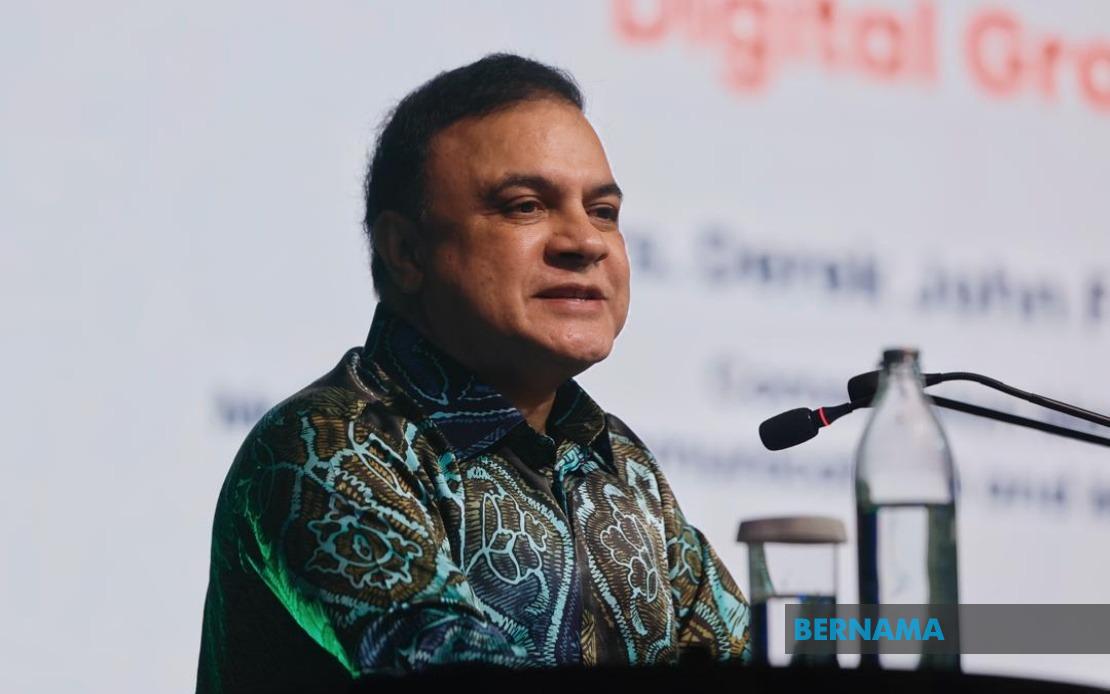
Malaysia's communications regulator has made a compelling case for aligning legal protections across both physical and digital domains, arguing that the current patchwork of inconsistent rules creates dangerous opportunities for criminals to exploit vulnerable populations with near impunity. Speaking at the International Regulatory Conference 2026 in Kuala Lumpur, Malaysian Communications and Multimedia Commission member Derek John Fernandez highlighted a fundamental gap in how society protects minors: while strict age restrictions govern real-world activities like cinema attendance and content access, the digital sphere remains far more permissive, allowing predators and fraudsters to operate across borders with relative ease.
The disparity represents more than a bureaucratic oversight. Fernandez explained that the difference in regulatory rigour creates a perverse incentive structure that effectively channels criminal activity online. Criminals recognise that digital anonymity, weaker enforcement mechanisms, and the relative youth of regulatory frameworks make online spaces considerably safer havens for illegal operations than their physical counterparts. This migration of criminal enterprise to digital platforms has accelerated as technology advances, transforming the internet from a convenience tool into an increasingly dangerous environment where traditional safeguards fail to apply.
Malaysia has moved to address this vulnerability through recent legislative action. The country strengthened its regulatory architecture by introducing the Online Safety Act 2025 (ONSA), which took effect on January 1 this year, alongside amendments to the Communications and Multimedia Act 1998 and modifications to the Penal Code. These measures introduce mandatory user verification and age confirmation systems, requiring digital platforms to implement gatekeeping mechanisms similar to those found in the physical world. The ONSA represents a significant shift in Malaysia's approach to online governance, signalling that policymakers recognise the urgency of bringing digital spaces under comparable legal control.
The scale of the problem underscores why this regulatory evolution has become essential. Malaysia's communications authority handles between two and three reports daily involving child sexual abuse material, whilst simultaneously executing approximately 1,700 takedowns of harmful online content every single day. These figures reveal not merely isolated incidents but systemic patterns of abuse enabled by platforms that have historically prioritised growth and engagement over user safety. The sheer volume of harmful content discovered daily suggests that existing voluntary industry measures and reactive enforcement have proven insufficient to contain the expanding ecosystem of online harm.
The particular vulnerability of children in digital spaces has changed fundamentally over recent decades. Unlike previous generations where parental supervision could extend to monitoring children's physical locations and activities, contemporary minors face unfiltered access to global digital networks through smartphones and connected devices present within the safety of their homes. Parents increasingly confront a paradox: they cannot realistically oversee their children's digital interactions in the same way they could monitor physical whereabouts, whilst the risks proliferating online—from grooming and exploitation to scams and cyberbullying—intensify constantly. This asymmetry between parental oversight capacity and genuine exposure to harm represents perhaps the central challenge animating Malaysia's regulatory response.
Beyond child safety, regulators must also contend with a broader transformation of personal data into a tradeable commodity within the digital economy. As Fernandez noted, information about individuals has become a weapon deployed for fraud, financial manipulation, and exploitation. Technology companies have built business models dependent on extensive data harvesting, creating fundamental tensions between commercial imperatives and consumer protection. The challenge for regulators across Southeast Asia mirrors this contradiction: how to permit legitimate innovation and business activity whilst preventing the weaponisation of personal information for criminal ends. Malaysia's approach through ONSA attempts to thread this needle by imposing platform obligations without entirely dismantling data-driven business models.
Identity verification through age-based restrictions has emerged as a focal point in international regulatory discussions, though experts acknowledge that such measures alone cannot eliminate online harms. An increasing number of countries—including Singapore and Australia—have begun implementing age-based restrictions on social media access, reflecting a growing consensus that technology platforms require stronger gatekeeping. Malaysia appears positioned to join this movement, yet Fernandez cautioned that verification represents merely one component of a genuinely protective framework. Comprehensive online safety demands the integration of legislative requirements, technological safeguards, consistent enforcement, and collaborative international action, acknowledging that no single instrument can address the multifaceted nature of digital threats.
The International Regulatory Conference 2026, themed "Shaping the Next Digital Era: Regulation, Resilience and Trust," symbolises Malaysia's assertion of regulatory sovereignty and the country's commitment to developing domestically-tailored responses rather than simply adopting frameworks designed elsewhere. The conference was officiated by Communications Minister Datuk Seri Fadhmi Fadzil, underscoring the political priority attached to these regulatory questions. Malaysia's experience with crafting the ONSA and related legislation positions it to contribute meaningfully to regional discussions about digital governance, potentially influencing how other Southeast Asian nations approach comparable challenges.
The fundamental tension Fernandez identified—between a unified real-world legal system and fragmented digital regulations—carries particular significance for Malaysia and the broader region. Southeast Asia has experienced explosive growth in digital platform adoption, with mobile penetration rates among the world's highest, yet regulatory frameworks have lagged considerably behind technological change. Children across the region face comparable threats regardless of national borders, yet existing legal structures often struggle to provide coordinated responses. Malaysia's push for regulatory parity between physical and digital domains implicitly calls for regional coordination, suggesting that lasting solutions require not merely national action but multilateral alignment on fundamental principles of user protection and platform accountability.
Moving forward, the success of Malaysia's regulatory framework will depend substantially on implementation rigour and industry cooperation. The legislative architecture exists through ONSA and related amendments, but translating these laws into effective protection requires sustained commitment to enforcement, meaningful cooperation from technology companies, and continued refinement as digital threats evolve. The MCMC's current operational metrics—handling multiple abuse reports daily and executing thousands of content takedowns—will serve as benchmarks against which future regulatory success can be measured. Whether Malaysia can achieve the envisioned parity between physical and digital legal protections will ultimately reflect not merely regulatory ambition but the political will and resources devoted to implementation and the degree to which international actors, particularly major technology platforms headquartered abroad, genuinely comply with locally-tailored safety requirements.

