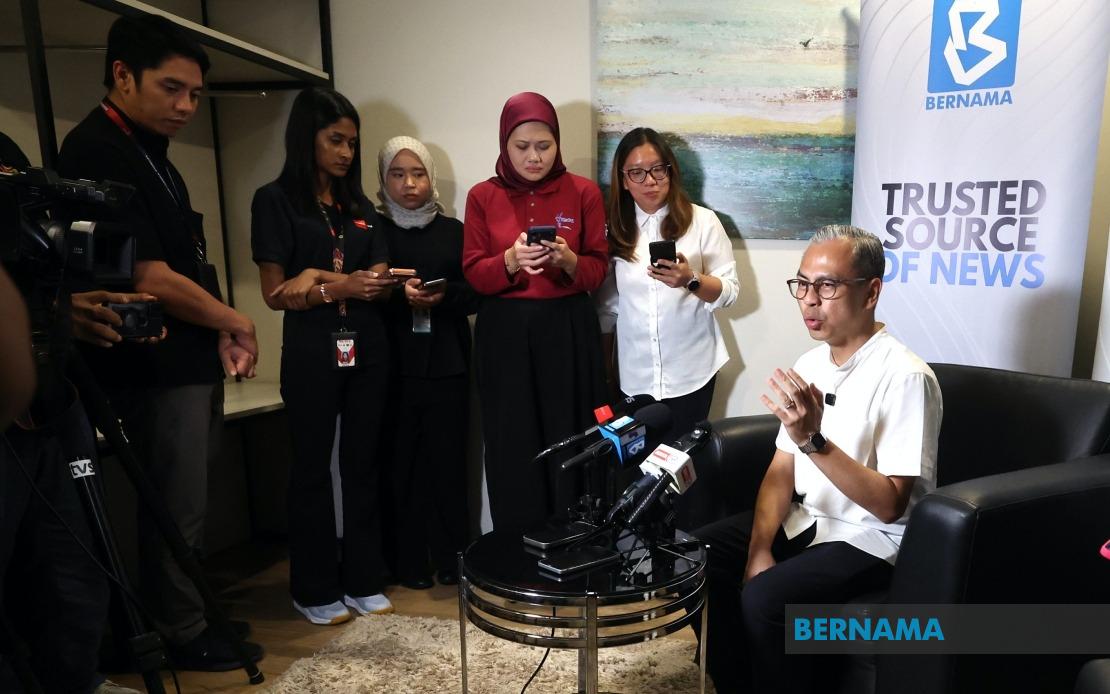
The Malaysian government is moving to strengthen its media self-regulatory framework by expanding the scope and membership of the Malaysian Media Council (MMM), with Communications Minister Datuk Fahmi Fadzil signalling that both traditional news organisations and social media platforms must participate in industry-led governance structures. Speaking during a visit to the Bernama operations centre in Johor Bahru on July 7, Fahmi outlined a vision where the newly established council would function as the primary mechanism for addressing media-related complaints and ethical breaches, fundamentally reshaping how journalism practice is monitored in the country.
Fahmi's remarks underscore a significant policy shift aimed at reducing direct government intervention in media affairs while simultaneously establishing clearer standards across increasingly fragmented news ecosystems. The minister indicated that the government would provide initial financial and administrative support to help the MMM gain institutional footing during its formative years, recognising that self-regulatory bodies require foundational resources before they can operate independently and effectively. This commitment reflects growing international pressure on Malaysia to demonstrate credible, non-partisan mechanisms for media accountability, particularly as the nation's Media Freedom Index rankings have drawn scrutiny from press freedom advocates.
Prime Minister Datuk Seri Anwar Ibrahim has already signalled a fundamental change in how complaints against journalists are handled. Rather than triggering automatic investigations or prosecutions, all allegations against reporters from recognised news outlets must now be channelled through the MMM for initial assessment. This procedural reform addresses longstanding concerns that media practitioners faced potential harassment through direct legal action without adequate opportunity for fair hearing or contextual review. The new mechanism is designed to create a buffer between government machinery and individual journalists, theoretically preventing weaponisation of laws against critical reporting.
The expansion to include social media platforms represents a more ambitious and contested element of this regulatory vision. Fahmi pointed out that digital platforms operate according to global guidelines that frequently disregard Malaysian social sensitivities, cultural contexts, and emerging regulatory frameworks. He cited a recent stabbing incident in Banting where social media users widely circulated sensitive images and investigative details without considering victim privacy or ongoing police procedures. Such cases illustrate how unmoderated content dissemination on international platforms can inflame local tensions and undermine law enforcement while causing direct harm to individuals caught in viral incidents.
Malaysia's digital information environment presents particular challenges for content regulation. Unlike traditional news organisations with established editorial hierarchies and professional accountability structures, social media platforms operate as distributed networks where millions of users simultaneously generate, share, and amplify content with minimal gatekeeping. Platforms enforce community standards designed for global audiences, creating gaps between their policies and specific Malaysian concerns around religious sensitivity, ethnic relations, and national security. The government's strategy of drawing platforms into sector-wide self-regulatory frameworks seeks to create localised accountability without resorting to heavy-handed censorship or platform restrictions.
The participation of social media companies in the MMM would theoretically establish peer-review mechanisms and industry-wide best practices specifically calibrated to Malaysian conditions. If major platforms with significant Malaysian user bases join the council, they could develop localised content policies, establish rapid-response protocols for sensitive incidents, and contribute to industry discussions about balancing expression rights with community protection. This cooperative model contrasts sharply with adversarial approaches where governments unilaterally impose content takedown demands or technical restrictions without dialogue.
However, the proposal faces practical obstacles and inherent tensions. Global social media companies have historically resisted joining sector-specific regulatory bodies outside their operational headquarters, citing jurisdictional complexity and concerns about establishing precedents for localised governance. Malaysian platforms and smaller regional services may prove more amenable, but their combined reach pales against Meta, TikTok, YouTube, and X. Additionally, the effectiveness of any self-regulatory council depends on robust enforcement mechanisms and meaningful consequences for members who violate agreed standards—areas where many industry bodies globally struggle.
Fahmi explicitly connected the MMM expansion to Malaysia's international standing, suggesting that credible self-regulation could improve the country's Media Freedom Index rankings. Malaysia's rankings have declined in recent years, reflecting concerns about judicial harassment of journalists, defamation suits against critical reporting, and perceived constraints on political coverage. By demonstrating functional, independent media governance structures, the government aims to signal commitment to press freedom principles while maintaining standards that protect legitimate national interests. International observers will scrutinise whether the MMM operates with genuine editorial input or functions as a government proxy for content control.
The council's credibility will be tested immediately through high-profile cases involving sensitive topics such as religious commentary, inter-ethnic relations, and political coverage. If the MMM consistently rules against journalists while favouring powerful interests, participation will decline and the body will lose legitimacy. Conversely, if it demonstrates robust protection for editorial independence and holds powerful actors accountable, it could establish itself as a trusted arbiter that both media and public respect. The balance between these outcomes will largely determine whether Malaysian self-regulation becomes a model for democratic governance or descends into managed consent.
For Southeast Asia more broadly, Malaysia's experiment offers lessons about regulating rapidly evolving digital information ecosystems. Regional governments face similar pressures to control harmful content without appearing authoritarian, and most lack sophisticated self-regulatory traditions in media. If Malaysia successfully establishes a functional MMC that gains voluntary participation from platforms and news organisations, other countries may attempt to replicate the model. Conversely, if the initiative falters through weak enforcement or perceived capture by state interests, it may discourage regional peers from investing in similar frameworks.
Fahmi's push for broader MMM membership also reflects recognition that media regulation in the digital age cannot rely solely on traditional gatekeeping structures. When a teenager stabbing case or political controversy spreads across millions of social media feeds within hours, government statements or traditional media corrections often cannot compete with viral momentum. Embedding digital platforms directly into professional media governance structures creates theoretical opportunities for faster, more coordinated responses to emerging misinformation or harmful content. Whether this translates into effective practice depends on implementation details and institutional commitment that remain unclear.
The government's stated intention to encourage voluntary participation rather than mandate membership suggests recognition that regulatory legitimacy requires genuine buy-in from regulated entities. Yet this approach risks creating a two-tiered system where cooperative news organisations and platforms submit to MMM oversight while others operate outside the framework, potentially weakening overall sectoral standards. The coming months will reveal whether major social media companies and news outlets view the council as a valuable governance partner or as a vehicle for state influence over content.

