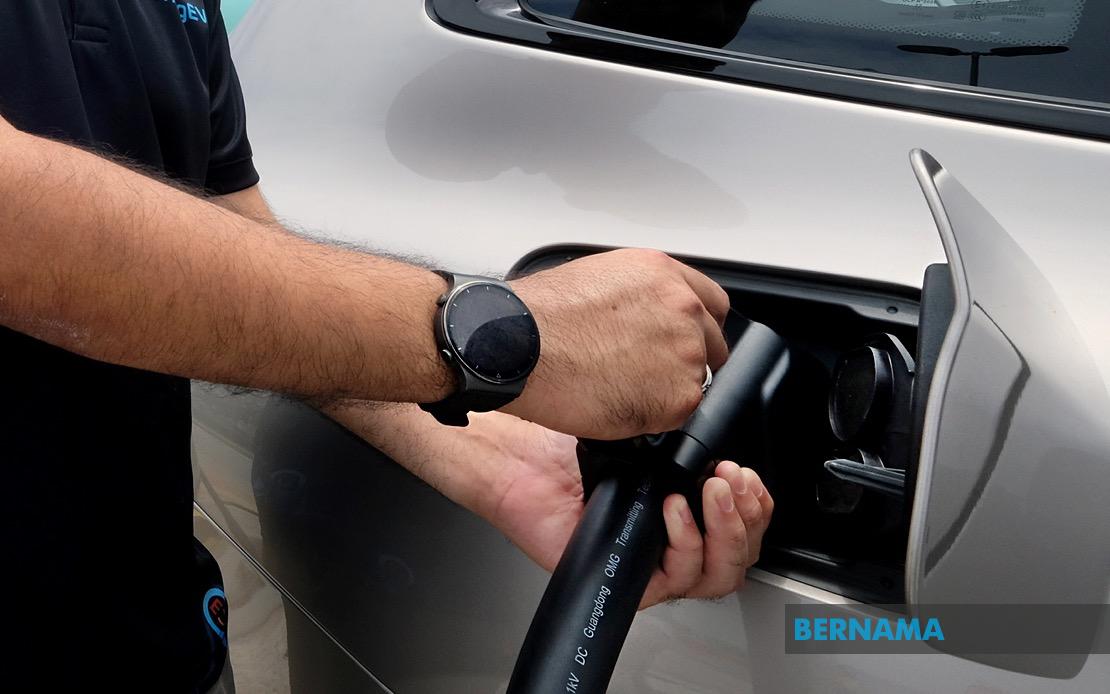
Malaysia's push toward electrified transportation has reached a significant milestone, with the Ministry of Investment, Trade and Industry announcing that 6,416 public electric vehicle chargers are now operational across the country as of the end of May 2026. The infrastructure expansion reflects the government's commitment to supporting broader adoption of battery-powered vehicles as a cornerstone of its low-carbon mobility strategy and long-term energy security objectives. The charging network comprises a mix of 2,143 direct current fast-charging stations capable of rapid energy replenishment and 4,273 alternating current chargers suitable for longer parking durations, providing Malaysian motorists with flexible charging options aligned with different travel patterns and vehicle types.
The rollout addresses a persistent bottleneck that has constrained EV uptake across the Southeast Asian region. Industry observers have long identified charging infrastructure scarcity as a critical barrier to consumer confidence and vehicle purchase decisions, particularly in a tropical nation where driving patterns and vehicle usage differ markedly from temperate-climate markets. By deploying both fast-charging and standard-charging facilities, the government acknowledges that comprehensive infrastructure must accommodate diverse user needs, from urban commuters requiring quick top-ups to residential areas requiring slower overnight charging. This nuanced approach signals a maturing understanding of practical deployment challenges that extend beyond simply counting individual chargers.
Government officials have attributed the accelerated pace of installation to structural reforms that have dramatically reduced bureaucratic delays. The implementation of the EV Charging Bay Planning Guidelines by PLANMalaysia has compressed approval timelines from months to as little as 14 working days, removing a significant friction point that previously discouraged private operators from expanding charging networks. This procedural streamlining exemplifies how regulatory modernization can catalyze private sector investment without requiring massive direct government expenditure. The shortened approval window transforms charging infrastructure deployment from a lengthy administrative ordeal into a manageable business process, fundamentally altering the economics of charging station expansion projects.
The government's strategy extends beyond infrastructure installation to encompass a coordinated, whole-of-government framework involving multiple stakeholders across energy, urban development, and commercial sectors. Regular engagement with local authorities ensures that charging networks integrate with municipal planning priorities, while collaboration with the Energy Commission and Tenaga Nasional Bhd addresses grid capacity and electricity supply considerations essential for scaling EV adoption without straining power systems. Partnership with charging point operators and industry associations ensures that technical standards, interoperability, and user experience standards align across the expanding network. This collaborative ecosystem contrasts sharply with fragmented approaches elsewhere in the region, where competing private operators and inconsistent technical standards have created confusing, incomplete charging landscapes.
Beyond physical infrastructure, the government is pursuing a parallel strategy of building indigenous EV manufacturing capabilities to reduce Malaysia's dependence on imported vehicles and strengthen the domestic automotive ecosystem. The National EV Project, spearheaded by Perodua under the New Industrial Master Plan 2030, has mobilized 62 local supplier companies and engaged over 300 Malaysian engineers and specialists in developing a competitively positioned national electric vehicle. This initiative represents more than an industrial policy objective; it reflects recognition that sustainable EV adoption requires building local technical expertise, supply chain resilience, and value-chain integration. Concentrating development efforts among domestic companies creates employment opportunities, retains technological knowledge within Malaysia, and positions local firms to participate in regional and global EV markets.
Proton's parallel EV development initiative pursues an analogous but independently structured approach, targeting the participation of 40 local companies in its supply chain. The existence of dual national EV projects by Malaysia's two major domestic automakers, rather than a single consolidated program, reflects both competitive dynamics within the local automotive sector and a deliberate strategy of developing multiple technological pathways and commercial models. This diversification reduces overdependence on a single platform and allows the market to determine which approaches prove most economically viable. The involvement of substantial numbers of local suppliers across both programs accelerates technology transfer from international partners and global OEMs into Malaysian companies, systematically building institutional knowledge in battery systems, electric drivetrains, and advanced driver assistance systems—the technical competencies that define next-generation automotive manufacturing.
The emphasis on high-value component manufacturing reflects sophisticated industrial policy thinking about Malaysia's position in global EV supply chains. Rather than competing on assembly labor costs—an impossible proposition against lower-wage economies—the strategy targets battery manufacturing, electric motor production, and autonomous driving technologies where Malaysia can leverage existing electronics manufacturing expertise and capital investment capacity. These segments command substantially higher profit margins than assembly operations and generate more sustainable employment for skilled and semi-skilled workers. Success in these areas would position Malaysian companies as essential suppliers to regional OEMs and global EV manufacturers establishing production facilities across Southeast Asia.
The broader context involves Malaysia's vulnerability to global fossil fuel market volatility and its strategic interest in reducing petroleum import dependency. Transportation accounts for a substantial portion of domestic petroleum consumption, making vehicle electrification a legitimate component of national energy security strategy alongside renewable electricity generation and industrial efficiency improvements. By aggressively promoting EV adoption and domestic EV manufacturing, the government simultaneously advances climate objectives outlined in its nationally determined contributions and pursues narrower national interest calculations regarding energy security and foreign exchange conservation. This convergence of environmental and national interest motivations explains the sustained policy commitment evident in coordinated infrastructure deployment and manufacturing sector support.
Regional implications extend beyond Malaysia's borders, as the country's EV infrastructure buildout and manufacturing initiatives influence investment flows and technology decisions across Southeast Asia. Malaysian success in deploying comprehensive charging networks and developing competitive domestic EV platforms could establish templates for neighboring countries grappling with identical infrastructure and industrial development challenges. Conversely, if the infrastructure expansion stumbles or domestic EV projects prove uncompetitive, regional policymakers may conclude that aggressive EV promotion exceeds current technological and economic capabilities in the Southeast Asian context. The outcomes of Malaysian policy choices thus carry demonstration effects throughout the region, influencing how other governments calibrate their own EV transition strategies.
Looking forward, the 6,416-charger milestone represents substantial progress yet falls short of the density required to support truly mass-market EV adoption. Achieving the charging infrastructure saturation point where EV ownership becomes practical for average consumers across diverse geographic contexts and socioeconomic circumstances demands continued acceleration. The government's streamlined approval processes and collaborative stakeholder engagement frameworks provide institutional foundations for achieving this trajectory, but sustained political commitment and adequate funding remain essential. Success ultimately hinges on achieving a virtuous cycle where improved charging infrastructure encourages EV purchases, growing EV sales justify further charging investment, and competitive domestic manufacturing brings EV prices within reach of middle-income Malaysian households.

