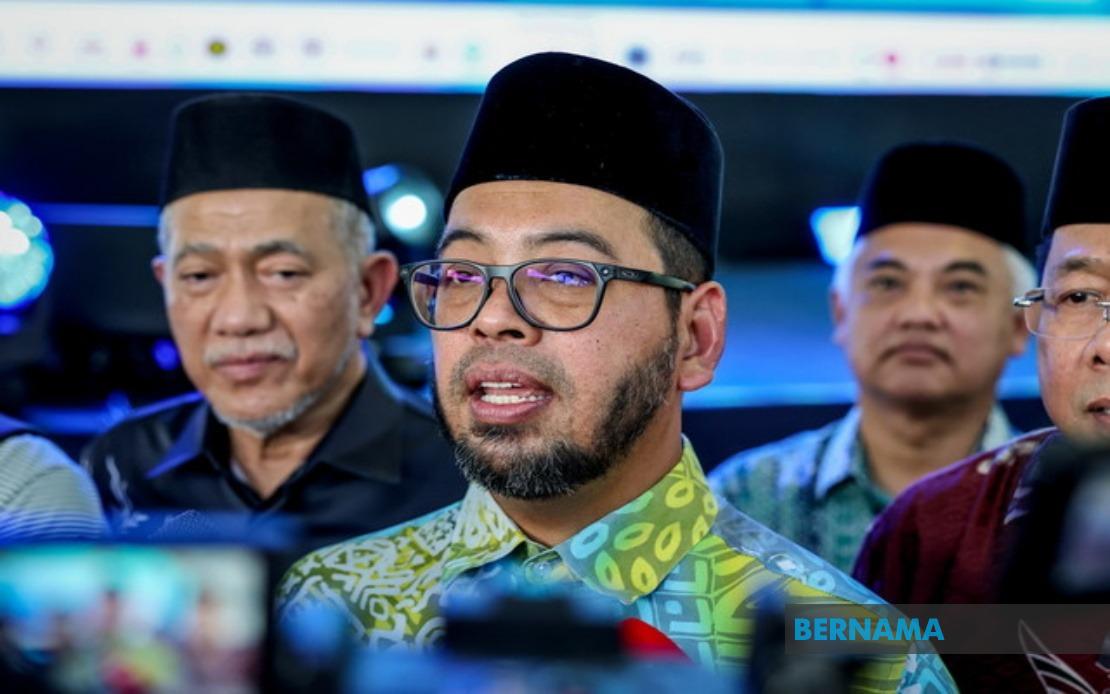
Malaysia continues to earn global acknowledgement as one of the world's foremost countries in administering Islamic affairs, underpinned by a robust architecture of institutions and forward-looking policies, according to Minister in the Prime Minister's Department (Religious Affairs) Dr Zulkifli Hasan. Speaking at the opening of the Northern Zone MADANI Ulama and Umara Multaqa at Masjid Timah in Permatang Pauh, Bukit Mertajam, on July 5, the minister highlighted how international data, statistical evidence, and assessments from scholars and observers consistently place Malaysia among the world's top performers in this crucial domain.
Dr Zulkifli's observations emerge from his interactions with counterparts and observers across the globe, who frequently express admiration for Malaysia's approach to Islamic governance and institutional management. During his international engagements, he noted that the country's system for overseeing religious affairs has become a subject of study and emulation elsewhere. This external validation directly contradicts domestic narratives that characterise Islam or Islamic institutions as being sidelined or under pressure within Malaysia, a claim the minister firmly rejected. Instead, the international community perceives Malaysia as playing a substantial and constructive role in propelling Islamic learning and practice forward on a global stage.
The backbone of Malaysia's international standing in Islamic affairs rests significantly on its halal certification framework, spearheaded by the Department of Islamic Development Malaysia (JAKIM). This system has achieved recognition as among the most credible and rigorous in the world, setting standards that extend far beyond the domestic market. The robustness of JAKIM's certification process has made it a reference point for halal assurance globally, reflecting Malaysia's commitment to maintaining the integrity of religious and commercial standards simultaneously. As global demand for halal-certified products and services continues to expand, Malaysia's regulatory excellence positions the nation as a trusted custodian of halal authenticity.
Equally significant is Malaysia's dominance in the Islamic finance sector, where the nation has maintained its position as the world's leading jurisdiction for 11 consecutive years. This achievement is not merely a matter of financial metrics; it reflects the successful integration of Shariah principles with modern banking infrastructure and regulatory frameworks. The Islamic finance industry has become a substantial economic pillar while serving as a practical demonstration of how Islamic values can underpin contemporary financial systems. For Southeast Asia, Malaysia's Islamic finance leadership has spillover effects, influencing the development of Islamic banking and capital markets across the region and beyond.
The country's pilgrimage management apparatus, administered through Lembaga Tabung Haji, has similarly garnered global commendation for its efficient organisation of the haj experience for Malaysian Muslims. This institution's track record reflects careful attention to the logistics, welfare, and spiritual needs of pilgrims, earning recognition for operational excellence from international observers. Such stewardship of one of Islam's central obligations demonstrates Malaysia's capacity to manage large-scale religious programmes with professionalism and sensitivity.
Beyond finance and certification systems, Malaysia has developed a comprehensive ecosystem for Islamic education that encompasses formal schooling, Quranic memorisation programmes, and professional development pathways. The government has recently strengthened the Kelas Al-Quran dan Fardu Ain (KAFA) curriculum through the KAFA 2.0 initiative, which shifts emphasis toward practical application and deeper appreciation of Islamic teachings rather than rote learning. This pedagogical refinement reflects an understanding that contemporary religious education must equip students with both traditional knowledge and contemporary analytical skills.
The tahfiz (Quranic memorisation) sector has been particularly strengthened through a coordinated national framework that includes the National Tahfiz Council, a comprehensive National Tahfiz Policy, standardised curricula through the National Tahfiz Standard, and the Malaysia Tahfiz Certificate. These institutional structures have created clear pathways for tahfiz graduates to transition into professional, technical, and higher education fields, ensuring that Quranic scholarship does not become isolated from broader societal contribution. The government's commitment to developing professional huffaz capable of serving national development goals reflects a strategic vision of integrating religious expertise with economic and social progress.
The minister's remarks come amid simultaneous efforts to strengthen the financial support infrastructure for religious institutions. Yayasan Takwa contributed RM280,000 to 28 mosques across Penang, distributing RM10,000 to each facility, while selected religious schools similarly received RM10,000 each to bolster their developmental capabilities. These injections of capital underscore the government's practical commitment to enhancing physical and educational infrastructure within religious institutions, ensuring that policy pronouncements are backed by tangible resource allocation.
For Malaysia and the broader Southeast Asian region, this positioning as a global exemplar in Islamic affairs management carries significant strategic implications. The nation's recognised expertise positions it as a potential consultant and model for other Muslim-majority and multi-religious societies grappling with questions of religious governance, interfaith harmony, and the integration of religious principles within modern institutions. As geopolitical attention to Islam's role in contemporary affairs intensifies, Malaysia's demonstrated success in managing this complexity without marginalising Islamic values or compromising governance standards becomes increasingly valuable to regional and international observers seeking viable examples of balanced religious stewardship.

