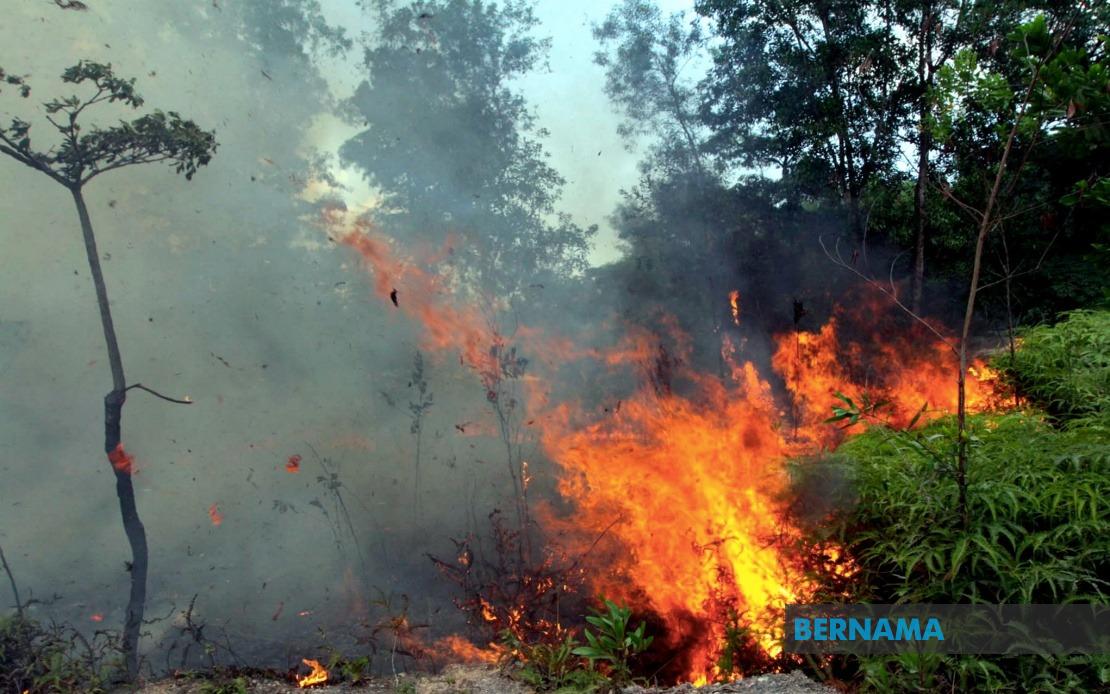
The Malaysian Fire and Rescue Department has sounded an alarm over escalating open burning incidents across the country, revealing that nearly 18,500 cases were logged between January and July this year—a dramatic spike that underscores deepening environmental and public safety concerns facing the nation. The 18,432 cases recorded during this seven-month window represent an 85 percent increase compared to the 9,941 incidents documented during the corresponding period in 2023, indicating a troubling acceleration in uncontrolled fires sweeping through forests, shrubland, and waste areas throughout Malaysia.
Datuk Seri Nor Hisham Mohammad, who heads the Malaysian Fire and Rescue Department, presented these figures while noting that the current year's tally even surpasses the 16,294 cases tallied during the same months in 2024, signalling that open burning remains a persistent challenge despite ongoing intervention efforts. This escalating trend has compelled the department to adopt a more targeted approach to fire prevention and response, focusing resources on geographic zones identified through historical data analysis as particularly vulnerable to uncontrolled combustion events.
In response to mounting pressure from repeated incidents, the fire department has established a comprehensive surveillance framework encompassing 183 locations nationwide that have demonstrated susceptibility to open burning based on fire records spanning the past five years. This proactive classification system allows officials to concentrate prevention messaging, enforcement operations, and rapid-response capabilities on areas where conditions most frequently conspire to ignite fires, whether through deliberate burning or negligence. Among these 183 monitored zones, however, a more critical subset demands heightened vigilance: 62 locations have been flagged as harbouring substantially elevated risk of large-scale conflagrations that could engulf territories exceeding 25 hectares in area.
The potential for fires of this magnitude poses severe logistical challenges for firefighting operations, as deploying and coordinating teams across such expansive affected areas strains departmental resources and complicates containment efforts. Nor Hisham explained that these supersized fires present particular difficulties because the sheer geographic scale makes rapid mobilisation of firefighting units inherently problematic, potentially allowing flames to advance and establish themselves before sufficient personnel and equipment reach the scene. This vulnerability has prompted the department to intensify monitoring protocols for the 62 identified high-risk zones, seeking to intervene before fires achieve the scale at which they become virtually unmanageable through conventional suppression methods.
Geographic patterns reveal that Sarawak currently experiences the most acute open burning crisis, with major fire outbreaks documented in districts including Sri Aman and Mukah, suggesting that East Malaysia faces more severe challenges than the Peninsular region. While Peninsular Malaysia has certainly recorded substantial open burning incidents, these tend to manifest as more scattered, smaller-scale events rather than the large coordinated fires increasingly typical of Sarawak. Sabah similarly commands departmental focus due to its distinctive vegetation composition and topographical characteristics that inherently facilitate rapid fire propagation and render containment exceptionally difficult once ignition occurs. Historical analysis of 2024 fire records identified seven separate major fire incidents concentrated around the Kota Kinabalu district, an unsettling concentration that has resulted in several of these locations being incorporated into the 62 high-priority monitoring zones.
Department officials have identified escalating ambient temperatures in specific regions as a principal driver of the upward trajectory in open burning incidents, a finding that carries ominous implications as Malaysia confronts anticipated climate pattern disruptions. The fire department is currently undertaking extensive preparatory work to fortify national firefighting capacity ahead of anticipated meteorological shifts associated with the Super El Nino phenomenon, which climate forecasters predict will develop in the Pacific Basin by November, with repercussive effects expected to influence Malaysian weather patterns commencing in mid-to-late January of the following year. These weather modifications could intensify heat stress across vulnerable regions, potentially triggering even more dramatic increases in fire incidents unless preventive measures and institutional preparedness are substantially enhanced beforehand.
The Super El Nino phenomenon historically correlates with elevated temperatures, extended dry periods, and reduced precipitation across Southeast Asia, creating environmental conditions that dramatically amplify wildfire susceptibility. For Malaysia specifically, this meteorological oscillation could generate a combustible convergence of heightened atmospheric temperatures, moisture deficits, and vegetation desiccation precisely during the period when agricultural burning practices peak in certain regions. Anticipating these conditions, the fire department has commenced early-stage preparation initiatives informed by meteorological forecasting to ensure that firefighting infrastructure, personnel deployment protocols, and community awareness campaigns achieve optimal readiness before the phenomenon's effects materialize in Malaysian territory.
The escalating incidence of open burning carries multifaceted implications extending well beyond immediate fire suppression challenges. Uncontrolled burning generates substantial transboundary air pollution, affecting not only Malaysian communities but neighbouring jurisdictions across Southeast Asia, particularly during the dry season when atmospheric circulation patterns concentrate smoke across the region. Such incidents exact considerable environmental tolls through habitat destruction, carbon emissions, and soil degradation, while imposing substantial economic burdens through emergency response expenditure, infrastructure damage, agricultural losses, and health system strain from respiratory ailments triggered by smoke exposure. The departmental data thus represents not merely a statistical accumulation of fire incidents but rather a crystallizing crisis demanding comprehensive, multi-sectoral intervention spanning regulatory enforcement, agricultural practice modification, community engagement, and inter-agency coordination throughout the region.

