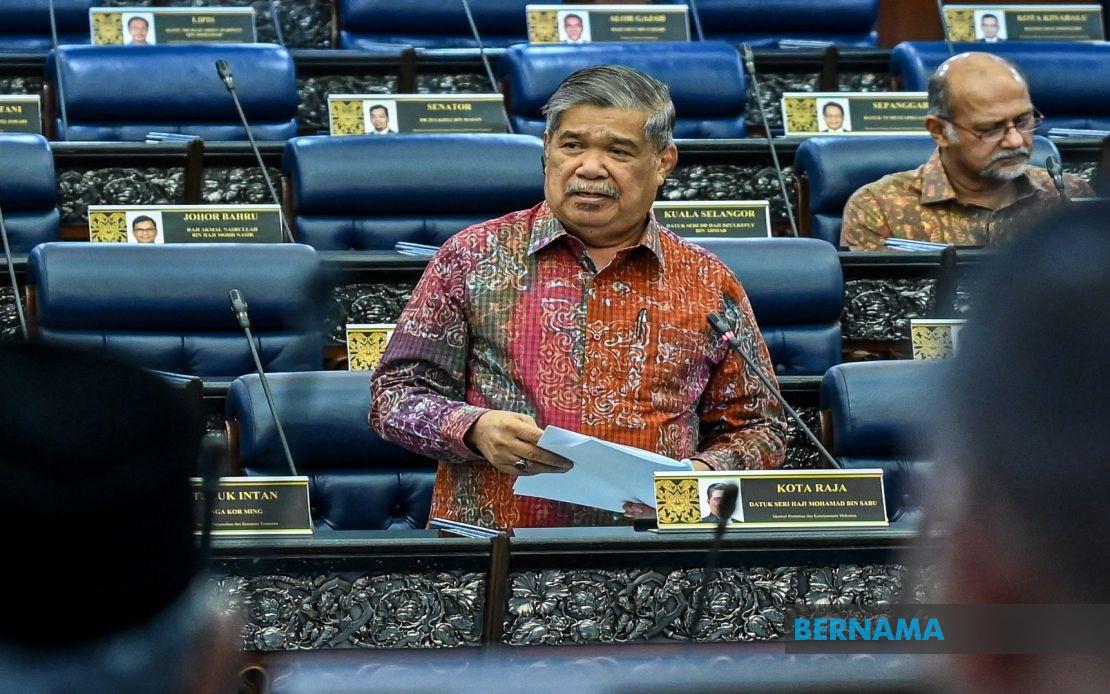
The Malaysian government is ramping up its defences against the looming El Niño phenomenon, which threatens to disrupt agricultural production and strain food supplies across the region. Agriculture and Food Security Minister Datuk Seri Mohamad Sabu outlined a comprehensive strategy during parliamentary proceedings today, revealing that authorities are mobilising multiple intervention points to insulate the agro-food sector from prolonged dry conditions. The initiative reflects growing recognition within policy circles that climate volatility poses a sustained challenge to national food independence, particularly for staple crops like rice that Malaysia depends on partly through imports.
At the core of the government's approach lies an overhaul of how the country manages its water resources during drought periods. Continuous surveillance of dam levels and catchment area status now forms part of an integrated water resource management framework designed to prevent crisis-driven depletion. Beyond monitoring, the ministry is promoting deployment of smart irrigation systems and drip irrigation infrastructure across farming zones, technologies that dramatically reduce wastage by delivering water directly to plant roots rather than relying on flood-based methods. These applications have proven effective in water-scarce regions globally and represent a shift towards precision agriculture in Malaysia's traditionally rain-dependent plantation and paddy sectors.
The fight against El Niño effects extends into research laboratories and breeding programmes. The Malaysian Agricultural Research and Development Institute (MARDI) has been tasked with accelerating development of rice varieties engineered to withstand extended drought stress. Such crop improvement programmes typically require years of field testing and regulatory approval, yet the Food Security Meeting chaired by the Prime Minister has instructed MARDI to intensify these efforts. This signals that policymakers view agricultural innovation not as a long-term aspiration but as an urgent necessity given emerging climate patterns. Cloud seeding operations, weather permitting, add another tool to the arsenal, though their effectiveness remains subject to atmospheric conditions.
Financial safety nets for farmers already show significant outlay. In the first phase of direct assistance, authorities distributed RM45.24 million to 8,224 rice farmers during 2024 alone. A broader picture emerges when examining subsequent phases: through to June 30 this year, a cumulative RM38.53 million reached 55,058 rice farmers managing 16,933 hectares across drought-affected zones in Peninsular Malaysia's northern and eastern regions. These figures underscore the scale of climate-related agricultural stress already manifest and the government's willingness to channel substantial resources toward affected producers. The disparity between first-phase beneficiaries and later phases suggests initial targeting may have been narrower, with subsequent rollouts expanding the net wider.
Rice stockpiling forms another pillar of Malaysia's food security architecture. The government maintains strategic reserves sufficient to cover approximately six months of domestic consumption, a buffer that provides breathing room during supply disruptions. Complementing domestic reserves, Malaysia continues to negotiate and execute import contracts to supplement local production as needed. This dual-track approach acknowledges that despite policy ambitions to boost self-sufficiency, importing rice remains economically prudent given global market dynamics and the capital-intensive nature of expanding domestic paddy cultivation. The maintenance of substantial stocks also signals confidence in supply chain logistics and storage infrastructure.
Geographic diversification of rice production now features prominently in ministerial strategy. The government is actively promoting large-scale rice field development in Sarawak and Pahang, alongside several other states, recognising that unlocking production potential beyond the traditional rice-growing regions could meaningfully increase national output. These initiatives require substantial infrastructure investment in irrigation, processing, and logistics, yet represent attempts to transform regional comparative advantages into concrete production gains. Equally important is the expansion of controlled environment agriculture—encompassing greenhouses and other climate-controlled cultivation systems—which offers crops protection from weather extremes that increasingly characterise Malaysian growing seasons.
Beyond staple crop production, the agriculture ministry is grappling with collateral economic damage from weather disruptions in export-oriented sectors. Recent durian price collapses, driven partly by supply gluts when multiple growing regions harvest simultaneously, have squeezed farmer incomes despite strong demand signals. The minister disclosed that government strategy pivots toward expanding export corridors, particularly into China's emerging markets. Currently, Malaysian durians concentrate in major Chinese cities, yet rural and smaller urban centres represent vastly larger consumer populations virtually untapped by Malaysian exporters. Facilitating this geographic expansion requires negotiating logistics improvements and streamlining customs procedures—essentially, the unsexy infrastructure of trade that often determines export success more than product quality alone.
The El Niño response unveiled today reflects lessons learned from previous climate shocks and represents Malaysia's positioning within a Southeast Asian context where climate variability increasingly determines agricultural fortunes. Neighbouring countries face identical threats, yet policy responses vary considerably based on institutional capacity, financial resources, and political commitment. Malaysia's multi-pronged approach—combining technological deployment, research investment, direct farmer support, and strategic stockpiling—suggests a government treating climate adaptation as a strategic imperative rather than a peripheral concern. Whether these measures prove sufficient depends partly on El Niño's ultimate severity and partly on implementation fidelity across various agencies and at farm level.
The parliamentary discussion also underscores how food security has ascended the political agenda, commanding Prime Ministerial attention through dedicated security meetings and triggering inter-agency coordination that transcends normal bureaucratic silos. This elevated status reflects both the genuine risks posed by prolonged drought to a nation that imports roughly 40 percent of its rice supply and the political salience of food affordability and availability for urban and rural voters alike. Across Southeast Asia, governments have similarly prioritised agriculture-climate adaptation, yet Malaysia's articulated focus on technological solutions and farmer assistance marks a particular policy pathway worth monitoring for its effectiveness and replicability.

