Malaysia's steadfast refusal to capitulate to pressure from American lawmakers has drawn strong backing from civil society and the highest levels of government, with both Prime Minister Datuk Seri Anwar Ibrahim and the NGO Citizens International asserting that the country's immigration policies remain non-negotiable matters of national sovereignty.
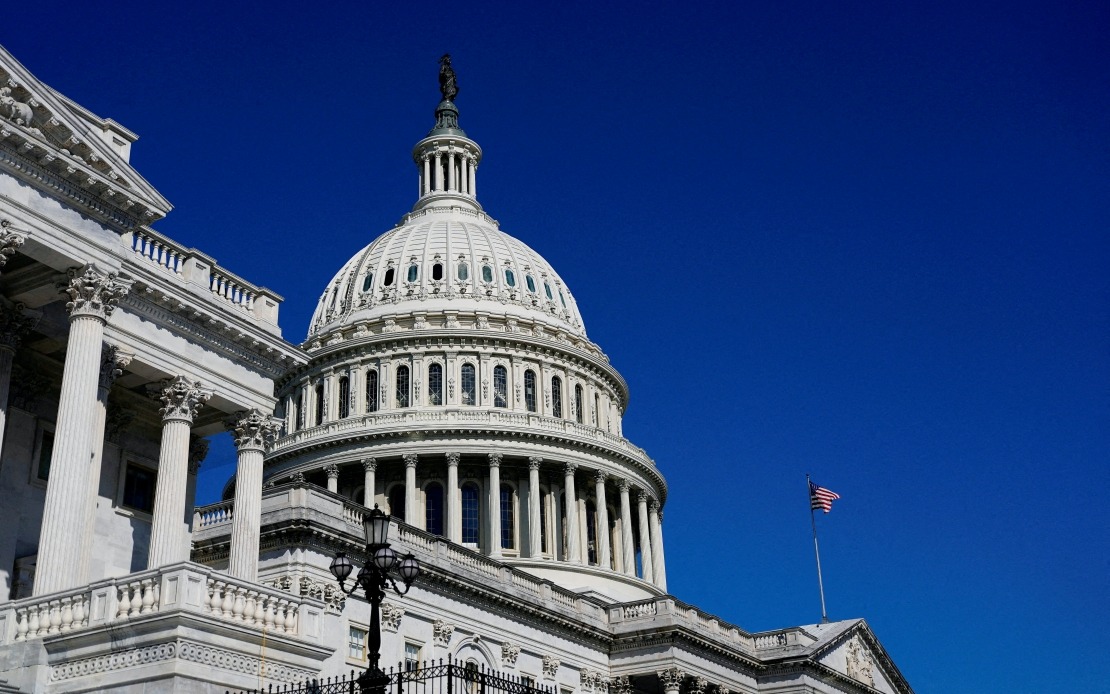
The confrontation emerged after a group of United States Congress members, including Greg Landsman, Josh Gottheimer, and Debbie Wasserman Schultz, issued threats through correspondence to US Secretary of State Marco Rubio, demanding that Malaysia reverse its longstanding ban on Israeli citizens within a 15-day window. The lawmakers signalled their intent to recommend suspension of International Military Education Training (IMET) funding to Kuala Lumpur should the country refuse to comply with their demands, effectively leveraging military aid as a tool of coercion.
Citizens International's Executive Director Imran Rasid characterised the congressional ultimatum as fundamentally incompatible with the principle of sovereign equality that underpins international law and the United Nations Charter. He underscored that for nations of the Global South, sovereignty represents far more than symbolic recognition; it constitutes the bedrock upon which legitimate governance rests and through which governments exercise their duty to serve their populations' interests. The use of military assistance as a weapon to force policy capitulation, Rasid argued, transforms what should be voluntary development partnerships into instruments of political leverage that undermine the independence of recipient nations.
The framing of Malaysia's position as potentially anti-Semitic, according to Citizens International's analysis, represents a deliberate conflation designed to delegitimise principled criticism of Israeli state conduct. The organisation separated Malaysia's opposition to specific governmental actions—including the occupation of Palestinian territories, construction of illegal settlements, and documented violations of international humanitarian law—from any antipathy toward Jewish people as such. This distinction carries particular weight in Southeast Asia, where diverse Muslim-majority nations have historically distinguished between religious identity and political accountability for state behaviour.
Prime Minister Anwar Ibrahim's public reaffirmation of Malaysia's commitment to maintaining its Israeli citizen entry restrictions signals that the government faces no meaningful domestic pressure to reverse course. Anwar grounded Malaysia's position in the broader framework of defending human dignity and opposing what he characterised as the systematic oppression and killing of Palestinians in Gaza. This rhetorical anchoring connects Malaysia's immigration policy to humanitarian principles rather than framing it purely as a political statement, thereby elevating the matter beyond simple diplomatic posturing into questions of fundamental human rights.
The incident illuminates broader tensions within the contemporary international system regarding the limits of great power influence over smaller nations' domestic and foreign policies. The United States has historically wielded military aid programmes, educational exchanges, and development assistance as instruments to align recipient countries with American strategic preferences. The IMET programme itself, which provides training opportunities for military officers from partner nations, carries significant prestige and practical value that makes the threat of its suspension consequential for many developing countries. However, Malaysia's apparent willingness to absorb this cost reflects either confidence in alternative security partnerships or a principled determination that certain policy domains remain beyond external negotiation.
The comparison Citizens International drew between Malaysia's position and that of Iran, Cuba, and Venezuela—nations often subjected to US sanctions and isolation—underscores how smaller countries sometimes find solidarity through shared resistance to external pressure. This alignment, whether formal or tacit, suggests the emergence of coalitions among Global South nations that prioritise non-aligned principles over alignment with Western strategic preferences. For Malaysia specifically, maintaining this stance despite congressional threats reinforces its carefully cultivated image as an independent actor rather than a satellite state of any great power.
The 15-day ultimatum itself reflects a particular style of American diplomatic coercion that has become increasingly visible during recent administrations. Rather than engaging in prolonged negotiations or multilateral forums, individual members of Congress have increasingly attempted to dictate terms to foreign governments, often acting independently of the executive branch's diplomatic apparatus. This pattern poses challenges for countries seeking to maintain stable, predictable relationships with the United States, as they must navigate not only official State Department positions but also the demands of activist lawmakers who may wield real budgetary influence through congressional appropriations processes.
For Malaysia and other Southeast Asian nations, the episode carries lessons about the importance of diversifying security and economic relationships. Countries that depend overwhelmingly on a single patron for military training, arms supply, and economic opportunity face precisely the coercive dynamics the congressional letter exemplifies. Malaysia's capacity to reject these demands without immediately capitulating suggests either sufficient alternative sources of military expertise or sufficient confidence in regional security arrangements that IMET funding, while valuable, is not irreplaceable.
Citizens International's broader call for Global South solidarity against what it termed bullying diplomacy reflects growing recognition that the post-Cold War international order, premised on Washington-led hegemony, faces sustained challenge from countries unwilling to subordinate their domestic preferences to external diktat. The organisation's framing of Malaysia's Palestinian solidarity as a matter of justice and humanity, explicitly divorced from calculations of great power favour, articulates a vision of international relations based on principle rather than interest asymmetry.
The Malaysian government's response thus far suggests no inclination toward compromise. Anwar's reiteration of commitment to the entry ban, coupled with Citizens International's vigorous public defence of the policy, indicates that backing down would carry significant domestic political costs. In Malaysia's context, where Palestinian causes retain substantial public support and where previous governments have staked considerable political capital on anti-colonial and non-aligned postures, reversing course would expose the administration to accusations of capitulating to Western pressure at the expense of moral principles.
As this diplomatic confrontation unfolds, it will likely serve as a test case for how middle-income developing nations respond to Congressional pressure campaigns. Should Malaysia successfully withstand the threat without suffering catastrophic consequences to bilateral relations or security cooperation, the precedent could embolden other nations to resist similar demands. Conversely, should the United States eventually follow through on threats or escalate pressure, it would demonstrate the persistence of asymmetrical power dynamics that constrain the policy autonomy of smaller states, regardless of their official sovereign status.

