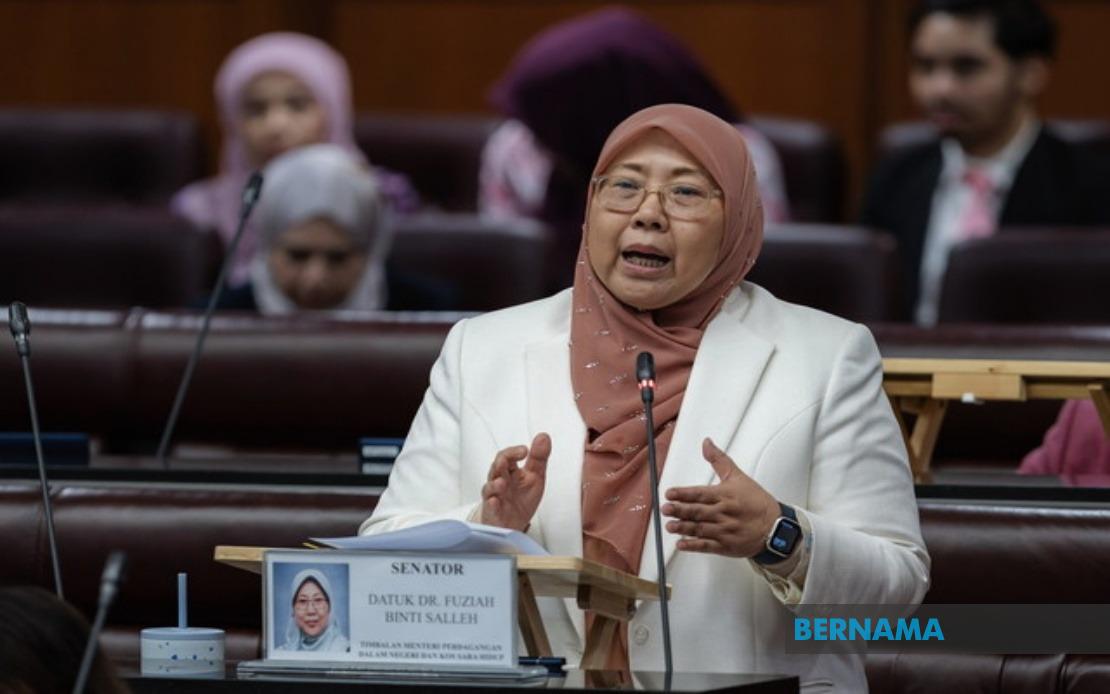
Malaysia's legal framework already mandates that copyright owners grant permission before their creative works are used to train artificial intelligence systems, according to Deputy Domestic Trade and Cost of Living Minister Datuk Dr Fuziah Salleh. Speaking in the Dewan Negara, Fuziah clarified that this requirement stems from existing legislation rather than new AI-specific rules, emphasising that protection for intellectual property applies equally regardless of whether the end application involves cutting-edge technology or conventional uses.
The minister's statement addresses growing concerns within Malaysia's creative sectors about whether artists, writers, musicians and other content creators face adequate safeguards as generative AI tools proliferate globally. Senator Datuk Wu Him Ven had specifically raised the question of whether the government mandates approval mechanisms and compensation structures for local creators whose work feeds AI model development. Fuziah's response signals that Malaysia is relying on its three-decade-old Copyright Act 1987 to handle these emerging scenarios, rather than rushing to draft technology-specific legislation.
Under Section 27 of the Copyright Act 1987, copyright holders maintain control over how their works are exploited commercially. Fuziah explained that arrangements between copyright owners and those seeking to use their material can take multiple forms. Licensing agreements represent the most direct approach, allowing creators to grant conditional permission while retaining ownership. Rights assignments enable outright transfer of control, though this typically involves substantial compensation. Alternatively, Collective Management Organisations—entities that aggregate rights on behalf of multiple creators—can negotiate on behalf of their members, streamlining transactions when numerous works are involved.
This framework theoretically provides copyright holders with leverage to demand compensation for AI training use. However, the practical application remains uncertain in Malaysia's context. Global technology companies developing large language models and image generators have faced criticism and litigation in Western jurisdictions for training on massive datasets of copyrighted material without explicit permission or payment. Malaysia has not yet experienced similar court disputes, largely because the country's AI industry remains nascent compared to global leaders. This absence of litigation does not necessarily indicate smooth compliance, but rather reflects the early stage of local AI commercialisation.
The government's cautious stance reflects broader uncertainty about how to balance innovation with creator protection. Fuziah acknowledged that no formal impact assessment has been conducted to quantify how AI-generated content might displace employment or reduce earnings for Malaysia's creative professionals. This gap in data represents a significant policy blind spot, as other nations grapple with evidence that some creative workers face genuine income pressure from AI systems trained on their contributions. Without rigorous local studies, policymakers operate with incomplete information about these trade-offs.
To address this knowledge gap, Fuziah disclosed that the government is engaged in ongoing consultations with stakeholders spanning creative industries, technology sectors, and civil society. Simultaneously, officials are monitoring policy developments and regulatory approaches adopted internationally. This comparative analysis will likely influence any future legislative changes, should Malaysia decide that its current copyright framework proves insufficient for the AI era. Countries including the European Union, United Kingdom, and United States are actively debating AI copyright issues, generating precedents and cautionary lessons that Malaysian policymakers can evaluate before committing to new laws.
A particularly significant aspect of Malaysia's current legal position concerns the copyrightability of AI-generated works themselves. The Copyright Act 1987 extends protection only to creative output demonstrating originality, skill, and intellectual effort from human creators. Content generated entirely by artificial intelligence systems, without substantial human direction or curation, falls outside the protection framework. This distinction creates an asymmetry: human creators must be compensated when their work trains AI, yet the systems themselves do not automatically generate copyrightable output deserving protection. Whether this asymmetry will persist as AI capabilities advance remains an open question for Malaysian lawmakers.
For Malaysian creative industries—a sector encompassing film production, music, publishing, design, and digital content creation—the implications are substantial. These industries contribute meaningful economic value and employment, yet lack specific legal instruments addressing AI-related intellectual property exploitation. Freelance creators and small production houses face particular vulnerability, as they typically lack the resources to negotiate individual licensing agreements or join collective management frameworks. Large multinational technology firms developing AI tools possess vastly greater bargaining power, potentially extracting creative value with minimal compensation if current legal ambiguities persist.
The government's incremental approach to AI regulation reflects a global trend toward cautious experimentation rather than preemptive restriction. Technology evolves faster than legislative processes can accommodate, creating legitimate concern that overly prescriptive laws might inadvertently stifle beneficial innovation. Conversely, insufficient legal clarity risks enabling value extraction from creators without fair compensation. Malaysia's middle path—maintaining existing copyright protections while studying international models—provides time for better data and clearer international norms to emerge, though it leaves stakeholders in transitional uncertainty.
Senator Wan Martina Wan Yusoff's question about local creative workers' welfare suggests parliament recognises these concerns. The absence of dedicated impact assessments means policymakers cannot yet distinguish between hypothetical risks and genuine, measurable harms. Gathering this evidence through consultations and research partnerships would strengthen future policy decisions, ensuring that any new regulations reflect evidence rather than speculation about AI's employment effects.
Looking forward, Malaysia's path likely depends on how international precedents develop and whether domestic evidence demonstrates material harm to creator livelihoods. The government's commitment to ongoing engagement with stakeholders provides a mechanism for adjusting course if evidence warrants intervention. Meanwhile, the existing Copyright Act 1987 serves as a baseline legal framework, though its application to AI scenarios remains untested in Malaysian courts. How these provisions ultimately function in practice may depend less on formal policy change and more on whether copyright owners actively assert their rights through licensing demands and legal action when they believe AI training violations occur.

