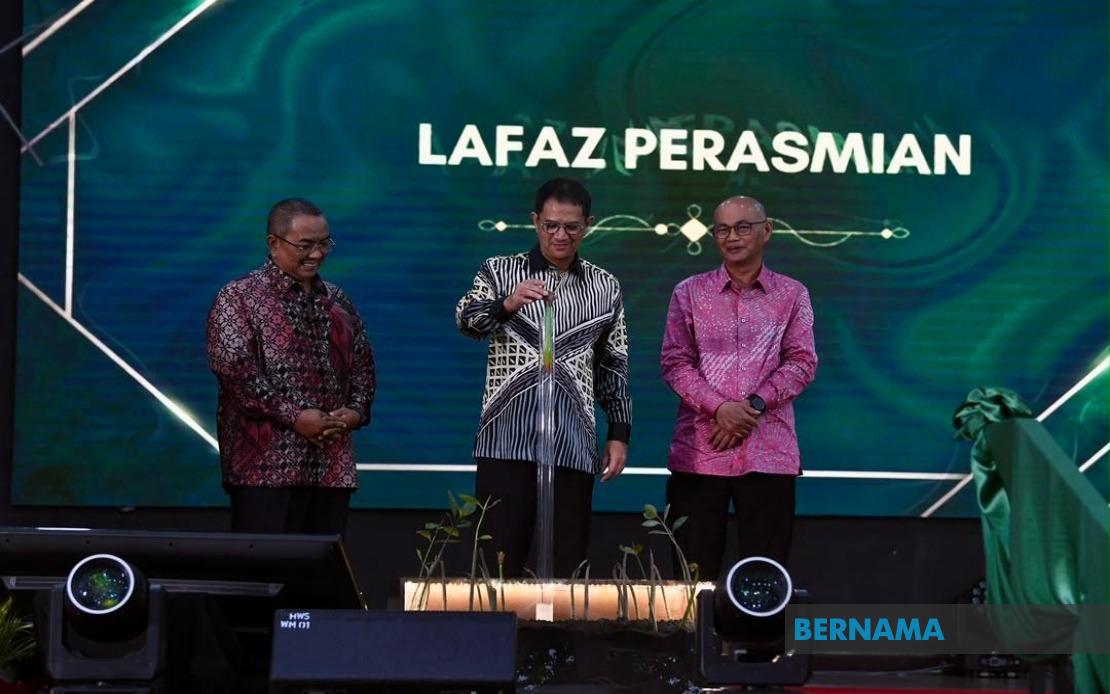
Malaysia has achieved a landmark milestone in mangrove forest restoration, with nearly 4,000 hectares of coastal ecosystems rehabilitated across the country through an ambitious tree-planting programme that has deployed more than 9.3 million saplings and suitable coastal vegetation. The Natural Resources and Environmental Sustainability Ministry highlighted this achievement during celebrations commemorating the International Day for the Conservation of the Mangrove Ecosystem held in Alor Setar, positioning the restoration effort as emblematic of the government's broader environmental stewardship agenda.
The scale of this mangrove restoration initiative reflects a sustained financial commitment spanning multiple budget cycles. Since the programme's inception, authorities have channelled RM71.3 million into comprehensive mangrove conservation activities encompassing tree planting operations, ongoing maintenance protocols, scientific research initiatives, environmental monitoring systems and community engagement campaigns designed to foster public understanding of coastal ecosystem values. This substantial investment demonstrates that Malaysia recognises mangrove forests as critical natural infrastructure warranting dedicated governmental resources and strategic planning.
Looking ahead to 2026, the government has earmarked an additional RM2 million within the 13th Malaysia Plan specifically targeting mangrove conservation and coastal area preservation initiatives spanning all three geographic regions—Peninsular Malaysia, Sabah and Sarawak. This forward-funded commitment suggests that policymakers view mangrove restoration not as a one-off environmental project but rather as an ongoing priority requiring consistent budgetary allocation and institutional attention. The geographic scope encompassing both peninsula and East Malaysian states indicates recognition that mangrove ecosystems present comparable conservation challenges across Malaysia's diverse coastal environments.
The restoration programme operates through an integrated institutional framework that coordinates efforts across multiple governmental bodies and research organisations. The Forestry Peninsular Malaysia department serves as a primary implementation agency, while parallel conservation activities in Sabah and Sarawak operate under respective state forestry administrations. Notably, the Forest Research Institute Malaysia contributes scientific expertise and monitoring capabilities, ensuring that restoration efforts incorporate evidence-based practices and measurable outcomes rather than purely ad-hoc environmental interventions.
Beyond governmental structures, the success of Malaysia's mangrove conservation agenda fundamentally depends upon sustained partnership with non-governmental organisations and grassroots community groups. Recognition ceremonies during the Alor Setar celebration formally acknowledged four NGOs and community organisations for their active contributions to ecosystem protection and restoration work. This institutional architecture reflects an understanding that environmental conservation cannot rely exclusively upon state capacity; effective protection requires mobilising civic society participation, leveraging local knowledge systems and establishing shared stewardship frameworks connecting government agencies with voluntary sector stakeholders.
The thematic framework encompassing these restoration efforts—"Mangrove Ecosystems Towards Blue Economy Sustainability"—signals an evolving conceptualisation linking environmental protection to economic development objectives. Mangrove forests provide substantial economic services including fishery habitat productivity, coastal storm surge protection, carbon sequestration capacity and aquaculture support systems. By framing mangrove conservation within blue economy parameters, Malaysian policymakers position ecosystem restoration as compatible with rather than antagonistic toward economic growth imperatives, potentially facilitating broader stakeholder buy-in for conservation measures.
The National Mangrove and Coastal Ecosystem Seminar held concurrently with the anniversary celebration provided structured forums for knowledge exchange among researchers, technical specialists, government representatives and conservation practitioners. The seminar programme featured 12 academic presentations, 15 technical poster presentations and nine exhibition installations collectively showcasing contemporary approaches to mangrove management, restoration techniques, ecological monitoring methodologies and conservation strategies. Such platforms enable cross-sectoral learning, identify emerging challenges within mangrove ecosystem management and facilitate adoption of best practices across different coastal regions.
Mangrove ecosystems occupy a uniquely vulnerable position within Malaysia's biodiversity landscape. These transitional coastal environments experience competing pressures from aquaculture development, urban expansion, agricultural conversion and port infrastructure projects. Simultaneously, mangrove forests provide essential ecosystem services including breeding habitat for commercially important fish species, natural filtration systems supporting marine water quality, and protective barriers mitigating coastal erosion and storm surge impacts. The restoration programme thus operates within a context of persistent tension between development pressures and conservation imperatives.
For Southeast Asian observers, Malaysia's mangrove restoration initiative carries broader regional significance. Mangrove forest coverage throughout Southeast Asia has declined dramatically over recent decades, with conversion to aquaculture ponds and urban development consuming substantial portions of remaining stands. Malaysia's investment of over RM70 million in mangrove rehabilitation and the mobilisation of community organisations demonstrates one regional model for addressing these challenges. However, the scale of restoration achievements—nearly 4,000 hectares across an entire nation—illustrates the magnitude of effort required to address historical losses and ongoing degradation pressures.
The involvement of local communities and NGOs in restoration work creates potential for sustained environmental stewardship extending beyond formal programme timelines. When communities develop ownership stakes in mangrove conservation outcomes through direct participation in planting activities and ecosystem monitoring, they become stakeholders in long-term management success. This participatory approach potentially generates environmental consciousness that extends beyond mangrove forests themselves, fostering broader appreciation for coastal ecosystem values and strengthening political constituencies supporting marine conservation policies.
Looking forward, Malaysia faces the challenge of translating restoration achievements into durable landscape-level outcomes. Planting millions of seedlings represents an important first step, but long-term forest regeneration requires sustained maintenance efforts, protection from competing land uses and adaptive management responding to environmental changes including sea level rise and shifting salinity patterns. The allocation of RM2 million under the 13th Malaysia Plan suggests governmental commitment to maintenance and monitoring, yet questions persist regarding the sufficiency of these allocations for managing restored areas across Malaysia's expansive coastlines.

