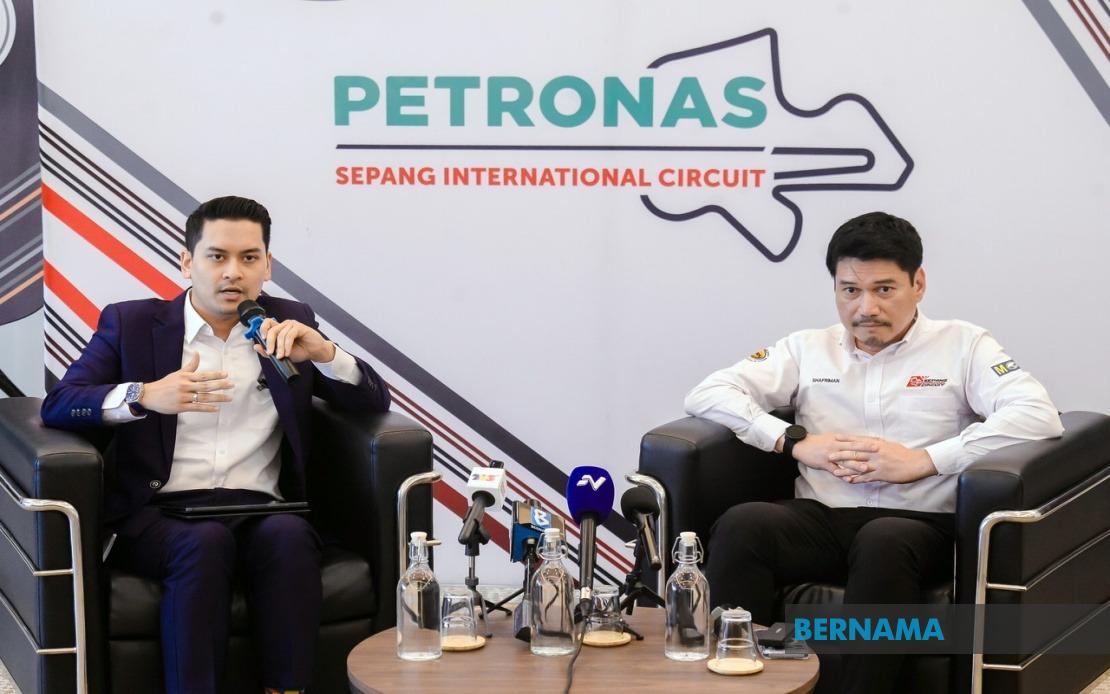
Malaysia has locked in its future as a world-class motorsport destination by extending its contract to host the Motorcycle Grand Prix through 2031, adding five more years to what has become one of the nation's most valuable sporting assets. Youth and Sports Minister Dr Mohammed Taufiq Johari announced the extension at the Sepang International Circuit, revealing that the new agreement received Cabinet approval and will commence in 2026, immediately following the completion of the current arrangement that runs through this year.
The decision underscores the government's strategic determination to maintain Malaysia's competitive edge in the global motorsport arena at a time when many nations are bidding aggressively for prestigious international sporting franchises. By committing to another half-decade of hosting the premier motorcycle racing series, Malaysia signals investor confidence and demonstrates continuity that the sport's governing bodies increasingly demand. This stability matters considerably in a landscape where venues constantly compete for limited slots on the MotoGP calendar.
Beyond the prestige of hosting elite international competition, the economic calculus driving this extension proves compelling. An impact assessment of the 2024 Malaysian MotoGP revealed the event generated approximately RM694 million in direct and indirect economic benefits across the nation. That figure encompasses spending by international visitors, media personnel, team members, and local supporters who attend the three-day racing weekend. The event created over 4,400 job opportunities, ranging from permanent positions in event management and hospitality to temporary work in transportation, accommodation, and retail sectors that surge during the racing calendar.
The return on investment ratio of 6.3 times illustrates how effectively the event converts government expenditure into measurable economic returns, a metric that justifies continued public investment in sporting infrastructure and event hosting. This multiplier effect extends well beyond the immediate weekend, as preparation and post-event activities sustain employment and business activity throughout the year. Hotels, restaurants, and transportation networks benefit from the influx of international visitors whose spending reverberates through Malaysia's service economy.
Tourism authorities particularly value MotoGP's international profile as a vehicle for destination marketing. The global television audience for MotoGP exceeds half a billion viewers annually, providing Malaysia with unparalleled exposure to potential tourists across Europe, Asia, and beyond. When international broadcasters feature Sepang International Circuit during their coverage, they simultaneously showcase Malaysian hospitality, culture, and natural attractions to a desirable demographic of affluent motorsport enthusiasts.
The motorsport ecosystem that has developed around the racing calendar represents another significant benefit often overlooked in immediate economic calculations. Malaysia has cultivated technical expertise and manufacturing capabilities in automotive and motorcycle-related industries, with several local enterprises supplying components and services to international teams and manufacturers. This industrial capability generates high-value employment and positions Malaysia within global supply chains.
Moreover, the government's Malaysian Motorsport Development programme has created structured pathways for nurturing homegrown racing talent. Young riders like Hakim Danish and Qabil Irfan have progressed through this system to compete on international stages, bringing recognition to Malaysia and inspiring subsequent generations to pursue motorsport careers. This talent pipeline strengthens the nation's presence within the sport beyond merely hosting the annual event.
The history of MotoGP in Malaysia stretches back three decades, with the nation first hosting the championship in 1991 before the race permanently relocated to Sepang International Circuit in 1999. Over these years, the event has evolved from novelty to institution, establishing deep roots within Malaysia's sporting culture and international reputation. The circuit itself has undergone continuous upgrades to maintain compliance with ever-evolving safety and operational standards required by international motorsport governance.
Extending the contract through 2031 requires complementary investments in circuit infrastructure and ancillary facilities to ensure the facility remains competitive with other premier venues globally. Governments hosting MotoGP events increasingly invest in transport infrastructure, hospitality facilities, and spectator amenities to enhance the experience and justify ticket prices. These capital expenditures themselves generate employment and stimulate construction and related industries.
For regional competitors seeking to host major sporting events, Malaysia's successful retention of MotoGP demonstrates the tangible benefits of maintaining long-term sporting assets and building institutional expertise in event management. The extension also reflects confidence in Malaysia's political stability and governance framework, factors that international sporting organisations carefully evaluate when choosing host nations.
Looking forward, the securing of MotoGP through 2031 provides certainty for related industries, sponsors, and hospitality providers who depend on the event's predictability for business planning. This certainty encourages investment in facilities and services specifically designed to serve the MotoGP visitor base, creating a virtuous cycle of infrastructure improvement and economic benefit.
The agreement positions Malaysia advantageously within Southeast Asia's broader sporting landscape, establishing clear differentiation as the region's premier motorsport host. As other regional nations compete for similar marquee events, Malaysia's locked-in schedule provides comparative advantage in attracting the ancillary spending, media attention, and international engagement that world-class sporting events generate. The extension thus represents not merely contract renewal but strategic validation of Malaysia's successful positioning within global sports commerce.

