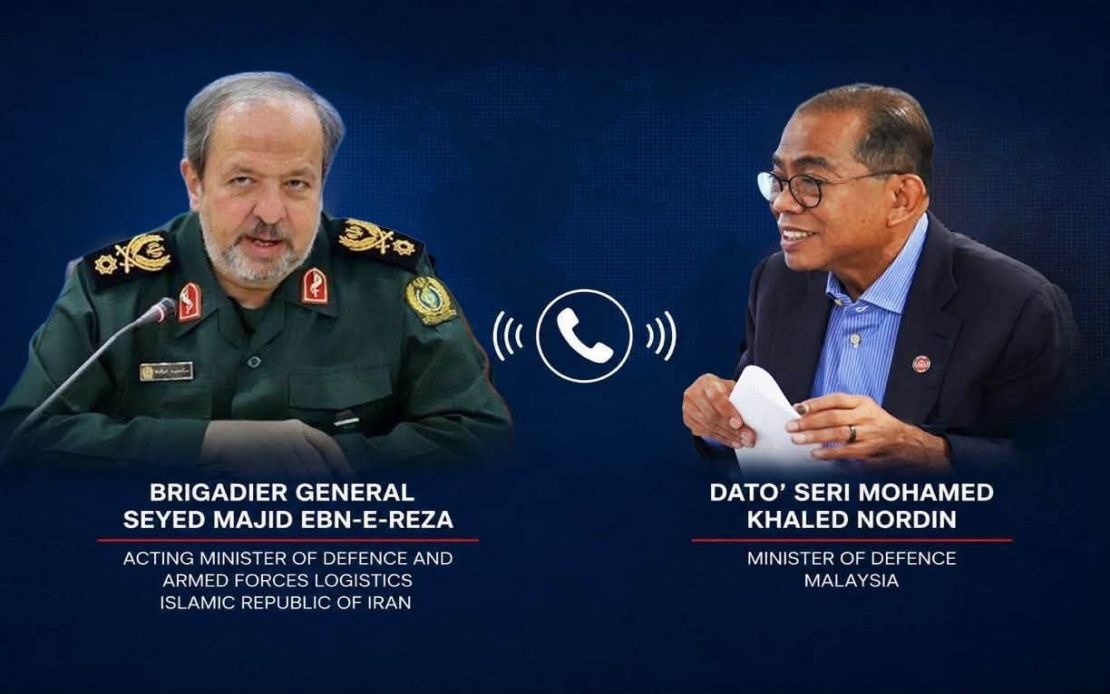
Malaysia has signalled its commitment to broadening defence cooperation with Iran, positioning the relationship within a framework of mutual friendship and shared strategic interests. Defence Minister Datuk Seri Mohamed Khaled Nordin conveyed this intention during a recent telephone discussion with Iran's Acting Minister of Defence and Armed Forces Logistics, Brigadier General Seyed Majid Ebn-e-Reza, marking a deliberate diplomatic outreach at a senior level.
The overture extends beyond rhetorical gestures, with Malaysia actively pursuing the formalization of bilateral military ties through institutional mechanisms. The proposed Memorandum of Understanding on defence cooperation represents a significant step towards establishing codified frameworks that would govern future interactions between the two nations' armed forces. Such formal instruments typically address areas including training exchanges, technology sharing, joint exercises, and intelligence cooperation, providing a structured foundation for sustained engagement.
One of the most concrete manifestations of this expanded cooperation will be Iran's participation in the Langkawi International Maritime and Aerospace Exhibition next year. LIMA, held biennially in Malaysia, serves as a premier regional defence and aerospace showcase, attracting military delegations, defence contractors, and government officials from across the globe. Iran's involvement would signal both nations' commitment to civil military cooperation and could facilitate broader discussions on shared defence interests within a multilateral setting.
Beyond the bilateral dimension, Malaysia's diplomatic engagement reflects a nuanced approach to regional geopolitics. The Defence Minister extended Malaysia's condolences regarding casualties among Iranian leadership, security forces, and civilians in the broader West Asian conflict, demonstrating empathy for Iran's security challenges. This expression of solidarity carries weight in international relations, particularly given Malaysia's status as a moderate Muslim-majority nation with influence across Southeast Asia and the broader Islamic world.
Malaysia's position on regional stability emphasizes dialogue and diplomatic resolution over military escalation. The Defence Ministry explicitly affirmed the country's hope that ceasefires could be maintained and that diplomatic channels would remain open. This stance aligns with Malaysia's historical commitment to peaceful conflict resolution and international law, principles enshrined in ASEAN's fundamental doctrine and reflected in Malaysia's own foreign policy orientation.
The acknowledgment of Iran's independently developed defence capabilities carries symbolic and practical significance. Malaysia's recognition of Iran's self-reliance in military development suggests respect for national sovereignty and technological advancement, themes that resonate strongly across the Global South. This appreciation extends to Iranian cooperation in ensuring maritime security, particularly regarding passage through conflict zones, a matter of direct relevance to Malaysia given its substantial maritime trade dependent on stable shipping lanes.
The emphasis on safeguarding the Strait of Hormuz reflects shared economic and security interests. One of the world's most critical chokepoints, through which approximately one-third of global seaborne traded oil passes, the Strait directly impacts energy security and economic stability for Southeast Asian nations including Malaysia. Any disruption to shipping through this waterway would have cascading effects on regional economies and supply chains, making mutual commitment to maintaining its security a pragmatic necessity beyond ideological considerations.
Malaysia's measured approach to this partnership illustrates the complexity of managing relationships with nations under international sanctions or significant geopolitical scrutiny. The country maintains diplomatic engagement with Iran while carefully calibrating its involvement to serve Malaysia's own strategic interests—enhanced maritime security, defence industry cooperation, and regional stability. This balancing act reflects Malaysia's broader foreign policy of maintaining multiple partnerships without full alignment with any single power bloc.
The timing of this diplomatic initiative suggests strategic calculation. As regional tensions persist and shipping security concerns mount, Malaysia positions itself as a bridge-builder capable of engaging with various regional actors while advancing practical cooperation on matters of mutual concern. For Iran, deepening ties with Southeast Asian nations provides alternatives to isolation and demonstrates that its international relations extend beyond traditional allies.
The defence cooperation framework also carries implications for regional military modernization and technology transfer patterns. Malaysian participation in joint initiatives with Iran could potentially influence defence procurement decisions and influence purchasing patterns across Southeast Asia, particularly among nations seeking diversified sources for military equipment and expertise outside traditional Western suppliers.
From a Southeast Asian perspective, Malaysia's proactive engagement demonstrates that regional nations maintain agency in their foreign policies despite pressures from great powers. The decision to formalize defence cooperation reflects Malaysia's conviction that pragmatic engagement serves the nation's interests more effectively than isolation or ideologically-driven positioning. This approach has long characterized Malaysian diplomacy and continues to shape its international relationships across diverse geopolitical contexts.

