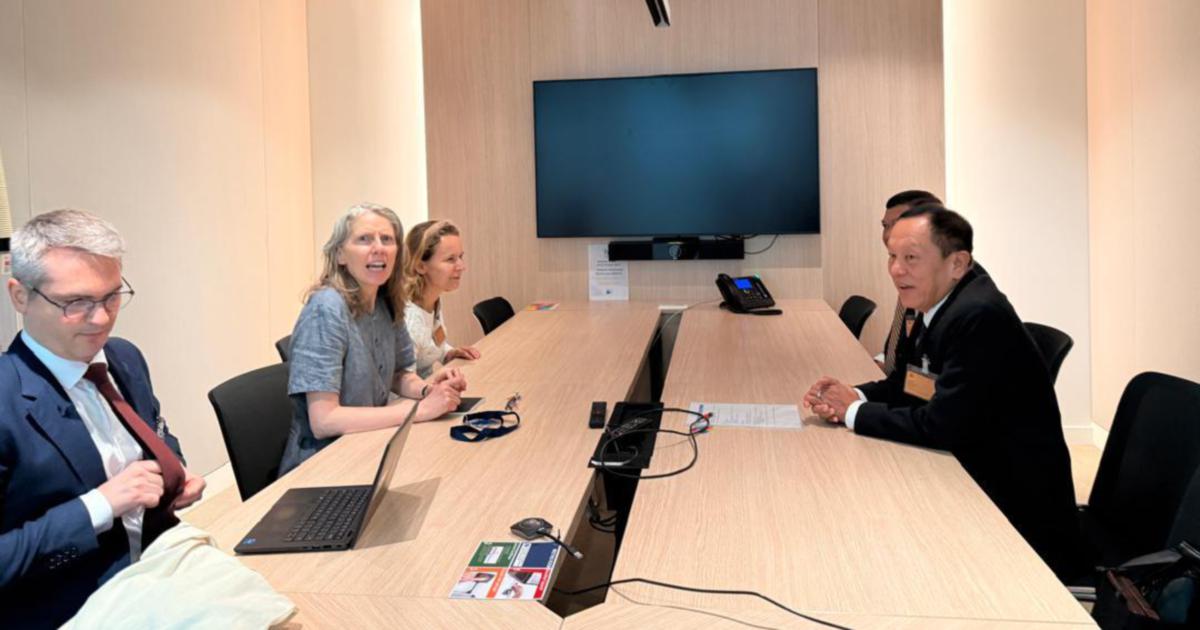
Malaysia has brought its hard-won expertise in recovering assets tied to the 1Malaysia Development Bhd scandal to an international anti-corruption forum in Paris, where representatives from the country's leading investigative agency briefed officials from the Organisation for Economic Co-operation and Development on strategies that yielded significant results in one of the world's most complex financial crime cases.
The Malaysian Anti-Corruption Commission's participation in the OECD gathering represents a significant moment for the country's efforts to rehabilitate its image on the global stage following the 1MDB debacle, which saw billions of ringgit siphoned from the state investment fund through a network of shell companies, political connections, and international financial channels. By positioning Malaysia as a source of expertise rather than merely a cautionary tale, authorities are demonstrating the tangible progress made in tracing, freezing, and recovering assets scattered across multiple jurisdictions.
The 1MDB scandal, which unfolded between 2009 and 2015, fundamentally exposed weaknesses in Malaysia's financial oversight mechanisms and attracted intense international scrutiny. However, the subsequent investigation and recovery efforts have yielded learning opportunities valuable to other nations grappling with similar challenges. The scale of the operation—involving coordination with law enforcement agencies across Asia, the Middle East, Europe, and North America—has provided Malaysia with institutional knowledge that transcends its own borders.
Asset recovery from cross-border financial crimes presents extraordinary challenges. Money flows through legitimate-appearing corporate structures, trusted financial institutions, and multiple currency conversions, each layer obscuring the criminal origins. Malaysia's experience navigating these complexities, combined with cooperation from international partners willing to freeze suspicious accounts and pursue legal action against intermediaries, offers practical lessons for other developing and developed nations. The country has recovered substantial portions of misappropriated funds, though the total amount remains subject to ongoing negotiations and legal proceedings in various jurisdictions.
The OECD platform provides Malaysia an opportunity to influence global standards for combating corruption and bribery. The organisation's anti-bribery convention and mutual evaluation mechanism set benchmarks for member and partner nations to follow. By sharing experiences from investigating and prosecuting individuals involved in 1MDB-related activities, Malaysia contributes to the refinement of international protocols for identifying beneficial ownership of suspicious assets, accelerating court proceedings across borders, and ensuring that recovered funds reach their rightful recipients.
Southeast Asian nations face particular vulnerability to corruption and asset-stripping schemes because of their developing infrastructure, evolving regulatory frameworks, and the region's role in global trade and financial flows. Malaysia's presentation at the OECD meeting carries implications for neighbouring countries including Indonesia, Thailand, and Vietnam, which confront similar challenges. By demonstrating that large-scale asset recovery is achievable despite institutional constraints, Malaysia provides a regional example that encourages peer nations to invest in their own investigative capacities and international cooperation mechanisms.
The recovery process has required unprecedented cooperation between Malaysian authorities and their counterparts in the United States, Singapore, Switzerland, and other jurisdictions where 1MDB-related funds were detected. This inter-agency coordination has strengthened bilateral relationships and established protocols for future cases. When Malaysia presents these experiences to the OECD, it underscores how corruption investigations increasingly depend on transparent information-sharing, mutual legal assistance treaties, and harmonised standards for evidence collection.
For Malaysian readers and businesses, the participation of local anti-corruption authorities in global forums carries practical significance. It signals that the country has moved beyond the defensive phase of acknowledging systemic failures and entered a phase of demonstrating institutional strengthening and capacity. This message is particularly important for international investors assessing Malaysia's governance climate and for multinational corporations evaluating compliance risks in the region. The visibility of Malaysia's anti-corruption enforcement at the OECD level provides reassurance that investigative standards have improved substantially.
The presentation also contextualises Malaysia's own ongoing efforts to strengthen regulatory oversight in financial services, identify shell company networks, and close gaps that enabled the 1MDB scheme to flourish in the first place. These internal reforms—undertaken parallel to asset recovery efforts—demonstrate that the country has absorbed lessons from the scandal and implemented preventive measures to reduce the likelihood of similar cases emerging in future.
International participation and knowledge-sharing mechanisms like the OECD forum create accountability dynamics that complement formal legal processes. When Malaysia speaks publicly about its asset recovery methodology, successes, and remaining challenges, the country creates expectations that implementation will be rigorous and consistent. This reputational mechanism incentivises continued institutional commitment to anti-corruption work even as political circumstances change or competing priorities emerge.
For the broader Southeast Asian and global development community, Malaysia's experience demonstrates that financial crime investigations in developing economies need not be futile. Sophisticated operators may exploit regulatory gaps and institutional weaknesses, but coordinated international action combined with persistent domestic investigation can recover significant assets and establish consequences for perpetrators. This message counters narratives of inevitability that sometimes accompany discussions of corruption in developing markets.
As Malaysia continues to navigate the long tail of 1MDB-related cases still pending in various courts, its contributions to international anti-corruption forums serve a dual purpose: advancing global standards while reinforcing domestic commitment to accountability. The OECD presentation represents not a conclusion to Malaysia's reckoning with the scandal, but rather a demonstration that the country has extracted institutional value from a painful episode and positioned itself as a contributor to global anti-corruption architecture.

