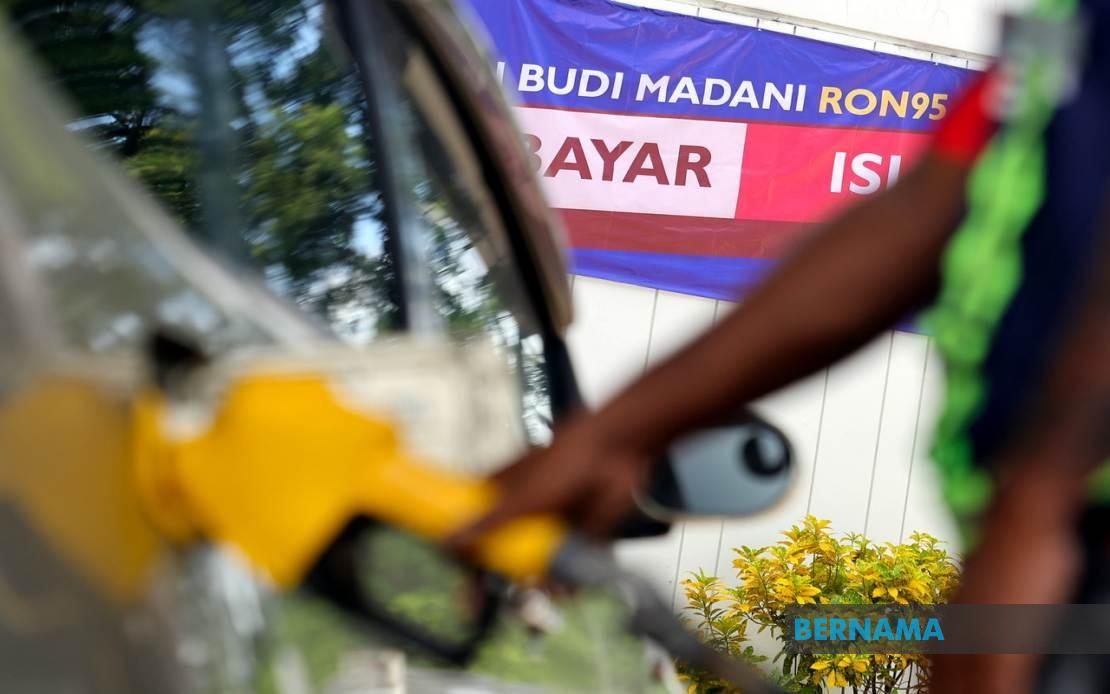
The Malaysian government has reaffirmed its commitment to protecting household budgets and maintaining welfare assistance even as global oil market turmoil inflates the cost of domestic fuel subsidies to nearly RM40 billion annually. Deputy Finance Minister Liew Chin Tong made the declaration during parliamentary questioning, signalling that economic pressures from regional geopolitical tensions will not prompt cutbacks to direct assistance to citizens or the petrol price stabilisation scheme that has become central to government policy.
This fiscal commitment reflects deliberate prioritisation of social stability over fiscal austerity at a time when international crude prices have surged due to escalating conflict in West Asia. The government's position represents a calculated trade-off, absorbing massive subsidy costs to shield ordinary Malaysians from economic shocks that could ripple through household finances and consumer spending. Such a stance carries implications for fiscal sustainability, yet government officials have signalled this is not negotiable in the current geopolitical environment.
The cornerstone of Malaysia's approach has been the BUDI MADANI RON95 scheme, operational since September of the previous year, which establishes a fixed ceiling price while simultaneously guaranteeing fuel availability. Under this arrangement, Malaysian motorists pay RM1.99 per litre regardless of global market movements. During the acute phase of West Asian tensions in March and April, international prices briefly reached RM5 per litre—more than double what consumers paid locally—illustrating the magnitude of government intervention required to maintain price stability.
Liew emphasised that this dual-pillar approach—combining price regulation with supply assurance—has proven particularly valuable during periods of market volatility and geopolitical uncertainty. The government has ensured both that petrol stations maintain adequate stocks and that price signals do not trigger demand shocks or consumer panic. For a nation whose economy depends partly on imported petroleum and where domestic fuel consumption supports critical transportation and industrial sectors, maintaining this equilibrium has strategic importance beyond simple welfare concerns.
The specific programmes mentioned as continuing unchanged include Sumbangan Tunai Rahmah (STR) and Sumbangan Asas Rahmah (SARA), which represent direct cash transfers designed to support lower-income households with living expenses. By maintaining these alongside fuel price controls, the government is pursuing a comprehensive rather than piecemeal approach to household financial protection. The question posed by parliamentarian Mohd Sany Hamzan from Hulu Langat implicitly raised the difficult trade-off: whether such large-scale petroleum spending would necessitate reductions elsewhere, including food subsidies or school assistance.
The government's answer has been categorical: no such reductions are planned. This resolute stance may reflect political calculation that protecting visible, routine benefits to ordinary citizens carries greater electoral and social weight than demonstrating fiscal discipline through subsidy rationalisation. However, it also suggests confidence that petroleum subsidy expenses, while substantial, remain manageable within the broader budget framework, or that policymakers believe the economic and social costs of rollback would exceed those of sustained spending.
Contextually, the West Asia security situation has created an external constraint on Malaysian fiscal policy. Crude price pressures originating from geopolitical conflict rather than supply fundamentals mean that adjusting domestic pricing would effectively transfer international risk directly to consumers. For a middle-income country with significant income inequality, such transfer could concentrate hardship among vulnerable populations and potentially destabilise demand for other goods and services. Maintaining price controls thus functions partly as macroeconomic insurance against second-order disruptions.
The BUDI95 scheme's success in preventing domestic price volatility during the March-April peak demonstrates the scheme's operational effectiveness, though at considerable fiscal cost. Liew's Parliament remarks highlighted that this arrangement has allowed Malaysia to avoid the fuel queuing and supply constraints witnessed in some neighbouring or comparable nations facing similar international price pressures. The implicit comparison underscores that the subsidy programme, despite its cost, delivers tangible public goods in the form of predictable pricing and reliable availability.
For Malaysian consumers and observers of domestic economic policy, this commitment represents a buffer against international commodity market shocks that would otherwise cascade into household budgets. Petrol prices feed into transport costs, agricultural input expenses, and manufacturing competitiveness, meaning fuel price stability has economy-wide reverberations. By absorbing the subsidy cost centrally, the government essentially spreads the burden across the tax base and general budget allocation rather than concentrating it on fuel purchasers, though the ultimate incidence remains debatable.
The sustainability question lurks beneath these reassurances. An annual petroleum subsidy bill approaching RM40 billion—roughly equivalent to significant portions of development or defence spending—cannot expand indefinitely without fiscal consequences. However, Liew's parliamentary intervention suggests the government views current conditions as temporary, tied to acute geopolitical tensions rather than structural oil market conditions. If West Asian instability gradually subsides and international crude prices normalise downward, subsidy costs would naturally decline, relieving pressure on fiscal frameworks.
Malaysian policymakers are essentially betting that regional tensions will resolve within a timeframe measured in quarters or single-digit years rather than becoming entrenched. Coupled with implicit assumptions about the government's revenue growth and borrowing capacity, this temporal calculation permits maintaining welfare programmes and fuel protections in the near term. The messaging to citizens is reassurance; the underlying strategic assumption is that current extraordinary costs are not the new normal.

