When geopolitical tensions between the United States and Iran threatened to disrupt shipping through the Strait of Hormuz, Malaysia's food sector faced potential tremors. The bottleneck would have constricted supplies of crude oil—a crucial raw material for fertiliser production—and plastic resins needed for food packaging, creating a perfect storm of scarcity and inflation. Ordinary Malaysians prepared themselves for the worst, mentally bracing for empty shelves and swollen grocery bills as global energy markets convulsed. Yet the feared price surge never materialised. Malaysia's food inflation inched up only marginally to 1.4% year-on-year in May 2026, a testament to deliberate government intervention that shielded consumers from the full brunt of international volatility.
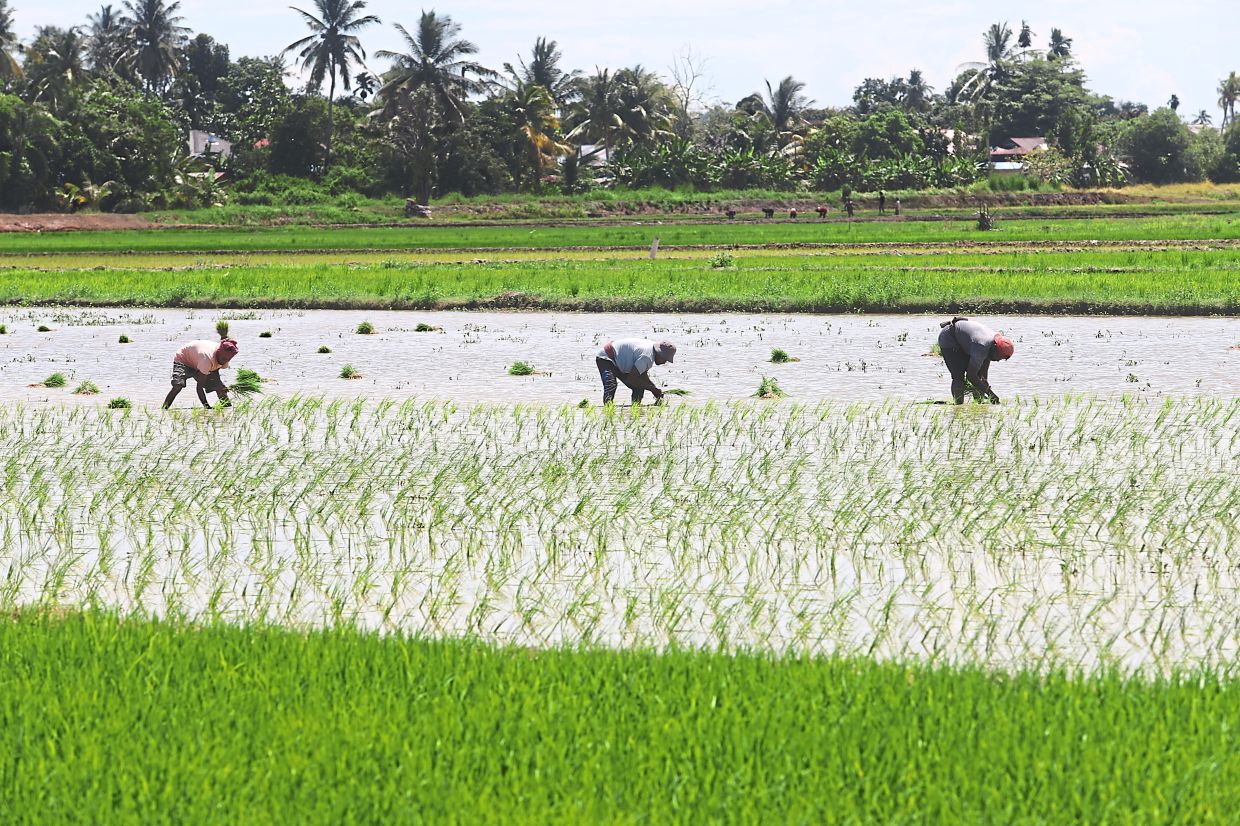
The government's protection of the Malaysian consumer rested on a foundation of direct financial support to farmers, the essential link between global disruptions and dining tables across the nation. In April 2026, the Ministry of Finance announced a substantial boost to Budi Agri-Komoditi, the diesel subsidy programme for agricultural machinery, raising it from RM300 to RM400 monthly—a 33% increase designed to help farmers absorb mounting fuel and transport expenses. Simultaneously, the ploughing incentive scheme, known as Insentif Pembajakan kepada Pesawah (IPKP), received an overhaul that nearly doubled the per-hectare payment from RM160 to RM300 for the 2026 planting season. To provide immediate breathing room, farmers in Peninsular Malaysia received an advance allocation of RM200 per hectare before the planting season commenced, effectively pre-positioning capital to support land preparation and cultivation activities.
These targeted interventions worked because they directly reduced the production burden facing Malaysia's farming community. Prof Datuk Dr Nasir Shamsudin, an agricultural economist at Putra Business School and professor emeritus at Universiti Putra Malaysia's Faculty of Agriculture, explained that the RM400 monthly diesel subsidy specifically offset rising operational costs, while the enhanced IPKP incentive improved farmers' cash flow at a critical juncture—before planting season arrives. Together, these measures functioned as short-term circuit-breakers against production cost pressures, allowing farmers to maintain output levels without passing full cost increases to consumers. The strategy worked: Malaysia's food inflation remained relatively contained even as global commodity prices experienced sharper movements, demonstrating that well-calibrated subsidies could insulate domestic consumers from external shocks without creating permanent distortions.
Beyond these emergency measures, the government signalled longer-term commitment through Budget 2026 allocations that extended well beyond simple price support. The budget earmarked RM2.62 billion for subsidies and assistance programmes spanning paddy pricing, crop cultivation, fertiliser provision, seed supply, and production incentives across the agricultural sector. The fishing industry received RM160 million to provide living allowances of up to RM300 monthly per fisher alongside catch incentives, acknowledging that coastal communities faced parallel pressures from disrupted maritime trade routes. Local fruit growers benefited from RM55 million in dedicated support through incentives and infrastructure funding focused on pineapples, soursop, water apple, and pomelo production. These allocations revealed a government conscious that food security required simultaneous support across multiple production tiers and commodity categories.
Stockpile management constituted another pillar of Malaysia's defensive strategy. The Ministry of Agriculture and Food Security publicly reassured citizens that essential food items—chicken, eggs, fish, milk, and fresh fruits—maintained sufficient inventory to last at least one month despite ongoing international supply chain turbulence. More significantly, rice supplies, including the national strategic buffer stock, remained adequate for five to six months of normal consumption. Fertiliser inventories similarly provided a nine-month cushion, reducing the immediate pressure to import replacement supplies at elevated prices. This stockpiling approach recognised a fundamental reality: when global logistics networks function normally, maintaining excess inventory appears wasteful, but when disruptions strike, buffer stocks transform from wasteful redundancy into invaluable insurance.
Prof Nasir cautioned, however, that subsidies functioned best as temporary interventions rather than permanent solutions. The most significant benefits would accrue only if cost savings percolated efficiently through the entire food supply chain, from farm to retailer, without margins being retained by intermediaries. More fundamentally, long-term food price stability required moving beyond subsidy dependence toward genuine productivity improvements and supply chain modernisation. Mechanisation programmes, precision agriculture adoption, climate-smart farming technologies, high-yield seed varieties, efficient irrigation systems, modern post-harvest facilities, and integrated logistical networks could permanently compress unit production costs and enhance sector competitiveness. Such structural improvements would reduce structural reliance on continuous government financial support while simultaneously building resilience against future shocks.
Recognising the limitations of subsidies alone, the government initiated shifts toward agricultural inputs less vulnerable to global price volatility. The Ministry promoted transitions from conventional chemical fertilisers toward organic alternatives, including biofertilisers and Effective Microorganisms (EM) products, which could be produced more locally and domestically. A RM5.5 million initiative under the 13th Malaysia Plan approved funding for a circular economy pilot that would convert agri-food waste into compost and organic fertilisers, simultaneously addressing waste management and reducing fertiliser import requirements. These programmes acknowledged that genuine food security required loosening Malaysia's dependence on chemically synthesised inputs whose prices fluctuated with global crude oil markets.
Yet beneath these encouraging developments lay a more sobering structural reality. Malaysia remains fundamentally a net food importer, with domestic production covering only a portion of national requirements. Global supply chain disruptions inevitably reverberate through Malaysian markets when international logistics falter. In 2024, Malaysia's agri-food trade deficit reached RM39.34 billion, reflecting deep dependence on global markets for essential commodities including rice, wheat, dairy products, and meat. This import orientation exposed Malaysian consumers and producers alike to external price shocks whenever geopolitical tensions or natural disasters disrupted trading routes or production in supplying nations.
Import dependence extended beyond primary commodities into agricultural inputs themselves. Many sectors appearing domestically self-sufficient in terms of production nonetheless relied on imported fertilisers, pesticides, seeds, and mechanical equipment. When global prices for these inputs spiked or supplies tightened, even well-managed domestic production faced margin compression. A genuine long-term solution required progressively reducing import intensity through expanding domestic cultivation, developing substitute input sources, and building production capacity in strategic commodities currently dominated by imports.
Prime Minister Datuk Seri Anwar Ibrahim framed the subsidy extensions as recognition of citizen pressures from rising living costs and global economic uncertainty, acknowledging in May statements that smallholders and entrepreneurs formed the backbone of Malaysia's economy. This rhetoric signalled that food security transcended technical agricultural management to become core political priority. However, the political commitment to subsidies must eventually transition toward structural productivity enhancements if Malaysia is to escape the subsidy treadmill and build genuinely resilient food systems.
The contrast between short-term success and long-term challenge crystallises Malaysia's food security paradox. Targeted subsidies and strategic stockpiling have effectively protected consumers from recent Middle Eastern tensions, demonstrating government capacity to implement emergency interventions. Yet these measures represent temporary relief rather than permanent solutions. Sustainable food price stability ultimately depends on raising agricultural productivity, strengthening supply chain efficiency, and progressively reducing structural import dependence. Malaysia's smallholder farmers and fishing communities require not merely subsidies offsetting global price movements, but investments in technological capabilities, infrastructure modernisation, and market integration that would enable them to compete effectively and maintain livelihoods independent of continuous government support. Building that resilience remains the longer-term challenge as immediate geopolitical risks recede.

