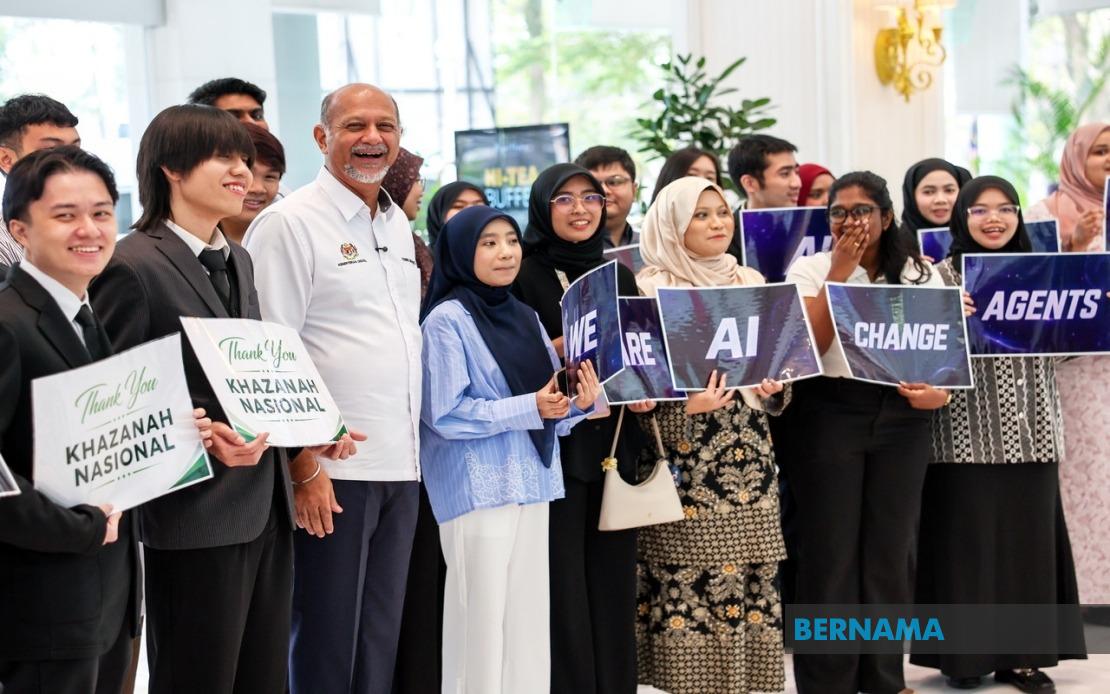
Digital Minister Gobind Singh Deo has signalled a fundamental shift in how Malaysia will approach emerging technological challenges, emphasising that the government intends to abandon its historically reactive stance in favour of anticipatory policymaking. Speaking at the AI-Ready Malaysia Summit 2026 in Petaling Jaya, Gobind outlined a comprehensive strategy designed to ready the nation for artificial intelligence adoption and the broader digital transformation reshaping economies across the region.
The traditional government approach of addressing technology issues only after they materialise has become inadequate in an environment where artificial intelligence and related technologies evolve at unprecedented speed. Under the old model, policymakers would wait for problems to emerge, then spend considerable time developing legislation, formulating policy responses, and establishing enforcement mechanisms—a process that inevitably left Malaysia playing catch-up with more nimble economies. This reactive framework, Gobind suggested, is no longer viable if Malaysia wishes to compete effectively on the global stage and harness technological advancement for national benefit.
Central to this reorientation is the establishment of AI Malaysia, positioned as the primary institutional vehicle for driving Malaysia's ambition to achieve AI nation status by the end of this decade. Rather than simply monitoring developments and responding to crises, AI Malaysia will function as an anticipatory body charged with identifying likely challenges before they materialise and engineering solutions in advance. This approach acknowledges that in the technology sector, first-mover advantage often accrues to nations that can implement solutions swiftly when opportunities or threats emerge. By having frameworks and responses already in place, Malaysia aims to compress the implementation timeline and maximise its capacity to seize opportunities or mitigate risks.
The Digital Minister elaborated that this proactive posture encompasses the deliberate development of legislation and policies framed explicitly as preparedness measures. Rather than waiting for a particular AI-related issue to surface before legislating, the government intends to construct a comprehensive legal and policy architecture that anticipates foreseeable challenges and establishes guardrails before they become urgent. This prospective legislative approach reflects lessons learned in other jurisdictions where delayed regulation of emerging technologies eventually necessitated more stringent, reactive controls that disrupted innovation.
AI Malaysia's focus extends across six identified priority sectors deemed critical to Malaysia's economic and social development: agriculture, transport, and healthcare feature prominently among these domains. Each sector presents distinct challenges and opportunities that AI can address, from precision farming and autonomous logistics to diagnostic medicine and personalised treatment. By concentrating expertise and resources on these high-impact areas, Malaysia can develop sector-specific solutions and regulatory frameworks that balance innovation incentives with appropriate safeguards. This targeted approach also enables the government to build domestic expertise and institutional capacity in areas most relevant to the national economy.
Yet technology adoption cannot succeed through policy and institutional frameworks alone. Gobind emphasised that widespread public understanding of artificial intelligence represents a prerequisite for successful deployment. Many Malaysians remain unfamiliar with AI capabilities and remain sceptical about its practical value, a knowledge gap that impedes adoption. The government recognises that education and awareness-raising must precede widespread uptake. Citizens need to grasp not merely what artificial intelligence is, but how it can tangibly improve their lives—whether through enhanced healthcare outcomes, more efficient transportation, or increased agricultural productivity. Without this foundational understanding, even technically sound solutions will languish underutilised.
Accessibility presents a parallel challenge. Technology adoption cannot be confined to urban, affluent populations without exacerbating existing inequalities. Gobind stressed that Malaysia's technology ecosystem must be genuinely accessible to all segments of society, regardless of geography or income level. Cost remains a significant barrier; if AI-enabled solutions or the infrastructure supporting them remain prohibitively expensive, ordinary Malaysians will be excluded from the benefits. The government's role therefore encompasses not merely fostering innovation but ensuring it is deployed equitably. This might entail subsidising access for low-income users, supporting rural digital infrastructure, or mandating that government services incorporate AI solutions in ways that serve the entire population.
The emphasis on ease of use and user-friendliness underscores a recognition that technology adoption depends on practical usability, not merely availability. Complex systems requiring substantial training or technical expertise will fail to achieve mass uptake. Solutions deployed through government programmes or marketed commercially must be intuitive and require minimal adaptation by end-users. This principle applies equally to systems deployed in healthcare clinics in rural Sabah and to AI applications in urban logistics hubs.
Malaysia's pivot toward proactive technology governance aligns with broader trends among Southeast Asian nations seeking to leapfrog developmental stages and establish themselves as regional technology hubs. Singapore, Thailand, and Vietnam have each invested heavily in AI ecosystems and forward-looking regulatory frameworks. Malaysia's willingness to embrace anticipatory policymaking and substantial institutional investment through bodies like AI Malaysia suggests recognition that passive positioning will not suffice. The nation possesses demographic, geographic, and economic advantages that could support a thriving AI ecosystem—provided the government creates the conditions for innovation while building public capacity to benefit from technological advancement.
The success of this strategy will ultimately depend on execution. Establishing AI Malaysia and announcing intentions to pivot toward proactive governance represents a necessary but insufficient foundation. Real progress requires sustained funding, recruitment of world-class technical talent, coordination across government agencies and the private sector, and patience as long-term capability develops. Regional competitors are pursuing analogous strategies; Malaysia's challenge is not merely to initiate this reorientation but to implement it with sufficient speed and rigour to establish itself as a credible AI leader within the Southeast Asian context and beyond.

