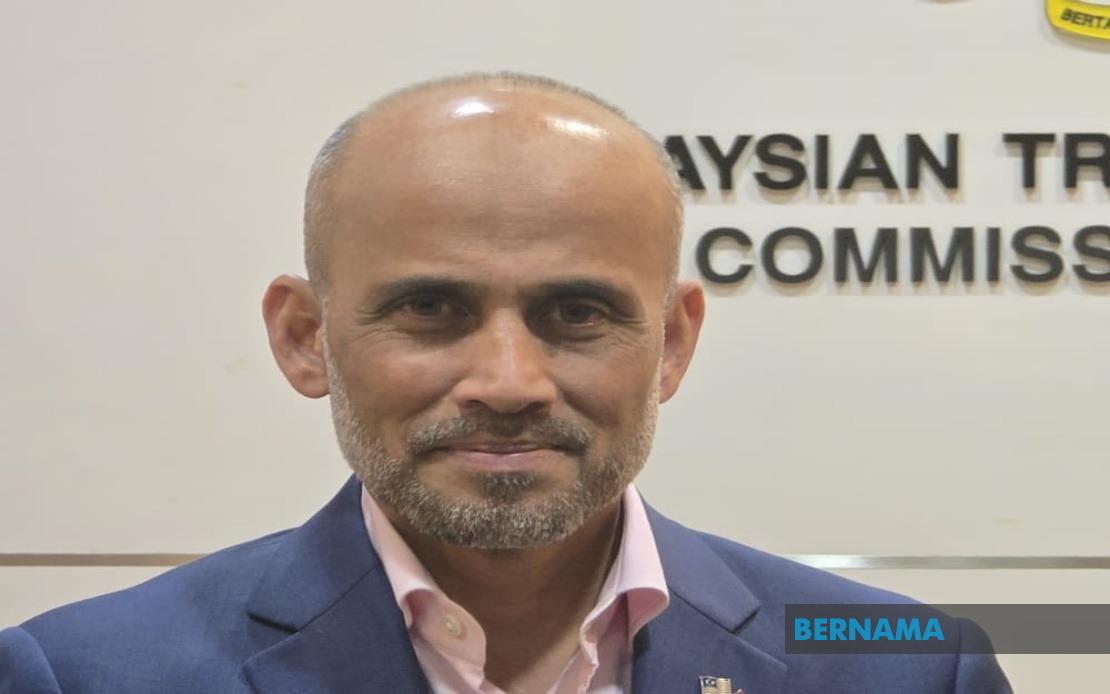
The partnership between Malaysia and Singapore has deepened significantly over recent years, anchored by sustained cooperation through multiple crises, according to Datuk Dr Azfar Mohamad Mustafar, Malaysia's High Commissioner to Singapore who is preparing to hand over his post this week. In his final weeks before transitioning to the United Kingdom as High Commissioner effective July 1, Azfar reflected on a tenure marked by diplomatic resilience, acknowledging that the two neighbours have strengthened their relationship precisely because they approached shared challenges with pragmatism and mutual commitment.
Azfar's five-year tenure, which began in June 2019, coincided with some of the most disruptive periods in recent regional history. The onset of COVID-19 in early 2020 presented an immediate test of bilateral coordination, as border restrictions and movement controls created unprecedented complications for the tens of thousands of Malaysians who depend on daily cross-border commutes for employment and commerce. The high commissioner emphasised that managing the consular demands during lockdowns required swift, coordinated action between authorities on both sides—a challenge that exposed both the fragility and the fundamental strength of the relationship. When borders closed and normal life ground to a halt, the institutional capacity of both governments to maintain channels of communication became essential to preventing minor logistical problems from escalating into diplomatic friction.
Beyond pandemic management, the broader geopolitical landscape has shifted markedly during Azfar's tenure, introducing fresh uncertainties that have tested regional stability. Global supply chain disruptions, rising great-power competition, and economic volatility have required Malaysia and Singapore to coordinate more closely on trade, investment, and strategic positioning. Azfar's assessment that the two countries have navigated these pressures successfully suggests that the relationship has moved beyond the historical tensions and border disputes that once defined it, at least at the level of high-level diplomatic engagement and institutional cooperation.
On the economic dimension, Azfar noted that bilateral trade and investment have rebounded strongly from pandemic lows and now exceed pre-COVID levels. Singapore remains one of Malaysia's most significant trading partners, a position underpinned by the island-state's role as a regional financial and logistics hub. More substantially, Singapore continues to funnel considerable foreign direct investment into Malaysia, positioning itself as a crucial source of capital for Malaysian development projects. This investment relationship has acquired new strategic importance with the launch of the Johor-Singapore Special Economic Zone, a cross-border initiative designed to harness complementarities between Johor's land, labour, and resources and Singapore's capital, technology, and expertise.
The Special Economic Zone represents more than a commercial arrangement; it embodies a shift toward integrated regional development that transcends traditional notions of bilateral relations. By creating a shared economic space that straddles the border, Malaysia and Singapore are effectively betting that economic interdependence and shared prosperity will reinforce diplomatic and political ties. Azfar's confidence that Singapore's investment in Malaysian projects will expand, particularly in Johor, reflects an understanding that the relationship has moved into a new phase where mutual economic benefit drives engagement more visibly than historical grievances or sovereignty concerns.
Looking toward the region's future, Azfar underscored Malaysia's support for Singapore's assumption of the ASEAN chairmanship in 2025. This endorsement carries particular weight given Malaysia's own significance within ASEAN and its long experience with regional diplomacy. Singapore's chairmanship presents an opportunity to advance economic integration among member states—a stated priority for the republic and, according to Azfar, an area where Malaysia intends to provide active support. This commitment reflects recognition that ASEAN's coherence and effectiveness serve all members' interests, including Malaysia's, and that Singapore's leadership in advancing integration mechanisms benefits the broader region.
Among the specific projects that will benefit from Malaysia-Singapore cooperation is the ASEAN Power Grid initiative, a transnational energy infrastructure project designed to improve electricity connectivity and facilitate trade in power across Southeast Asia. The initiative addresses mounting energy security concerns across the region while promoting integration and reducing costs for end consumers. That Malaysia and Singapore are working in tandem on this initiative demonstrates how bilateral cooperation increasingly serves regional integration goals, with the two countries functioning as catalysts and anchors for larger ASEAN initiatives rather than as rivals competing for scarce resources.
Azfar's career trajectory illustrates the stability and professionalism that has characterised Malaysia's diplomatic service. Having joined the Foreign Ministry in 2001 after serving in administrative roles, he advanced through postings including a significant tenure as Ambassador to France from 2018 to 2021 before assuming the Singapore position. His appointment to London marks his elevation to one of Malaysia's most prestigious diplomatic postings, reflecting the Foreign Ministry's assessment of his competence and experience. The continuity provided by such career progression—where experienced diplomats move between major postings—underpins the kind of consistent, institutionalised engagement that has allowed Malaysia-Singapore relations to mature beyond the volatility that characterised earlier decades.
Reflecting on his own contribution to strengthening ties, Azfar adopted an appropriately modest tone, remarking that he hoped to have played his small part during his tenure. This modesty should not obscure the reality that the High Commissioner's role is fundamentally important to bilateral relations. The High Commissioner serves as the chief executive of the bilateral relationship, responsible for managing day-to-day issues, representing Malaysia's interests, and maintaining the communication channels through which larger diplomatic objectives are pursued. That Azfar is leaving the position with confidence that Malaysia-Singapore relations have strengthened suggests that his tenure succeeded in this essential stewardship function.
The transition of high commissioners does not typically mark dramatic shifts in bilateral policy, but rather represents continuity within the institutional relationships that bind nations together. Azfar's successor will inherit a relationship that has weathered significant external shocks and emerged stronger, suggesting that the foundations—shared interests in prosperity, regional stability, and economic integration—remain solid despite the uncertainties that continue to surround the region. His departure to London, one of the world's major diplomatic postings, reflects Malaysia's confidence in its capacity to manage its most important bilateral relationships while simultaneously maintaining its global diplomatic presence.

