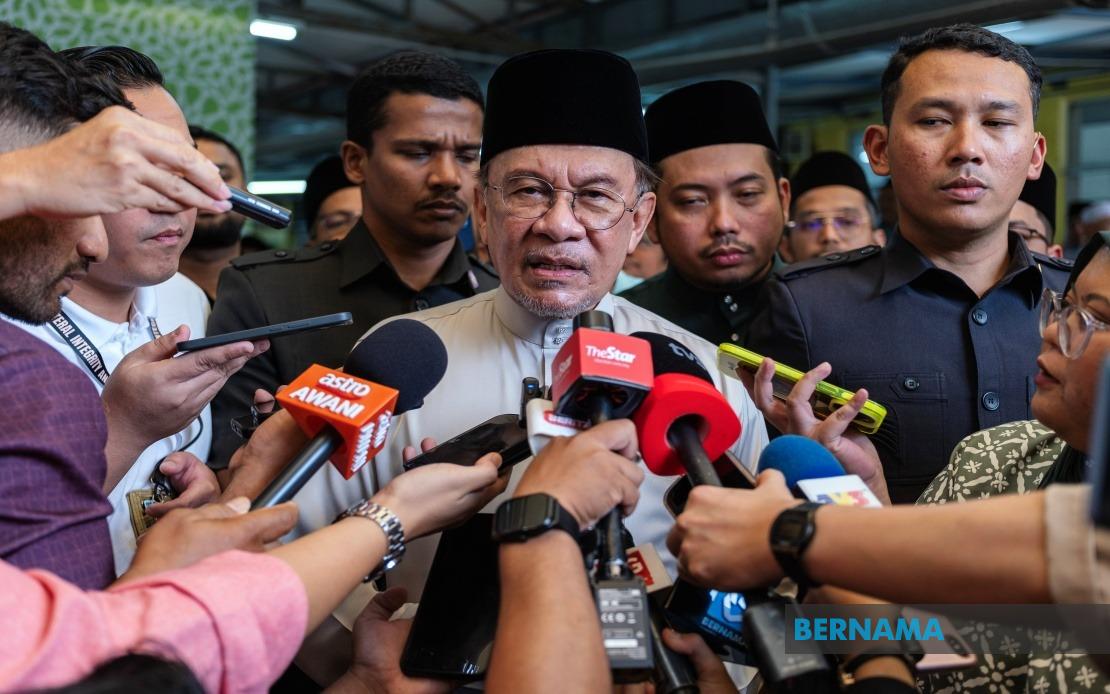
Malaysia will not alter its legal stance against fugitive businessman Low Taek Jho, commonly known as Jho Low, despite international reports suggesting he may be among individuals under consideration for a presidential pardon by United States President Donald Trump, Prime Minister Datuk Seri Anwar Ibrahim declared today. Speaking to journalists following Friday prayers at Masjid As-Sodiqin in Taman Kobena, Kuala Lumpur, Anwar emphasised that Malaysia's position on this matter remains unwavering regardless of developments beyond the nation's borders.
The Prime Minister's comments arrive amid widespread media coverage indicating that Jho Low could be among approximately 250 individuals being evaluated for potential pardons by Trump, with an announcement expected to coincide with the United States' Fourth of July celebrations marking the country's 250th Independence Day. This potential executive action has added fresh complexity to an already contentious international case involving one of Malaysia's most scrutinised fugitives.
Anwar articulated Malaysia's foundational position with particular clarity, stating that while the US possesses absolute authority over its own domestic decisions, Malaysia will not be swayed by such determinations. "Malaysia's position is clear. We follow the rule of law. Whatever the US decides, that's their internal matter. We will not be influenced, disturbed or affected by any US decision," he stated. This declaration underscores the government's determination to pursue accountability through established legal channels, regardless of pressures or developments in foreign jurisdictions.
The Jho Low case remains one of the most significant financial scandals of recent years, centring on alleged massive fraud and misappropriation of funds from state investment vehicle 1Malaysia Development Bhd (1MDB). The businessman fled Malaysia following the collapse of the former government and has remained at large, evading legal proceedings despite multiple court cases filed against him domestically. Malaysia has maintained active pursuit of his extradition and legal accountability through international channels, viewing this as a matter of national importance and institutional integrity.
The potential US pardon scenario represents a diplomatic test of Malaysia's commitment to its rule of law principles. Throughout his administration, Anwar has consistently emphasised that Malaysia operates as a nation governed by law rather than political patronage, a message particularly resonant given the 1MDB affair's role in shaping contemporary Malaysian politics and public discourse. Any perceived accommodation or passive acceptance of external interventions in Malaysia's legal processes could undermine these foundational statements.
Beyond the Jho Low matter, Anwar also addressed a separate development with bilateral implications. The Prime Minister acknowledged receipt of information regarding a proposed one million ringgit contribution from the United States designated for the restoration of Tugu Negara, Malaysia's National Monument, in connection with celebrations surrounding next year's National Day. He indicated that this matter would receive formal consideration during the following week's Cabinet meeting, suggesting Malaysia's openness to cooperative cultural and heritage initiatives with the United States despite potential disagreements on other fronts.
This dual approach—maintaining firmness on legal and accountability matters while remaining receptive to cooperation on cultural initiatives—illustrates the nuanced diplomacy often required in managing significant bilateral relationships. The US remains a crucial strategic partner for Malaysia across multiple domains, yet this partnership does not preclude Malaysia from pursuing its own legal and governance objectives independently. Anwar's statements reflect an attempt to balance these competing imperatives without appearing either hostile toward Washington or compromising Malaysian sovereignty.
The timing of these remarks carries additional significance given ongoing international scrutiny of Malaysia's governance transformation following the regime change several years ago. The government has worked to rebuild institutional credibility and demonstrate commitment to accountability mechanisms that were perceived as compromised under previous leadership. The Jho Low case symbolises this broader reform agenda, and any suggestion that Malaysia might relent in pursuing accountability would signal a reversal of these efforts.
Regional observers have noted that Southeast Asian countries face persistent challenges in enforcing legal decisions and pursuing fugitives who benefit from international mobility and resources. Malaysia's stated determination to pursue the Jho Low case regardless of external developments sends a message to other nations in the region about the government's prioritisation of the rule of law. Such consistency is particularly important for maintaining public confidence in judicial institutions during periods of broader institutional reform.
The situation also highlights the complexities of international criminal justice and extradition processes in an era of global mobility. Individuals with substantial financial resources can navigate multiple jurisdictions and potentially exploit diplomatic relationships or executive prerogatives in ways unavailable to ordinary citizens. Malaysia's insistence on maintaining its legal position reflects a broader commitment to ensuring that accountability standards apply consistently regardless of an individual's wealth, connections, or ability to secure sympathetic political consideration elsewhere.
Moving forward, Malaysia will likely continue monitoring any developments regarding potential US actions while maintaining public statements affirming its commitment to pursuing Jho Low through available legal channels. The government's willingness to articulate this position clearly suggests confidence in Malaysia's legal framework and determination to see justice served according to the nation's own institutional processes. This approach balances respect for the US as a sovereign entity with Malaysia's equally important obligation to its own citizens and legal system, establishing clear boundaries around what Malaysia will and will not accept from external actors.

