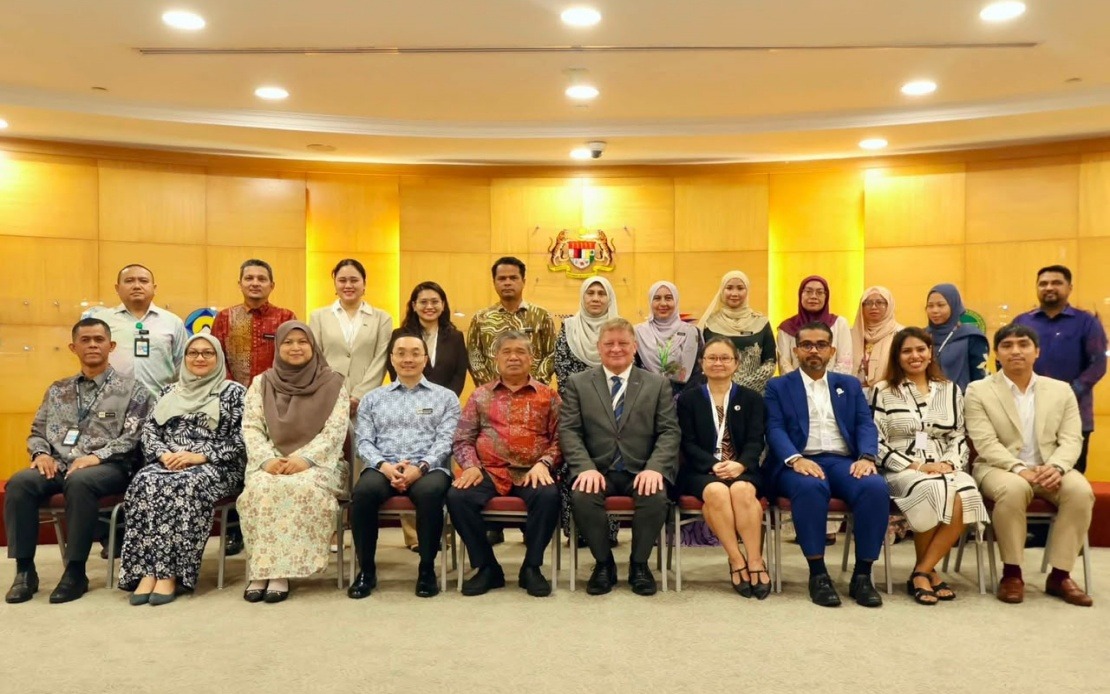
Malaysia is intensifying its agricultural partnership with the European Union through high-level diplomatic engagement aimed at modernising the country's food production systems. Datuk Seri Mohamad Sabu, the Minister of Agriculture and Food Security, hosted Chris Humphrey, executive director of the EU-ASEAN Business Council (EU-ABC), and his delegation at Wisma Tani in Putrajaya, signalling the government's commitment to leveraging European expertise and investment in the agri-food sector.
The meeting between the minister and the EU-ABC delegation centred on four strategic priorities that reflect Malaysia's broader vision for agricultural transformation. Implementation of the National Agro-Food Policy 2.0 (DAN 2.0) took centre stage as a framework for ensuring long-term food security across the nation. Alongside this, both parties explored how artificial intelligence and cutting-edge agricultural technologies could be deployed to increase productivity, reduce waste, and enhance decision-making for farmers across the country. The discussion signals Malaysia's recognition that technological advancement is no longer optional in competing globally for food production efficiency.
Beyond technology, the conversation addressed two critical operational areas within Malaysia's livestock and farming sectors. Strengthening the domestic dairy supply chain emerged as a key concern, particularly as Malaysia seeks to reduce reliance on imported dairy products and build a more self-sufficient local industry. Equally important were discussions on elevating animal health standards and biosecurity protocols—matters that have grown increasingly urgent in a post-pandemic world where disease transmission and food safety represent significant economic and public health risks. These measures are essential for protecting Malaysia's herds and meeting international export standards.
Minister Mohamad Sabu emphasised that the European Union represents far more than a simple trading partner for Malaysia. The EU is positioned as a critical source of technological knowledge, investment capital, and best practices that can fundamentally reshape how Malaysian agriculture operates. This framing underscores a strategic shift in how Putrajaya views the relationship—not as a transactional exchange of goods, but as a transformational partnership capable of addressing systemic challenges. The minister acknowledged that European expertise could be instrumental in helping Malaysia navigate the interconnected crises of food insecurity, climate change, and supply chain disruptions that increasingly threaten global agriculture.
The statement from the Ministry of Agriculture and Food Security highlighted the minister's specific appeal for EU companies to invest in capacity building among Malaysian farmers and animal breeders. This request recognises that technology transfer alone is insufficient; local farming communities require comprehensive training and support to adopt new methods, meet international quality standards, and implement Sanitary and Phytosanitary (SPS) measures that facilitate market access. By focusing on human capital development, Malaysia is attempting to ensure that technological gains translate into tangible improvements for agricultural workers and small-scale producers, not just large agribusinesses.
Trade facilitation and market access were other substantive topics addressed during the discussion. Mohamad Sabu highlighted the importance of EU support in helping Malaysian agricultural products access new markets, which carries significant implications for rural communities dependent on farming. As regional competition intensifies and global trade becomes increasingly complex, having a developed-market partner like the EU assist in navigating export requirements and standards compliance could open substantial revenue opportunities for Malaysian producers.
Both the minister and the EU-ABC delegation reaffirmed their commitment to advancing the Malaysia-European Union Free Trade Agreement (MEUFTA) negotiations, which have been progressing for several years. This trade deal represents a landmark opportunity to deepen economic ties between Malaysia and Europe, with agriculture standing as one of the most sensitive and strategically important sectors in any such agreement. The mutual support expressed by both parties suggests optimism about the negotiation trajectory, though significant technical and political hurdles typically remain in finalising comprehensive trade agreements involving agricultural products.
Crucially, the discussion underscored the need for enhanced strategic cooperation between EU-based companies and their Malaysian counterparts. Such collaboration, if executed properly, could facilitate technology transfer in agricultural production, supply chain management, food processing, and distribution networks. The ministry's emphasis on modernising the agro-food supply chain reflects a recognition that Malaysia's food security depends not only on producing more food, but on creating efficient, resilient systems capable of delivering that food reliably to consumers nationwide. In a country where urban populations continue to grow and living standards rise, securing stable food supplies at affordable prices remains a cornerstone of social stability and political legitimacy.
The minister seized the opportunity to promote Malaysia's agricultural sector on the international stage by inviting the EU-ABC delegation to attend the Agriculture, Horticulture and Agro-Tourism Exhibition (MAHA) 2026, scheduled for late August through early September at the Malaysia Agricultural Expo Park (MAEPS) in Serdang, Selangor. This exhibition, one of Southeast Asia's largest agricultural showcases, attracts industry players, investors, and government officials from across the region and internationally. By extending this invitation, Mohamad Sabu was essentially inviting European businesses and policymakers to observe Malaysia's agricultural capabilities firsthand and identify investment and partnership opportunities within the local sector.
The broader context for this engagement reflects Malaysia's positioning within evolving regional dynamics. As Southeast Asian nations compete to attract foreign investment and technology in agriculture, Malaysia is working to differentiate itself through institutional frameworks like DAN 2.0 and strategic partnerships with developed economies. The EU, facing its own agricultural challenges and sustainability imperatives, increasingly views Southeast Asia as a region of strategic importance—both as a market for European technology and expertise, and as a source of complementary agricultural products. For Malaysian policymakers, this convergence of interests creates a window for leveraging external partnerships to accelerate domestic agricultural modernisation while building resilience against future global disruptions.

