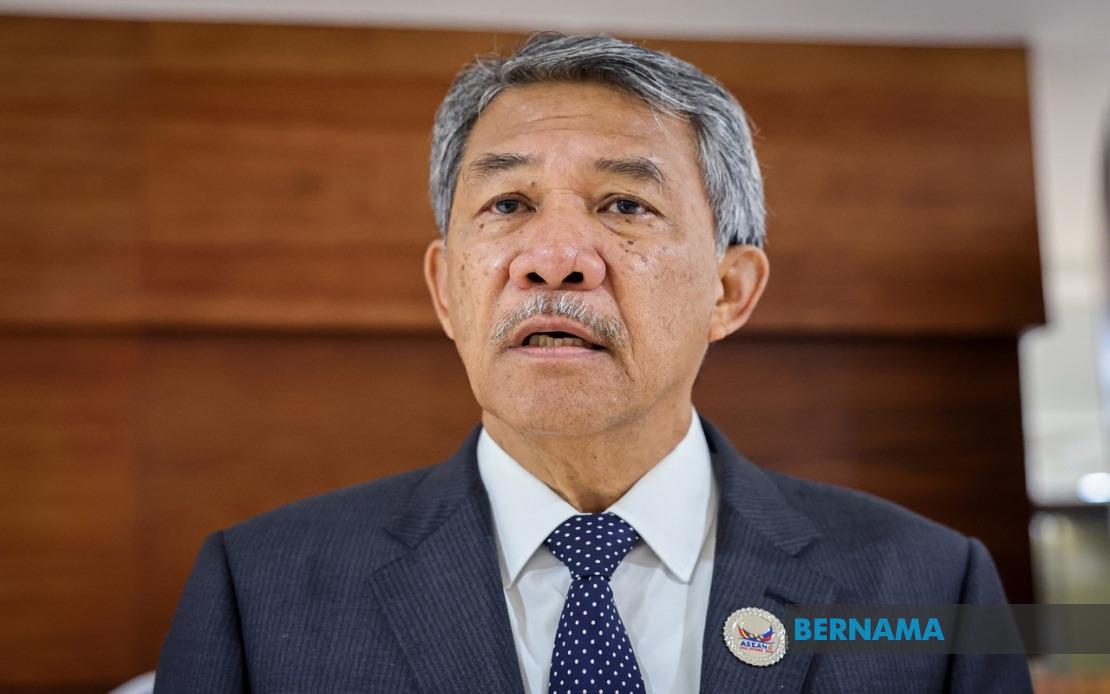
The ASEAN regional bloc has entrusted Malaysia with a significant diplomatic responsibility, appointing the country as the official coordinator for its relations with Turkey following Turkey's elevation to Dialogue Partner status. The decision was announced by Foreign Minister Datuk Seri Mohamad Hasan during the 59th ASEAN Foreign Ministers' Meeting and Post-Ministerial Conference held in Manila, underscoring Malaysia's continued influence within the regional grouping and its capacity to manage strategic partnerships on behalf of the bloc.
The elevation of Turkey to ASEAN Dialogue Partner status represents a meaningful expansion of the bloc's diplomatic footprint, particularly in strengthening ties with nations outside the Indo-Pacific region. This development carries particular weight given that ASEAN operates under a formal moratorium on accepting new members and dialogue partners, a restrictive policy designed to maintain the quality and coherence of the organisation's external relationships. The acceptance of Turkey thus reflects the stringent vetting process and the consensus required among all ten member states before any new relationship is formalised at this level.
Malaysia's designation as country coordinator stems in part from its role as ASEAN Chair in 2025, a position that grants the nation particular standing to shepherd important strategic initiatives. Mohamad explained that Malaysia had specifically proposed Turkey's admission as an ASEAN Dialogue Partner, demonstrating the proactive diplomatic engagement that characterises Malaysia's leadership within the bloc during its chairmanship year. This role builds on Malaysia's historical positioning as a bridge between the Islamic world and ASEAN, given both Malaysia and Turkey's shared interests in cross-regional Muslim cooperation and economic engagement.
The coordinator designation carries practical implications for bilateral and multilateral engagement. As coordinator, Malaysia will be responsible for facilitating dialogue mechanisms, coordinating positions among ASEAN members regarding Turkey-related initiatives, and serving as the primary point of contact for Turkish diplomatic overtures to the bloc. This responsibility positions Malaysia to shape the trajectory of ASEAN-Turkey relations during a period of intensifying global competition for influence in Southeast Asia and beyond.
Simultaneously, ASEAN approved the United Kingdom's admission as a new member of the ASEAN Regional Forum, expanding that dialogue mechanism's geographical reach. The ARF, which focuses on regional security and political matters, has traditionally included major powers and interested parties in Asia-Pacific affairs. The UK's inclusion reflects both London's renewed focus on Indo-Pacific engagement and ASEAN's willingness to deepen security cooperation with developed democracies during an era of geopolitical uncertainty.
During the plenary session chaired by Philippine Foreign Affairs Secretary Ma. Theresa P. Lazaro, discussions centred on ASEAN's internal cohesion and its capacity to maintain relevance amid shifting great power dynamics. The member states engaged substantively on the ASEAN Community Vision 2045, a long-term strategic blueprint that outlines the bloc's political-security, economic, and socio-cultural priorities through mid-century. ASEAN Secretary-General Dr Kao Kim Hourn presented updated progress on this vision, highlighting the ongoing efforts required to translate aspirational goals into concrete institutional advancement.
A central theme permeating the meetings was ASEAN's determination to preserve its institutional centrality in regional decision-making and diplomatic architecture. Mohamad emphasised that the bloc must guard against external pressures or attempts to diminish ASEAN's voice in shaping regional norms and responses to major geopolitical challenges. This concern reflects longstanding anxieties among member states that larger powers might seek to circumvent ASEAN mechanisms or impose solutions that disregard the bloc's interests and the principle of member state sovereignty.
The emphasis on safeguarding ASEAN centrality has acquired heightened urgency given the current geopolitical environment. Rising strategic competition between the United States and China, ongoing tensions in the South China Sea, and divergent economic interests among regional powers create pressures that could fragment ASEAN consensus or marginalise its role as a neutral forum for dialogue. By reinforcing commitment to Vision 2045 and expanding strategic partnerships with countries like Turkey and the UK, ASEAN attempts to position itself as an indispensable actor in regional and global affairs rather than a passive venue for external powers to compete.
For Malaysia specifically, the appointment as Turkey coordinator carries domestic political resonance. Turkey under President Recep Tayyip Erdoğan has cultivated increasingly active engagement in Southeast Asia, viewing the region as strategically important for Turkish economic and geopolitical interests. Malaysia, with its substantial Muslim population and history of bridging Eastern and Western perspectives, represents a natural ally for Turkey's regional aspirations. The coordinator role allows Malaysia to expand its diplomatic influence while serving as a conduit between ASEAN and an increasingly assertive Turkish foreign policy.
The decisions reached during this ministerial session also reflect broader trends in ASEAN's external relations strategy. Rather than adopting a purely defensive posture in response to great power competition, ASEAN is actively cultivating partnerships with mid-range powers and democracies that share interests in regional stability, rules-based order, and economic cooperation. Turkey's admission and the UK's inclusion in the ARF signal ASEAN's confidence in its convening power and its ability to attract diplomatic engagement from diverse partners.
Looking forward, Malaysia's coordination of ASEAN-Turkey relations will require careful balancing of diverse member state interests while deepening substantive cooperation in areas including trade, defence, cultural exchange, and multilateral security frameworks. The success of this relationship will partly depend on Malaysia's diplomatic skill in mediating between ASEAN's consensus-seeking culture and Turkey's sometimes assertive foreign policy approach. Additionally, the coordinator role underscores Malaysia's continued relevance as a trusted voice within ASEAN deliberations, reinforcing its position as one of the bloc's most influential members alongside Indonesia and Thailand.

