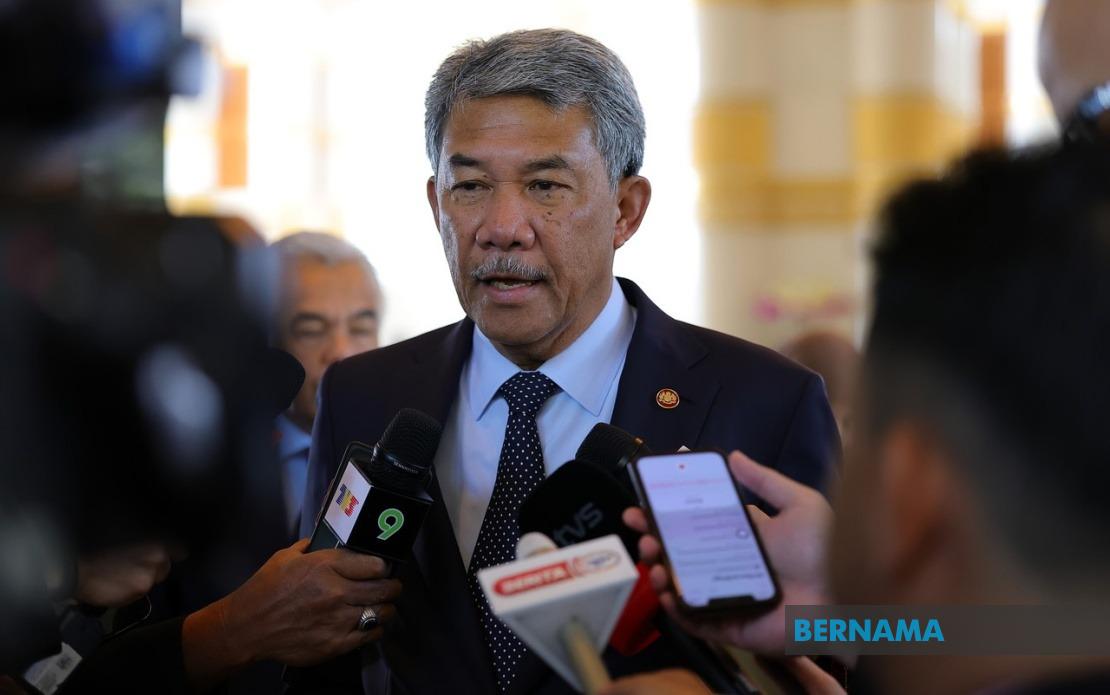
Malaysia is mobilising multilateral diplomatic channels to confront the transboundary haze crisis that has degraded air quality across swaths of the Southeast Asian region. Foreign Minister Datuk Seri Mohamad Hasan announced that his government views ASEAN as the most suitable institutional framework for addressing the pollution emergency, which has sparked health concerns and economic disruption across affected territories. The move reflects Kuala Lumpur's preference for engaging Indonesia—the source of much of the transboundary smoke—through established regional protocols rather than unilateral pressure or bilateral confrontation.
The escalating diplomatic offensive includes coordinated correspondence targeting multiple channels within the ASEAN apparatus. Malaysia's Ministry of Natural Resources and Environmental Sustainability (NRES) will formally notify the ASEAN Secretariat of the crisis and seek collective action. Simultaneously, NRES Minister Datuk Seri Arthur Joseph Kurup plans to address a letter directly to his Indonesian counterpart, establishing a parallel track for ministerial-level engagement. This two-pronged approach demonstrates Malaysia's intent to frame the haze as a regional problem requiring institutional solutions rather than isolated bilateral negotiations.
Modamad Hasan articulated during his working visit to Brunei that ASEAN constitutes the optimal mechanism for resolving transnational environmental challenges among member states. His assessment reflects a deliberate choice to vest authority in the regional secretariat rather than pursue direct government-to-government dispute resolution, a strategy that observers interpret as an attempt to depoliticise what has become a recurring flashpoint between Malaysia and Indonesia. By internationalising the matter, Kuala Lumpur appears to be broadening the circle of stakeholders and potential pressure on Jakarta to implement stricter controls over land-clearing practices and agricultural burning that generate the seasonal haze.
The diplomatic initiative gains urgency against the backdrop of deteriorating air quality in Malaysian territories. Sarawak has emerged as the epicentre of the current crisis, with the Serian District Police Headquarters registering an Air Pollutant Index reading of 217 as of early afternoon on August 21—a classification denoting hazardous health conditions and advising vulnerable populations to remain indoors. This measurement positions Sarawak well beyond thresholds that typically trigger emergency public health alerts and restrictions on outdoor activities.
Neighbouring areas across Sarawak report comparably alarming pollution levels. Sri Aman recorded an API of 186, Sarikei measured 173, whilst Kuching registered 171. Samarahan, Sibu, Samalaju, Bintulu, Mukah, and Kapit collectively report API figures clustered in the range of 108 to 156, all exceeding recommended safety standards for prolonged human exposure. The geographic spread of elevated readings indicates that the haze penetration extends beyond coastal regions into interior districts, amplifying the population at risk and raising the political stakes for federal and state governments tasked with protecting public welfare.
The timing of Mohamad Hasan's announcement during a three-day working visit to Brunei demonstrates how the haze crisis has intersected with Malaysia's highest-level bilateral engagements. The visit coincides with the 27th Malaysia-Brunei Exchange of Letters meeting and the 27th Annual Leaders' Consultation scheduled for subsequent days, forums where air quality degradation features prominently on the agenda. Malaysian High Commissioner to Brunei Datuk Mohd Aini Atan previously indicated that Prime Minister Datuk Seri Anwar Ibrahim and Sultan Hassanal Bolkiah plan to address the pollution emergency during their bilateral consultation, signalling that the matter has acquired sufficient gravity to command heads-of-state attention.
Brunei's inclusion in the diplomatic loop underscores that the haze transcends a bilateral Malaysia-Indonesia concern and has become a subregional challenge affecting multiple ASEAN members. Brunei's geographic proximity to affected Malaysian territories and its shared environmental interests give the sultanate standing in collective ASEAN deliberations on the matter. The involvement of smaller member states in framing the crisis as a regional problem rather than an isolated bilateral dispute potentially strengthens Kuala Lumpur's negotiating position by expanding the coalition of nations demanding action.
Historically, transboundary haze has proven resistant to permanent resolution despite repeated ASEAN statements and bilateral agreements. Indonesia ratified the ASEAN Agreement on Transboundary Haze Pollution in 2003, establishing a legal framework for cooperation, yet recurring seasonal smog episodes suggest that institutional mechanisms lack sufficient enforcement capacity or that economic incentives for agricultural expansion and land clearance override compliance pressures. Malaysia's renewed emphasis on ASEAN channels may reflect frustration with Jakarta's limited progress in curtailing the root causes of haze generation, driving Kuala Lumpur to seek solutions through formalised regional procedures that amplify external accountability.
The diplomatic strategy also carries implications for Malaysia's broader positioning within ASEAN during a period when regional cohesion faces pressure from competing geopolitical interests and economic competition. By championing the haze as a multilateral environmental issue rather than a grievance against Indonesia, Malaysia potentially avoids alienating Jakarta whilst simultaneously building political capital among other member states that benefit from collective action on climate and environmental matters. This approach aligns with Malaysia's investment in strengthening ASEAN institutional capacity and relevance—objectives articulated by recent administrations seeking to elevate regional mechanisms as counterweights to great power competition in Southeast Asia.
The practical effectiveness of ASEAN intervention remains uncertain. The secretariat possesses limited enforcement authority over sovereign member states and relies on consensus-based decision-making that can dilute the urgency of environmental crises. Indonesia's economic interests in agricultural expansion and palm oil production create incentives that may resist external pressure. Nevertheless, Malaysia's invocation of ASEAN protocols signals that Kuala Lumpur views diplomatic escalation through institutional channels as preferable to public recriminations or unilateral environmental sanctions—a calculation that reflects both the strategic value of Indonesia's economic cooperation and the diplomatic costs of bilateral environmental confrontation.
The coming weeks will illuminate whether ASEAN intervention produces tangible improvements in air quality or merely generates procedural engagement without substantive policy change. Malaysian officials will scrutinise responses from both the ASEAN Secretariat and Indonesia's environmental ministry for evidence of accelerated action on haze mitigation. Simultaneously, public attention will focus on air quality readings across Malaysian territories, with further deterioration potentially forcing Kuala Lumpur to supplement diplomatic channels with stronger regulatory measures or public pressure campaigns. The outcome of this multilateral gambit will likely shape Malaysia's approach to transboundary environmental challenges and influence perceptions of ASEAN's capacity to address collective regional problems.

