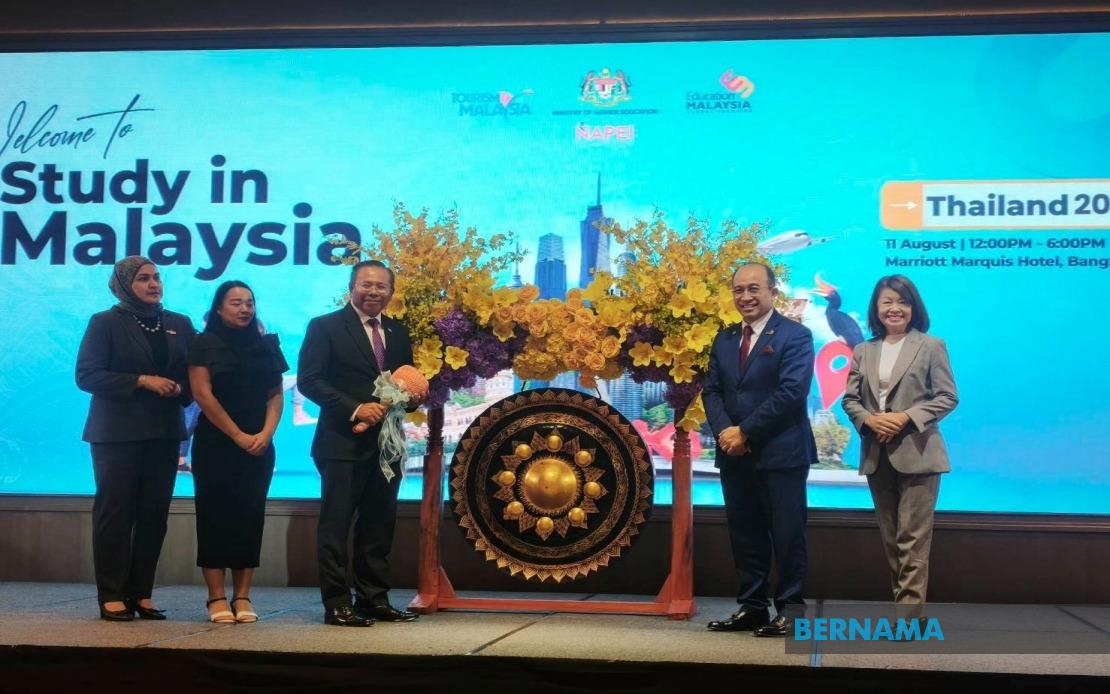
Malaysia is intensifying efforts to draw a significantly larger share of Thai students into its higher education sector, recognising the nation's positioning as an accessible and affordable alternative for tertiary study in Southeast Asia. The coordinated campaign reflects a strategic acknowledgment that neighbouring Thailand represents a substantial untapped market, with Malaysian institutions competing to attract students who might otherwise consider universities in Bangkok or further afield.
Education Malaysia Global Services, the government agency tasked with internationalising Malaysia's education sector, has partnered with Thailand's professional education consultants to amplify the recruitment message. The Thai International Education Consultants Association, representing 78 active education agents across Thailand, provides EMGS with direct channels to reach prospective students and their families in key population centres. This network-based approach signals a departure from traditional blanket advertising towards more localised, agent-driven engagement that capitalises on trusted relationships within Thai educational communities.
Current enrolment figures suggest the initiative addresses a genuine opportunity. As of 2025, approximately 634 Thai nationals were studying at Malaysian institutions, yet this represents a relatively modest penetration given Thailand's population and proximity to Malaysia. The year-on-year growth from 300 students in 2024 to 360 in 2025 demonstrates momentum, though a 20 per cent or greater expansion would be needed to substantially shift the competitive landscape. Such growth would require not merely incremental marketing improvements but systematic changes in how Malaysian universities profile themselves within Thai educational discourse.
The appeal of Malaysian higher education to Thai students rests on several overlapping advantages that regional competitors cannot easily replicate. Geographic proximity minimises travel disruption and reduces costs associated with long-haul relocation, a significant consideration for families evaluating educational investments. Tuition fees across Malaysian universities, particularly private institutions, remain competitive against international benchmarks, positioning Malaysia as offering genuine value without sacrificing educational quality. This affordability-quality intersection has long proven attractive to Thai middle-class families seeking internationally recognised credentials without the expense of study in Australia, the United Kingdom or North America.
The introduction of Malaysia's Graduate Pass scheme represents perhaps the most strategically significant incentive for Thai graduates. The one-year post-study work visa permits international graduates, including Thai nationals, to remain in Malaysia and secure employment in designated sectors. This pathway addresses a critical pain point for Thai families: the concern that educational investment abroad will result in permanent brain drain rather than skill acquisition translatable to career advancement either in Thailand or across Southeast Asia. By guaranteeing a structured transition period between study completion and career entry, the Graduate Pass transforms Malaysian education from a purely academic investment into a professional development opportunity with immediate tangible benefits.
The Study in Malaysia Education Fair, jointly organised by EMGS, Tourism Malaysia and the National Association of Private Educational Institutions, extended across multiple Thai cities during August. The multi-venue approach—launching in Chiang Mai on 9 August, moving to Bangkok on 11 August and concluding in Hat Yai on 13 August—reflects recognition that Thai demand for overseas education is geographically dispersed rather than concentrated in the capital. Northern and southern Thailand possess their own educational demographics and student aspirations, requiring tailored messaging and institutional representation beyond what centralised Bangkok operations typically provide.
Malaysia's Ambassador to Thailand, Datuk Wan Zaidi Wan Abdullah, has proposed enhancing the recruitment strategy through dedicated scholarship mechanisms administered by Malaysian public and private universities. Such programmes would specifically target Thai applicants, reducing financial barriers that currently discourage students from middle and lower-income backgrounds. This initiative acknowledges that while affordability represents a competitive advantage, genuine scholarships would transform Malaysian education from accessible to genuinely aspirational for broader Thai demographic cohorts. The diplomatic emphasis on scholarship development suggests that strengthening educational ties has acquired diplomatic importance beyond commercial higher education considerations.
The collaborative framework now being formalised between EMGS and the Royal Thai Embassy in Malaysia indicates a shift towards institutionalising student exchange mechanisms rather than relying on ad-hoc recruitment campaigns. Enhanced bilateral engagement at official levels typically precedes sustained growth in student mobility, creating supportive administrative frameworks and reducing bureaucratic friction. Such cooperation may eventually encompass articulation agreements, credit transfer arrangements and dual-degree pathways that further embed Malaysian institutions within Thai educational trajectories.
For Malaysian higher education providers, Thai recruitment represents more than revenue diversification. Thai students bring demographic stability—Thailand's political and economic fundamentals remain relatively resilient—and cultural-linguistic proximity that facilitates integration into Malaysian campus communities. Unlike recruitment from more distant markets requiring intensive English language preparation and cultural adjustment, Thai students often arrive with functional English proficiency and existing familiarity with Malaysian society through tourism, trade and family connections. This reduces institutional costs associated with student support services whilst potentially enhancing peer learning outcomes.
The broader regional implications merit consideration. Malaysia's coordinated push into Thai recruitment occurs within intensifying competition for international students across Southeast Asia. Singapore, increasingly regarded as a premium destination, attracts substantial Thai enrolment despite higher costs. Vietnam offers lower tuition alternatives, whilst Thailand itself has upgraded domestic offerings through international branch campuses and enhanced university rankings. Malaysia's strategy essentially seeks to capture the middle ground—positioning itself as superior to Thailand's domestic options whilst remaining more affordable and accessible than Singapore or traditional Western alternatives.
Successfully achieving the target 20 per cent enrolment increase within the next recruitment cycle would require sustained commitment beyond the current education fair initiative. EMGS would need to maintain active engagement with Thai education agents, ensuring consistent information flow and addressing applicant concerns throughout the admission process. Malaysian universities must simultaneously differentiate themselves through visible improvements in English-medium instruction quality, campus internationalisation and employer recognition within Thai professional communities. Without such institutional reinforcement, even improved marketing awareness may not translate into actual enrolment growth.
The initiative also reflects Malaysia's broader positioning within regional higher education hierarchies. As Southeast Asia experiences unprecedented demand for tertiary education—driven by rising incomes, aspirational middle classes and the professionalisation of regional job markets—competition for market share intensifies. Malaysia's geographical and economic positioning relative to Thailand creates a natural advantage that more strategic recruitment can amplify. Whether the 20 per cent target proves achievable depends ultimately on sustained execution and genuine institutional improvements in international student experience, not merely enhanced promotional campaigns.

