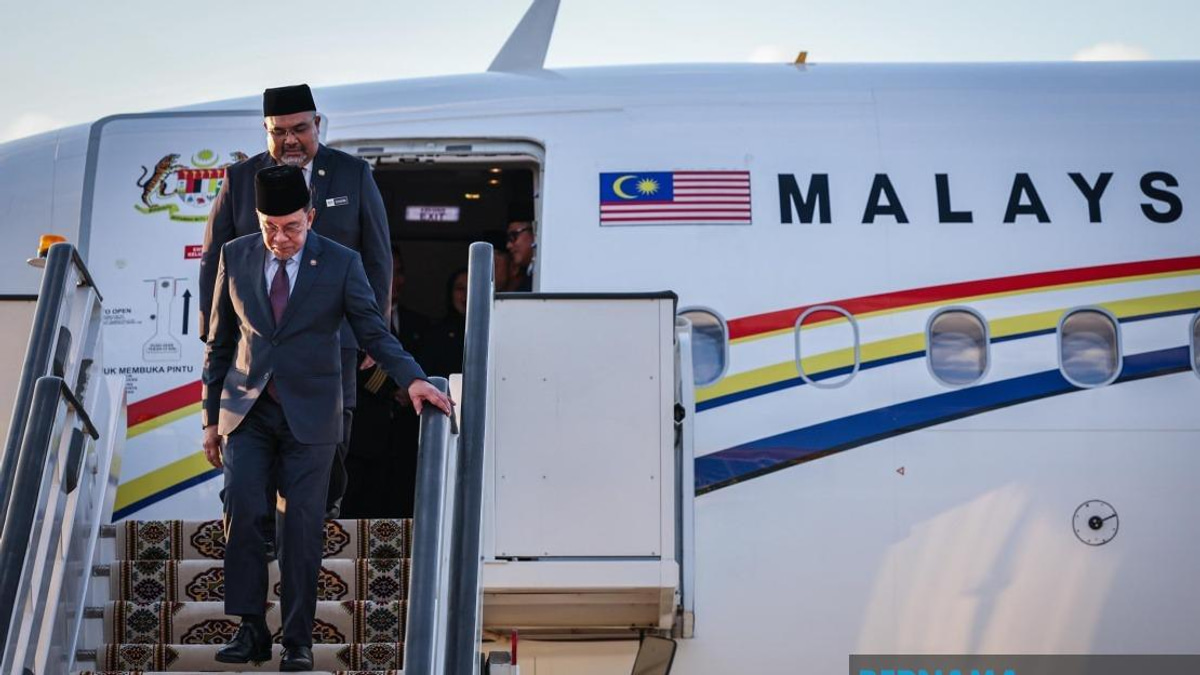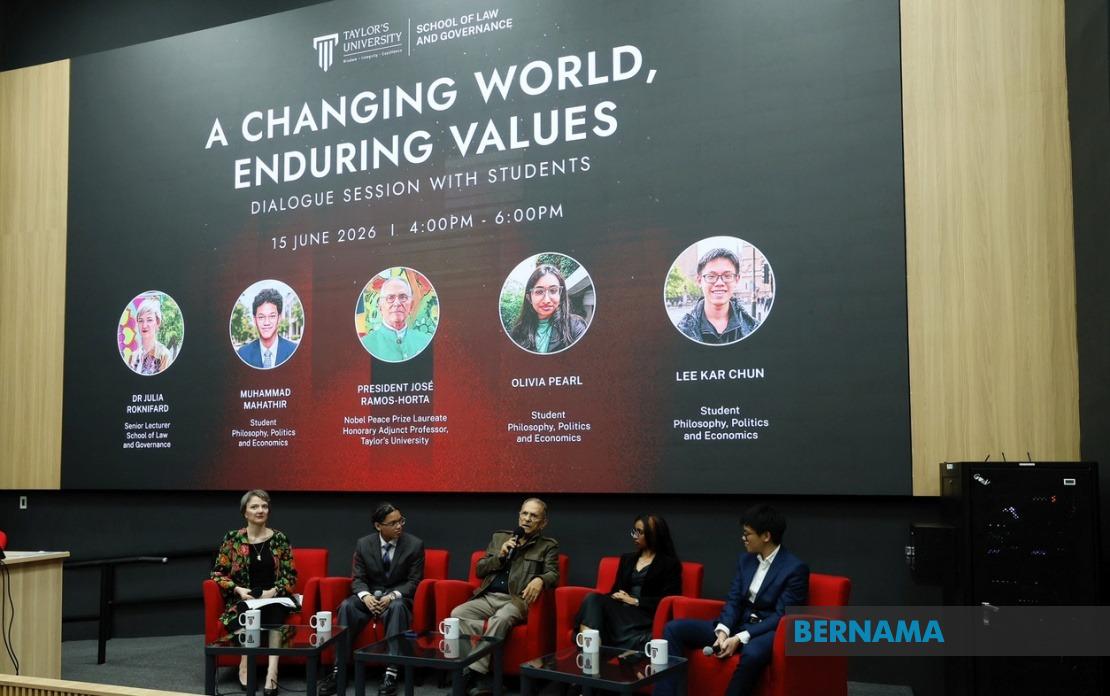
Timor-Leste President Jose Ramos-Horta has described bilateral relations with Malaysia as exceptionally strong, commending the country's global standing in security, freedom and democratic governance during a five-day special visit that concludes on Wednesday. Speaking at Taylor's University in Petaling Jaya on Monday, the Nobel laureate and former journalist highlighted Malaysia's consistent backing of his nation dating back decades, particularly through the critical peacekeeping deployment in 1999 that preceded Timor-Leste's independence in 2002.
Ramos-Horta's remarks underscore the deepening partnership between two ASEAN neighbours with increasingly convergent interests. His characterisation of ties as exceptionally good reflects not merely ceremonial diplomatic courtesy but recognition of substantive cooperation across multiple domains. The assessment carries weight given his prominence as a respected global statesman and his intimate familiarity with regional affairs spanning decades of leadership in one of Southeast Asia's youngest democracies.
The Timorese president particularly acknowledged Prime Minister Datuk Seri Anwar Ibrahim's contribution to strengthening Malaysia's international standing. Ramos-Horta observed that Malaysia's economic growth and enhanced regional influence over recent years owe substantially to Anwar's leadership and strategic vision. This recognition is significant as it reflects Timor-Leste's appreciation for Malaysia's sustained economic and political development, which enables Kuala Lumpur to play a more constructive role in regional affairs and bilateral partnerships.
Beyond political pleasantries, Ramos-Horta's visit carries tangible implications for Malaysian journalism and civil society. During remarks honouring the National Journalists' Day celebrations scheduled for Penang this Saturday, he underscored the indispensable role of a well-informed public in maintaining social cohesion, promoting national unity, and enabling societies to navigate contemporary challenges effectively. His message resonates particularly in the Malaysian context, where press freedom and journalistic independence remain subjects of ongoing discussion and evolution.
A cornerstone of Ramos-Horta's agenda involves securing continued Malaysian support as Timor-Leste prepares to chair ASEAN in 2029. The Timorese leader expressed confidence that his nation will complete necessary infrastructure preparations for hosting the regional bloc's leadership and institutional structures, while explicitly acknowledging Malaysia's crucial role during its 2024 ASEAN chairmanship in facilitating Timor-Leste's accession. This gratitude carries practical significance, as hosting the regional organisation represents both prestige and considerable logistical and financial demands for a developing nation.
Timor-Leste's successful integration into ASEAN represents a watershed moment for the region. The nation became the bloc's 11th member on October 26, 2025, marking the first expansion in 26 years and fundamentally altering ASEAN's geographical reach and demographic composition. Malaysia's instrumental support during this process—advocated by Kuala Lumpur during its chairmanship—demonstrated commitment to inclusive regionalism and recognition of Timor-Leste's legitimate claim to membership within Southeast Asia's premier political and economic forum.
The enthusiasm Ramos-Horta displayed regarding the 2029 hosting reflects broader Timorese aspirations for international recognition and regional standing. For a nation that endured centuries of colonial rule and violence before achieving independence just over two decades ago, the prospect of chairing ASEAN symbolises remarkable progress and integration into regional institutions. Malaysia's partnership in this endeavour—through infrastructure cooperation, technical assistance, and diplomatic encouragement—helps position Timor-Leste for successful stewardship of regional affairs.
From Malaysia's perspective, cultivating robust relations with Timor-Leste offers strategic advantages. The nation sits at a critical geographic juncture in Southeast Asia, controlling maritime passages and occupying an increasingly important position in regional geopolitics. As Timor-Leste develops economically and institutionally, enhanced bilateral cooperation creates opportunities for Malaysian business, investment, and cultural exchange while strengthening Malaysia's own standing within ASEAN and beyond.
Ramos-Horta's emphasis on Malaysia's four-decade trajectory of positive development carries implicit messaging about the viability and sustainability of democratic governance combined with economic growth. For Timorese policymakers navigating their own developmental challenges, Malaysia's experience offers a regional model worthy of study and adaptation. The comparative stability and prosperity Malaysia has achieved provide both inspiration and practical lessons for younger nations pursuing similar objectives.
The dialogue at Taylor's University, framed around "A Changing World, Enduring Values," reflects broader conversations occurring throughout Southeast Asia regarding how nations can adapt to rapid geopolitical, economic, and technological transformation while preserving foundational principles of social cohesion, democratic participation, and cultural identity. Ramos-Horta's participation in such academic forums during his Malaysia visit demonstrates commitment to people-to-people engagement beyond governmental channels.
Looking forward, the trajectory of Malaysia-Timor-Leste relations appears firmly positive. With Timor-Leste's ASEAN integration still relatively recent and the nation preparing for the presidency in 2029, opportunities abound for deeper bilateral cooperation. Malaysian expertise in diverse fields—from governance and economic management to infrastructure development—can meaningfully contribute to Timorese national objectives while simultaneously strengthening the broader ASEAN community that benefits from all member states' successful development and stability.