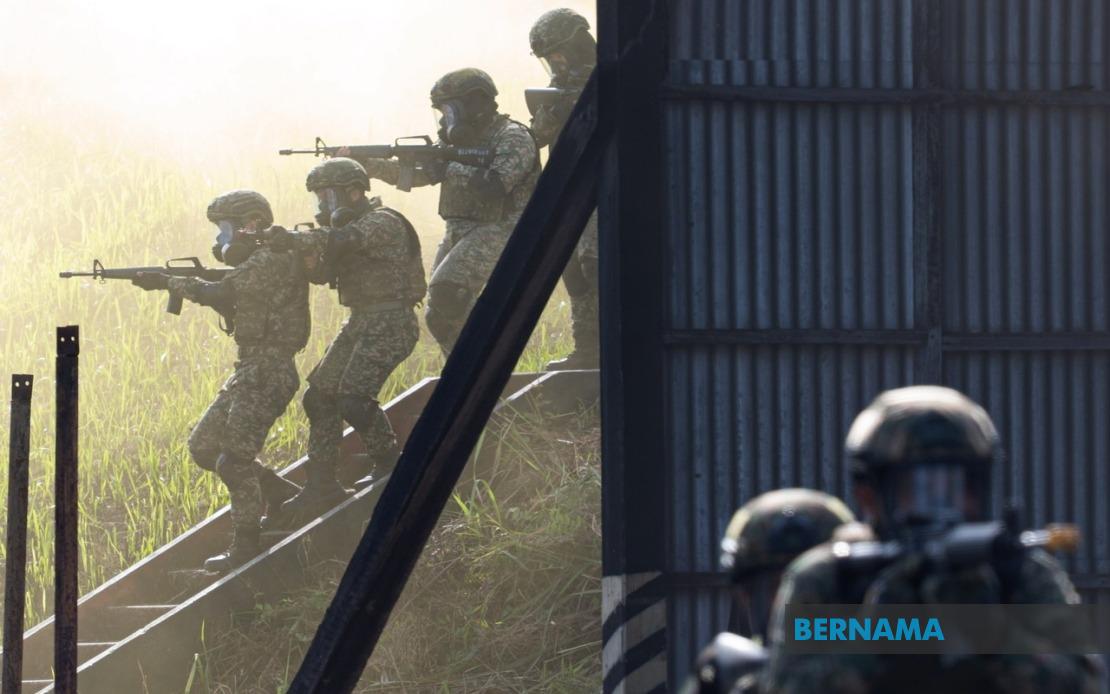
Prime Minister Datuk Seri Anwar Ibrahim has signalled the government's intention to increase defence spending in the 2027 budget, underscoring Kuala Lumpur's determination to keep its military capabilities robust and responsive to emerging threats. Speaking in Melaka on August 7, Anwar—who also holds the Finance portfolio—emphasised that strengthened defence readiness serves as a cornerstone of national stability, describing peace as Malaysia's most precious resource. The commitment reflects broader recognition within government circles that military preparedness cannot be built reactively; strategic investments must be made well before security challenges materialise on the horizon.
The proposed budget expansion will target multiple areas critical to military effectiveness and personnel retention. Investment priorities include upgrading accommodation facilities for service members, constructing modern medical infrastructure for armed forces hospitals, and ensuring consistent maintenance of essential utilities such as water systems across military installations. These welfare improvements are designed to address longstanding concerns about quality of life among enlisted personnel and officers, issues that directly influence recruitment and retention rates within the Malaysian Armed Forces (MAF). By linking defence modernisation to human resource development, the government aims to create a more professional and motivated military workforce.
Anwar's announcement gains significance when viewed against the government's defence spending trajectory over the past three years. Under the MADANI administration, the Defence Ministry has received cumulative budget increases exceeding 35 per cent—a substantial expansion by any measure. However, the Prime Minister acknowledged that these gains remain underappreciated in public discourse, particularly when procurement controversies or equipment maintenance failures dominate headlines. This disconnect between actual resource allocation and public perception reflects persistent challenges in communicating government achievements effectively and rebuilding public confidence in defence spending after earlier corruption scandals involving military procurement.
A central emphasis of Anwar's remarks concerned the need for systematic and transparent weapons acquisition processes. The Prime Minister explicitly called for eliminating profiteering and excessive commissions paid to intermediary agents, signalling determination to prevent the kind of procurement irregularities that have damaged public trust in defence investments. This stance aligns with broader government anti-corruption initiatives and suggests that future defence spending increases will be accompanied by stricter oversight mechanisms. The commitment to clean procurement is particularly important given Malaysia's regional position, where defence credibility depends not only on military capability but also on institutional integrity and transparent governance.
Economic conditions have improved sufficiently to support higher defence allocations, according to government assessment. Anwar pointed to positive macroeconomic indicators including currency strengthening, rising foreign investment inflows, and inflation management as factors that create fiscal space for expanded defence budgets without compromising other priority areas. The stronger ringgit particularly benefits military procurement since many weapons systems and defence technologies are priced in foreign currencies. This economic backdrop distinguishes the 2027 budget environment from previous years when fiscal constraints limited defence spending growth.
The timing of increased defence focus reflects Malaysia's evolving security environment in Southeast Asia. While the Prime Minister did not identify specific regional threats, the emphasis on continuous readiness acknowledges that security challenges in the Indo-Pacific region are not confined to traditional state-on-state conflicts. Maritime security, cyber threats, irregular migration, and transnational organised crime all demand modern military capabilities. Countries throughout the region have similarly increased defence spending in recent years, and Malaysia's budget increases reflect this broader regional trend toward military modernisation and capability expansion.
The announcement carries implications for Malaysia's defence industry and international defence partnerships. Higher procurement budgets may attract increased interest from foreign defence contractors seeking regional market share. Simultaneously, the government's emphasis on transparency and competitive bidding could create opportunities for Malaysian defence companies to participate in supply chains rather than foreign firms monopolising procurement. The balance between leveraging international defence partnerships and developing domestic defence capabilities will shape the outcome of expanded defence budgets.
Budget 2027 will be presented to Parliament on October 9, providing legislators opportunity to scrutinise defence spending proposals in detail. The parliamentary process offers a transparent forum for evaluating whether proposed allocations adequately address military modernisation priorities while maintaining fiscal responsibility. Opposition parties and backbench members will likely use this occasion to probe procurement plans, question acquisition timelines, and seek assurances regarding spending efficiency. This parliamentary scrutiny, while sometimes contentious, provides an important institutional check on defence spending.
Beyond major defence allocations, the government has committed immediate resources to military welfare and religious infrastructure. An allocation of RM147,000 has been granted to the Armed Forces Family Welfare Association, supporting initiatives that address personnel and family needs beyond standard military compensation. Additionally, RM1 million has been designated for maintaining mosques and prayer facilities at four military installations across Melaka—Terendak, Sungai Udang, Masjid Tanah, and Bukit Beruang. These targeted allocations demonstrate that defence spending encompasses not merely weapons systems but also institutional support structures that sustain military personnel and their families.
For Malaysian observers and regional analysts, the defence budget announcement signals that Kuala Lumpur views military modernisation as integral to long-term national development strategy. The government's willingness to commit larger resources to defence, coupled with stated intentions to improve procurement transparency, suggests a recalibration of defence priorities following earlier institutional challenges. Whether these increased allocations translate into genuine military capability enhancement will depend largely on execution quality, procurement integrity, and strategic focus in selecting which capabilities receive priority investment. The next several budget cycles will prove whether expanded spending genuinely strengthens Malaysian defence posture or merely reflects political commitments without commensurate operational impact.

