Malaysia's government is undertaking a substantive review of Section 97 of the Child Act 2001, seeking to introduce transparent detention periods that better reconcile the competing demands of victim protection, community safety and the rehabilitation needs of juveniles who committed serious crimes. The initiative emerged from a special parliamentary committee established after the nation abolished the mandatory death penalty and life imprisonment for minors in 2023, representing a shift toward modernising juvenile justice frameworks in line with international standards.
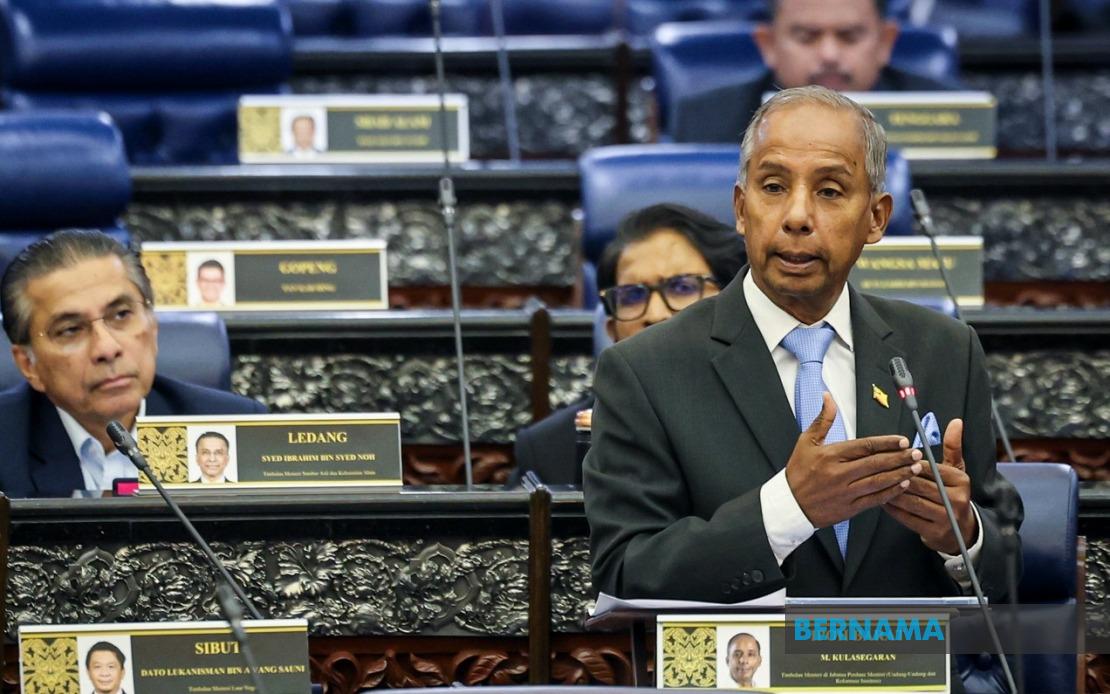
Deputy Minister M. Kulasegaran, addressing Parliament's Question Time, emphasised that the proposed amendments aim to deliver consistency across Malaysia's legal system while ensuring equitable justice outcomes. The committee has convened multiple times to deliberate on substantive reforms that would eliminate the ambiguity currently plaguing implementation of Section 97, which allows courts to order detention at the pleasure of the King or state ruler without specifying release timelines. This discretionary framework has created situations where individuals face indefinite incarceration beginning in adolescence, with no clarity regarding their eventual freedom.
The human toll of the existing system became starkly apparent through Kulasegaran's prison visits in Semporna and Sandakan. During these inspections, he encountered an inmate who has remained detained for nearly 25 years after entering the facility at age 17. The individual's prolonged isolation has created profound disconnection from society—he lacks familiarity with modern technology including smartphones and possesses virtually no understanding of contemporary civilian life. Such cases illustrate how the absence of defined detention parameters can inadvertently create permanent institutionalisation rather than rehabilitation or eventual reintegration.
Currently, 40 individuals remain held under Section 97's provisions throughout Malaysia's detention system. These detainees represent a cohort whose cases highlight the legal framework's inherent tensions. Section 97 was originally designed to spare minors from capital punishment by substituting custodial sentences subject to royal prerogative, yet the mechanism's indefiniteness has effectively transformed it into an alternative form of indefinite detention. The absence of clear sentence structures or review mechanisms means these individuals may serve sentences far exceeding those imposed on adult offenders convicted of comparable crimes.
Malaysia's obligations under the Convention on the Rights of the Child compound the urgency of this legislative review. The international treaty, which Malaysia has ratified, establishes principles emphasising childhood development, rehabilitation possibilities and proportionate detention practices. International human rights bodies have increasingly scrutinised detention systems that fail to establish clear sentence lengths or regular review processes for juvenile detainees, viewing such practices as inconsistent with child protection frameworks. The government's acknowledgment of these commitments signals recognition that indefinite detention, particularly when imposed during developmental years, raises substantive human rights concerns.
The distinction between justice for crime victims and appropriate treatment of young offenders presents the core tension animating this review. Serious crimes committed by minors understandably generate powerful victim advocacy and public demands for stringent consequences. However, contemporary criminological research demonstrates that adolescent development, including neural maturation and impulse control, continues into the mid-20s. Detention practices must accommodate both accountability and the possibility of rehabilitation, particularly when individuals may spend 50 or more years in custody following sentences imposed while they were children.
The review process reflects evolving regional attitudes toward juvenile justice. Several Southeast Asian nations have similarly reformed laws addressing child offenders, recognising that rehabilitation investments yield better long-term social outcomes than purely punitive approaches. Thailand, Indonesia and the Philippines have each undertaken legislative reviews intended to establish clearer detention parameters and rehabilitation-focused frameworks. Malaysia's initiative positions the country within this broader regional movement toward modernised juvenile justice standards while maintaining accountability mechanisms.
The proposed fixed detention period framework would establish defined sentence ranges rather than indefinite detention subject to executive discretion. Such mechanisms would provide detainees with certainty regarding potential release dates, enabling meaningful rehabilitation planning and reintegration preparation. Fixed periods would also create predictability for victim families and society, facilitating resource allocation and security planning. Importantly, defined sentences remain compatible with public safety—release could be conditional upon assessed risk levels and behaviour outcomes during detention.
Implementing such reforms requires legislative precision regarding sentence lengths for various offences, parole eligibility criteria and review procedures. The committee must balance escalating gravity across different crimes—sentences for young offenders convicted of murder reasonably differ from those convicted of armed robbery or manslaughter. The framework must also address how sentences interact with rehabilitation milestones, educational achievement and psychological assessments conducted during detention. These technical considerations explain why the committee's deliberations have extended across multiple sessions.
Beyond legislative amendments, successful reform requires institutional development. Prison officials require training in assessing juvenile development, rehabilitation potential and reintegration readiness. Correctional facilities need programmes enabling education completion, vocational training and psychological support throughout detention. Social reintegration services must assist released individuals in securing employment, housing and community acceptance. Without these supporting systems, fixed detention periods alone cannot achieve meaningful rehabilitation outcomes.
The timing of this review holds significance given Malaysia's broader governance trajectory. The MADANI Government has positioned human rights protection and institutional reform as cornerstone policy priorities. Addressing juvenile justice deficiencies represents concrete progress toward these commitments while demonstrating responsiveness to constitutional obligations and international treaty responsibilities. Success in clarifying Section 97 could catalyse wider judicial reforms addressing sentencing consistency and rehabilitation principles across Malaysia's criminal justice system.
Stakeholder consultation will prove essential as the committee develops concrete proposals. Prison authorities, victim advocacy organisations, child welfare specialists, criminal justice academics and international human rights practitioners each bring distinct expertise relevant to formulating balanced amendments. Parliamentary debate following committee recommendations will generate additional public scrutiny ensuring that proposals genuinely balance multiple legitimate interests rather than privileging any single constituency's preferences.
Ultimately, Malaysia's Section 97 review represents an opportunity to construct a juvenile justice framework demonstrating that society can simultaneously hold young offenders accountable, protect community safety and preserve their developmental potential. Establishing clear detention periods would constitute significant progress—transforming indefinite uncertainty into defined pathways offering both justice and rehabilitation prospects. The government's commitment to strike this balance while honouring international human rights obligations suggests that legislative amendments could position Malaysia among Southeast Asian leaders in juvenile justice modernisation.

