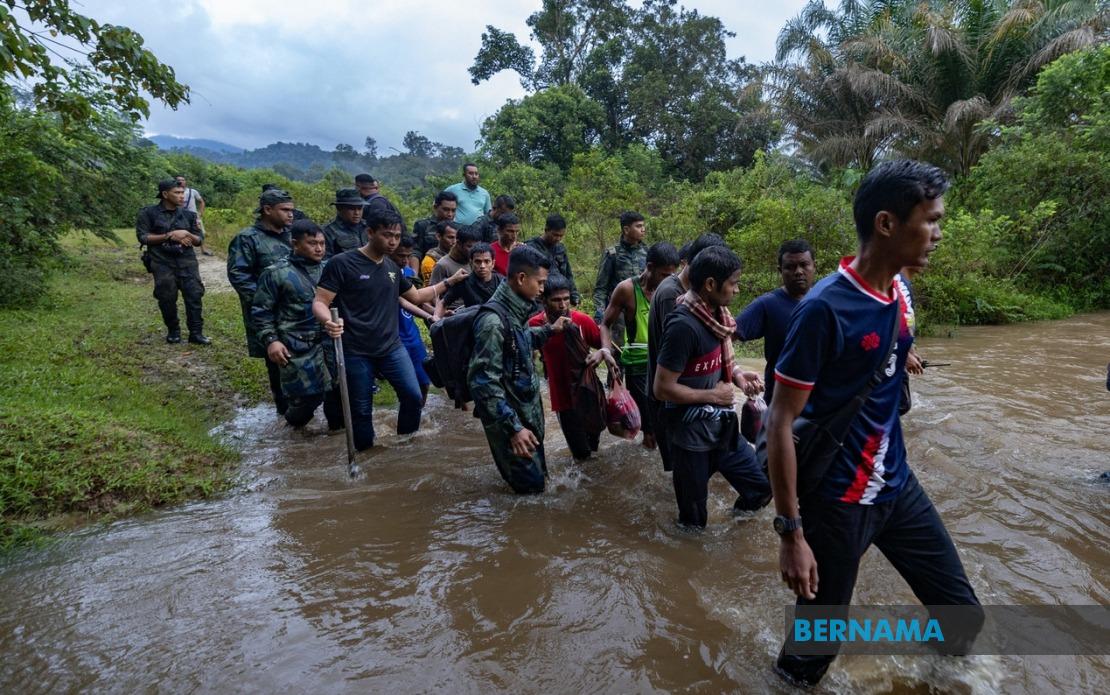
Malaysia is committed to deepening its engagement with ASEAN and the United Nations High Commissioner for Refugees to forge a more strategic and multifaceted response to the protracted Rohingya refugee crisis, Deputy Foreign Minister Datuk Lukanisman Awang Sauni announced in Parliament on July 7. The declaration underscores the nation's dual role as both a frontline host state and a vocal advocate within the regional bloc for addressing what has become one of Asia's most intractable humanitarian challenges.
Speaking during a special chamber session of the Dewan Rakyat, Lukanisman outlined how Malaysia has consistently leveraged its position within ASEAN to champion a peaceful resolution while simultaneously providing direct protection and assistance to Rohingya populations sheltering within Malaysian territory. The statement came in response to a parliamentary query from Datuk Seri Dr Shahidan Kassim regarding the extent of Malaysia's collaborative efforts with regional and international stakeholders to devise enduring solutions to the crisis.
The refugee situation extends far beyond humanitarian compassion, carrying profound implications for regional stability and security architecture across Southeast Asia. The uncontrolled movement of displaced Rohingya populations has catalysed a cascade of transnational challenges including irregular migration networks, sophisticated human trafficking operations, and mounting security vulnerabilities that transcend traditional border controls. These interconnected risks directly threaten Malaysia's own security apparatus and social fabric, making strategic partnership essential not merely as a matter of principle but as pragmatic necessity.
However, the deputy minister acknowledged a stark reality: Malaysia's multilateral efforts face significant structural impediments that curtail their effectiveness. ASEAN's foundational commitment to non-interference in member states' internal affairs, combined with its requirement for consensus-based decision-making, fundamentally constrains the bloc's capacity to mount decisive collective pressure against Myanmar's military leadership. These organisational principles, designed to preserve regional peace and respect sovereignty, paradoxically limit the alliance's ability to address root causes of the Rohingya displacement.
Simultaneously, the UNHCR's institutional mandate, while invaluable in delivering humanitarian protection and material assistance, operates within defined boundaries that exclude direct political engagement. The organisation's role remains confined to ameliorating the consequences of displacement rather than addressing the underlying political grievances, ethnic tensions, and governance failures that precipitated the crisis. This division of labour means humanitarian efforts, however generously resourced, cannot independently resolve what is fundamentally a political problem requiring Myanmar's internal transformation.
The existing constellation of responses therefore concentrates predominantly on reactive measures: safeguarding vulnerable populations from further abuse and alleviating immediate suffering through humanitarian channels. While essential, this humanitarian-centric approach leaves intact the systematic conditions that drove Rohingya communities from their ancestral homeland and continue to prevent their sustainable repatriation. Malaysia recognises that indefinite warehousing of refugee populations perpetuates instability rather than resolving it.
Looking forward, Lukanisman outlined Malaysia's intention to pursue several complementary regional strategies designed to break through current deadlock. The nation intends to champion enhanced responsibility-sharing mechanisms that would distribute the burden of hosting Rohingya refugees across multiple ASEAN states rather than concentrating it in Malaysia, Bangladesh, and Indonesia. Such burden-sharing would transform the refugee crisis from a challenge affecting particular frontline nations into a collective regional responsibility, theoretically generating broader political will for comprehensive solutions.
Equally important is Malaysia's commitment to catalysing political dialogue that transcends the current humanitarian-assistance framework. The nation envisions fostering conditions whereby Rohingya populations could voluntarily return to Myanmar under guarantees of safety, dignity, and fundamental rights restoration. Such returns would require fundamental changes to Myanmar's citizenship laws, religious tolerance, and minority protections—structural transformations that only sustained diplomatic pressure can encourage.
The deputy minister emphasised that Malaysia's multifaceted approach simultaneously strengthens regional stability while positioning the nation as a credible voice for peace and humanitarian responsibility on the international stage. By demonstrating commitment to principled engagement rather than unilateral action, Malaysia enhances its diplomatic standing within both ASEAN and broader global forums, reinforcing its capacity to influence outcomes on this and related regional security matters.
For Malaysian policymakers and the broader Southeast Asian community, the strategic imperative is apparent: the Rohingya crisis cannot be managed indefinitely through short-term humanitarian palliatives alone. The challenge demands sustained diplomatic engagement, creative burden-sharing arrangements, and willingness to address Myanmar's internal governance deficits. Malaysia's willingness to champion such comprehensive approaches, even while acknowledging current limitations, reflects recognition that refugee crises generate cascading regional consequences that ultimately demand root-cause solutions rather than mere symptom management.

