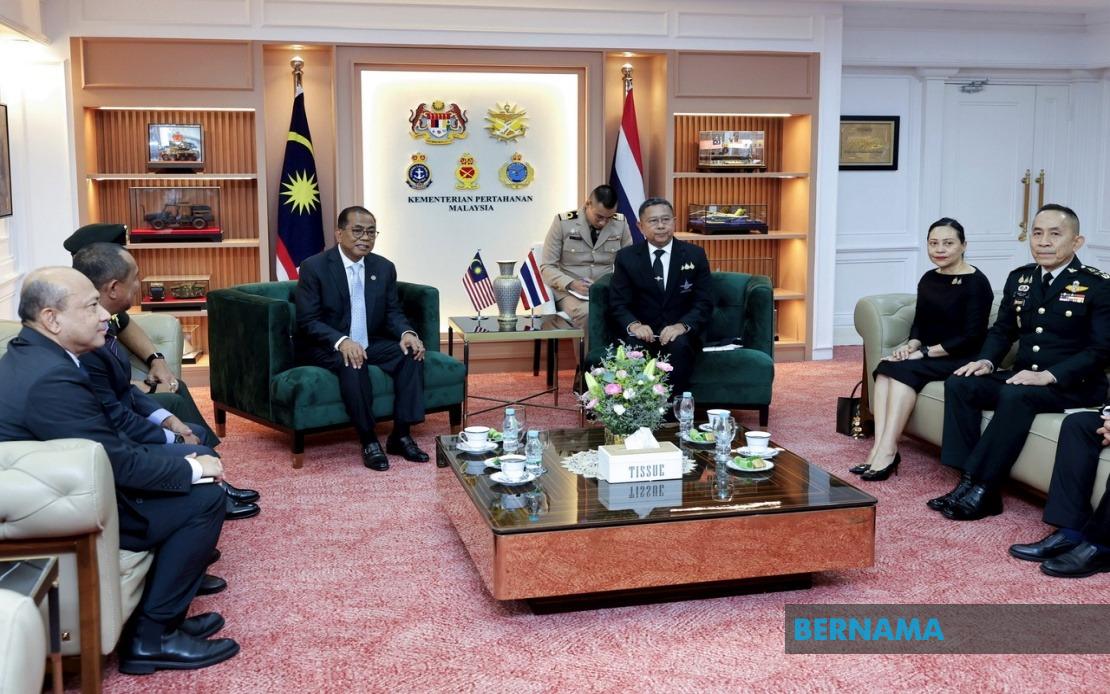
Malaysia has signalled its readiness to intensify cooperation with Thailand's newly appointed chief of the Royal Thai Government's Peace Dialogue Panel, Thanut Suvarnananda, in a bid to consolidate regional efforts aimed at achieving lasting peace and stability in southern Thailand. Defence Minister Datuk Seri Mohamed Khaled Nordin conveyed this commitment during discussions with his visiting Thai counterpart, Lieutenant General Adul Boonthumjaroen, underscoring the significance both nations place on resolving the protracted insurgency that has destabilised the region for nearly two decades.
The appointment of Thanut to lead Thailand's peace dialogue machinery represents a fresh institutional approach to negotiations that have periodically stalled and gained momentum in cycles. Malaysia's explicit welcome of this development reflects Kuala Lumpur's understanding that effective Thai leadership structures are essential prerequisites for meaningful diplomatic progress. By endorsing the new appointment, Malaysia is essentially signalling confidence that Thanut's tenure may usher in renewed momentum in a peace process that has oscillated between optimism and frustration, particularly given the complexity of engaging multiple stakeholder groups with divergent interests across the conflict zone.
Malaysia's facilitator role in the dialogue, currently held by Datuk Rabin Basir, positions the country as a crucial neutral intermediary in negotiations involving the Thai government and armed groups operating within Pattani, Yala, and Narathiwat provinces. This facilitation function carries particular weight given Malaysia's geographic proximity, shared historical ties with the region, and its track record of hosting and mediating similar regional disputes. The formal coordination between Mohamed Khaled and his Thai counterpart, therefore, sets a framework within which Malaysia can continue deploying its diplomatic capital to encourage all parties toward a negotiated settlement.
Crucially, Mohamed Khaled articulated Malaysia's careful calibration of its involvement, emphasising that while Malaysia stands ready to facilitate dialogue, substantive military operations and internal security decisions remain strictly within Thailand's sovereign domain. This clarification carries significant weight for both Bangkok and international observers, as it establishes clear boundaries that prevent Malaysia's facilitation role from being construed as interference in Thai affairs or as implicit endorsement of particular Thai government policies on counterinsurgency. Such precision in diplomatic messaging helps insulate the facilitation process from accusations of bias and preserves Malaysia's standing as an impartial mediator.
Beyond the peace dialogue, the two defence ministers identified smuggling activities and the illicit cross-border movement of individuals as pressing bilateral security concerns requiring enhanced cooperation. The Malaysia-Thailand General Border Committee, already an established mechanism for coordinating security matters, will serve as the primary vehicle for addressing these interconnected challenges. The planned 57th GBC Meeting, which Malaysia will host during the year, is expected to encompass a comprehensive agenda spanning border security infrastructure, coordinated military operations, socioeconomic development initiatives for border communities, and disaster management protocols. This multifaceted approach acknowledges that sustainable regional stability cannot be achieved through security measures alone but requires parallel investments in economic opportunity and social development.
Malaysia's position on Thailand's bilateral border dispute with Cambodia further illustrates the country's commitment to regional stability through adherence to established ASEAN norms and mechanisms. By endorsing Thailand's preference for bilateral dialogue consistent with the ASEAN Way—an approach that privileges consensus-building and peaceful resolution over external pressure—Malaysia signals support for conflict management frameworks that have preserved relative harmony across Southeast Asia despite numerous potential flashpoints. The reference to the Philippines as the incoming 2026 ASEAN Chair suggests that Malaysia is also strategically positioning ASEAN institutions to play a moderating role should tensions require multilateral attention.
The bilateral alignment of positions ahead of the ASEAN Defence Ministers' Meeting and ADMM-Plus reflects a broader pattern of Malaysia and Thailand coordinating their defence agendas at the regional level. Such coordination strengthens ASEAN's collective voice on security matters and ensures that shared experiences and perspectives from the Malaysia-Thailand frontier inform broader regional security discussions. The Philippines, as the designated host, will benefit from input reflecting the lived experiences of nations managing active conflict zones and complex cross-border security challenges.
The agreement to conclude a Memorandum of Understanding during the year to strengthen regional security and facilitate defence industry cooperation represents a tangible dimension to the Malaysia-Thailand security partnership. Defence industry collaboration can generate mutual economic benefits while building deeper institutional ties that transcend individual political cycles or leadership changes. Such commercial and technological partnerships create stakeholder constituencies on both sides with incentives to maintain stable bilateral relations, thereby adding a layer of structural resilience to the security relationship.
For Malaysian policymakers and the broader Southeast Asian community, the deepening Malaysia-Thailand engagement signals that despite the complexity and duration of the southern Thailand conflict, diplomatic mechanisms remain functional and committed parties continue seeking peaceful pathways. The emphasis on institutional coordination, clear role delineation, and multifaceted cooperation suggests a maturation of approach beyond simplistic military-dominated responses. As Malaysia prepares for an expanded facilitation role alongside Thanut Suvarnananda's leadership, the coming months will test whether these institutional and diplomatic investments can translate into substantive progress toward a negotiated resolution that addresses the legitimate grievances underlying the conflict while respecting Thailand's sovereignty and the security concerns of all regional stakeholders.

