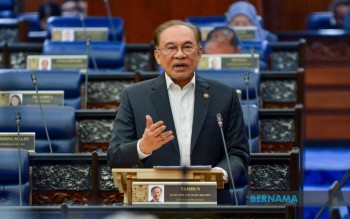
Prime Minister Datuk Seri Anwar Ibrahim has announced that Malaysia will undertake a comprehensive examination of the feasibility and approach for establishing a national petroleum reserve as a critical safeguard for the nation's long-term energy stability. The directive emerged from the inaugural National Energy Council Meeting of 2026, which Anwar chaired and where senior officials deliberated on multiple energy-related initiatives. The government views such a reserve system as essential insurance against potential disruptions arising from volatile geopolitical conditions and unpredictable worldwide supply constraints that could threaten Malaysia's economic interests and operational capabilities.
The decision to investigate petroleum stockpiling mechanisms represents a strategic pivot toward fortifying Malaysia's position in an increasingly uncertain global energy landscape. Geopolitical tensions, regional conflicts, and supply chain vulnerabilities have demonstrated the vulnerability of nations dependent on consistent energy imports without adequate domestic buffers. By establishing a strategic petroleum reserve comparable to those maintained by advanced economies, Malaysia would create a stabilising mechanism capable of buffering sudden price spikes, supply interruptions, or crisis scenarios that could otherwise destabilise sectors ranging from manufacturing to transportation and electricity generation.
Within the broader context of Malaysia's energy transition agenda, the petroleum reserve initiative sits alongside accelerating renewable energy deployment and fuel diversification efforts. According to Anwar's accounts, the nation's renewable energy capacity reached 31 percent of total installed generation by December of the previous year, reflecting steady progress toward reducing dependence on coal-fired power stations. This expanding renewable footprint represents a substantial achievement in Malaysia's commitment to balancing short-term energy security with medium-term environmental objectives, though the government recognises that transition timelines cannot compromise near-term stability.
The implementation of the Corporate Renewable Energy Supply Scheme, now integrated with Battery Energy Storage System capabilities, demonstrates how Malaysia is addressing one of renewable energy's central challenges: intermittency and variable output. By pairing distributed solar installations with storage technology, the framework allows businesses to maintain power reliability while drawing progressively larger shares of their consumption from clean sources. This technological coupling has proven increasingly vital as nations worldwide discover that high renewable penetration requires substantial energy storage investment to prevent grid instability and blackouts.
Transportation electrification efforts are advancing in parallel with these stationary energy initiatives. The deployment of 250 electric buses across Malaysian cities signals a tangible shift toward sustainable urban mobility, while the expansion of electric rail networks spanning 800 kilometres nationwide provides commuters with lower-emission alternatives to private vehicles. These initiatives carry particular significance for Malaysian cities grappling with air quality challenges and traffic congestion, problems that electrification addresses while simultaneously reducing hydrocarbon consumption and strengthening the case for petroleum reserve adequacy rather than abundance.
The B15 biodiesel programme represents another facet of Malaysia's transport fuel strategy. By mandating higher biofuel blends in diesel fuel supplies, the government leverages existing vehicle fleets' compatibility while gradually transitioning toward renewable transport fuels. The Petronas biofuel hub planned for Pengerang, Johor, will anchor Malaysia's emerging biofuel production capacity, positioning the nation to participate in the global shift toward sustainable aviation fuel, marine fuel alternatives, and other advanced biofuel applications that remain essential for sectors where electrification proves impractical.
Sarawak's hydrogen hub initiative, with its first phase targeting completion by year-end, exemplifies Malaysia's exploration of emerging energy vectors for hard-to-decarbonise applications. Hydrogen produced through renewable electrolysis or from natural gas with carbon capture offers potential pathways for heavy industry, long-distance transport, and industrial heating applications where battery electrification remains economically unfeasible. The Autonomous Rapid Transit system serves as an early-stage proving ground for hydrogen fuel cell technology in passenger transport, generating operational data and technical experience valuable for broader deployment planning.
These diverse initiatives collectively form Malaysia's comprehensive energy strategy, which balances immediate security concerns with systemic transition imperatives. The decision to study petroleum reserve creation acknowledges that energy transition, while essential, cannot be rushed without first establishing robust resilience mechanisms. Nations that prematurely retired fossil fuel infrastructure without adequate substitutes have discovered the hard way that transitions must maintain continuity of energy supply throughout the changeover period.
For Malaysia specifically, developing a petroleum reserve strategy carries regional implications. As a major crude oil and natural gas producer, Malaysia has traditionally prioritised export revenues over domestic stockpiling, a position that made economic sense during periods of geopolitical stability and predictable supply chains. However, the post-pandemic environment has fundamentally altered risk calculations. Supply chain fragility demonstrated during recent years has prompted even resource-rich nations to reconsider buffer strategies, recognising that export-dependent economies require domestic reserves to protect against self-imposed vulnerabilities.
The energy council's decisions also reflect evolving understandings of energy security itself. Traditional definitions emphasising physical fuel availability have broadened to encompass technological reliability, infrastructure resilience, financial stability of energy sectors, and workforce capacity. Malaysia's multipronged approach addresses these dimensions simultaneously, though coordination challenges inevitably arise when pursuing simultaneous objectives within constrained budgets and timeframes.
Implementing these overlapping energy initiatives requires sustained policy consistency, substantial capital investment, and coordination across Petronas, utilities, transport authorities, and industrial stakeholders. The National Energy Council structure exists precisely to provide such coordination, though execution remains more difficult than policy formulation. Success will ultimately depend on whether Malaysia's political leadership maintains commitment to these transitions across election cycles and budget constraints that will inevitably test resolve.
The petroleum reserve initiative signals that Malaysian policymakers recognise energy transition as a multi-decade undertaking requiring strategic patience and infrastructure investments that extend beyond typical political planning horizons. By acknowledging the need for enhanced resilience mechanisms alongside renewable acceleration, Anwar's government adopts a pragmatic risk management approach that many developed economies adopted years earlier, reflecting the reality that aspirational decarbonisation targets and near-term energy security are not competing objectives but interdependent ones.

