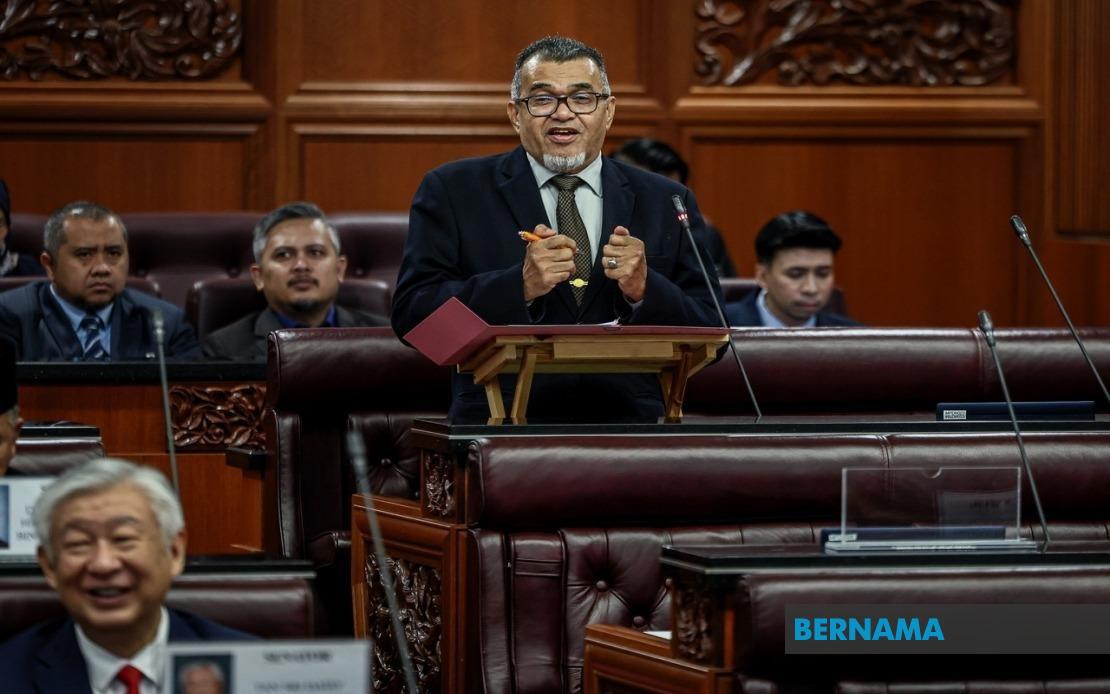
Malaysia's government is moving forward with legislation to substantially toughen criminal penalties against those who target railway infrastructure, specifically those who steal cables and trespass on rail facilities. Deputy Transport Minister Datuk Hasbi Habibollah announced that proposed amendments to rail transport laws are expected to reach Parliament within the coming months, introducing fines reaching RM100,000 for each offence—a dramatic increase from the current RM1,000 ceiling that officials argue has failed to deter organised theft rings.
The announcement reflects growing frustration within Malaysia's transport sector over what operators consider inadequate legal consequences relative to the actual damage inflicted on national rail services. Hasbi indicated the legislative push has gained momentum within government circles, with the target being finalisation by year-end for presentation during the next parliamentary session. The move represents a significant escalation in how Malaysia's authorities intend to tackle what has become a persistent operational headache for the country's rail infrastructure.
The urgency driving this legislative reform stems from startling financial data gathered across the nation's rail networks. Collectively, cable theft incidents have resulted in cumulative losses totalling RM50 million across three major rail operators and projects: Keretapi Tanah Melayu Berhad (KTMB), Prasarana Malaysia Berhad, and the ambitious East Coast Rail Link (ECRL) development connecting Port Klang to Kuantan. These figures underscore the scale at which organised thieves have been targeting valuable copper and aluminium cabling that powers and controls Malaysia's rail systems.
The ECRL project alone has experienced significant setbacks attributable to theft and sabotage. Between theft incidents and damage to associated equipment and materials, the project has suffered estimated losses of RM4.75 million across 71 documented cases. This figure is particularly concerning given that the ECRL remains in its construction and testing phases, meaning the impact on actual train operations and passenger schedules has not yet materialised—but the disruption potential looms large. Delays to installation, commissioning, and operational preparation could cascade into extended timelines and substantial cost overruns that ultimately burden Malaysian taxpayers.
The scale of criminal activity targeting KTMB and Prasarana operations accounts for the balance of the RM50 million in losses. These incidents have directly contributed to service disruptions that frustrate commuters and undermine public confidence in Malaysia's rail transport ecosystem. When cables are stolen from signal systems, power distribution networks, or telecommunications infrastructure, the consequences ripple through timetables, forcing cancellations or significant delays that impact businesspeople, students, and working-class commuters who depend on reliable rail service.
Beyond legislative reform, authorities are implementing complementary security measures designed to make theft significantly more difficult and costly for criminal syndicates. The government is currently installing 1,146 closed-circuit television cameras along the railway corridor stretching from Johor northward, creating comprehensive surveillance coverage intended to both deter thieves and provide investigative evidence when theft occurs. This technological overlay represents a recognition that legal penalties alone cannot solve the problem without enhanced detection capabilities.
On the ground, security operatives are receiving additional resources to increase their capacity for round-the-clock monitoring. Keretapi Tanah Melayu Berhad has acquired 20 scrambler motorcycles specifically for use by its Auxiliary Police force, enabling rapid response and more flexible patrol operations along rail corridors where cable theft is prevalent. The combination of enhanced mobility and extended patrol coverage aims to create a more visible security presence that discourages would-be thieves and increases arrest likelihood.
Physical security improvements complement these technological and personnel-based measures. High-security manholes providing access to underground cable infrastructure are being secured with enhanced locking mechanisms, reducing easy entry points for theft. Additionally, the deployment of sniffer dogs trained to detect metals and suspicious activity represents an innovative security layer that can identify threats before theft occurs. These layered security approaches reflect understanding among transport authorities that prevention across multiple dimensions—legal, technological, and physical—offers the most comprehensive strategy.
For Malaysian and Southeast Asian observers, this legislative initiative signals how governments across the region are beginning to recognise that critical infrastructure targeting requires elevated legal consequences. Cable theft targeting rail networks represents a particular challenge because the perpetrators are often highly organised, understand electrical systems, and operate with knowledge of vulnerable access points. By dramatically increasing potential fines, Malaysia joins other countries attempting to shift the cost-benefit calculation that motivates organised theft rings, making criminal activity financially less attractive relative to the escalating legal jeopardy involved.
The timing of these reforms proves significant as Malaysia accelerates major rail infrastructure development through projects like the ECRL and other initiatives forming part of broader connectivity ambitions. Allowing systematic cable theft to proceed unchecked would substantially undermine the strategic and economic rationale behind these massive investments. By implementing stronger deterrents now, during the construction and early operational phases of newer rail projects, the government aims to prevent entrenched theft patterns from developing that would plague these systems throughout their operational lifespans.
Stakeholders across Malaysia's transport sector are closely monitoring parliamentary progress on these amendments. Rail operators believe elevated penalties will substantially shift criminal risk calculations, particularly for professional theft syndicates whose operational economics depend on likelihood of detection, arrest, and conviction probability. If the RM100,000 maximum fine becomes law alongside consistent prosecution, the deterrent effect could meaningfully reduce theft incidents and associated service disruptions that continue frustrating millions of Malaysian rail users.

