Malaysia's Religious Affairs Ministry has committed to ramping up its engagement with young people following a significant royal intervention on the role of religious leaders in countering contemporary threats. The decision comes after Sultan Nazrin Shah of Perak last week emphasised the critical need for religious authorities to actively intervene in addressing extremism, misinformation, and digital polarisation affecting the nation's youth. Dr Zulkifli Hasan, Minister in the Prime Minister's Department (Religious Affairs), said his ministry would fully embrace the Sultan's directive and embed its core messages into departmental programmes and policy initiatives.
The Sultan's address, delivered during last Friday's proceedings, underscored a pressing reality facing Malaysia's young demographic today. Beyond traditional concerns, youths contend with multifaceted challenges spanning environmental sustainability, geopolitical instability, precarious economic conditions, algorithmic polarisation on social platforms, and eroding confidence in established institutions. The royal assessment reflects growing anxieties among policymakers that without sustained intervention from credible community voices—particularly religious authorities—the vulnerability of young people to radicalisation and manufactured narratives could intensify.
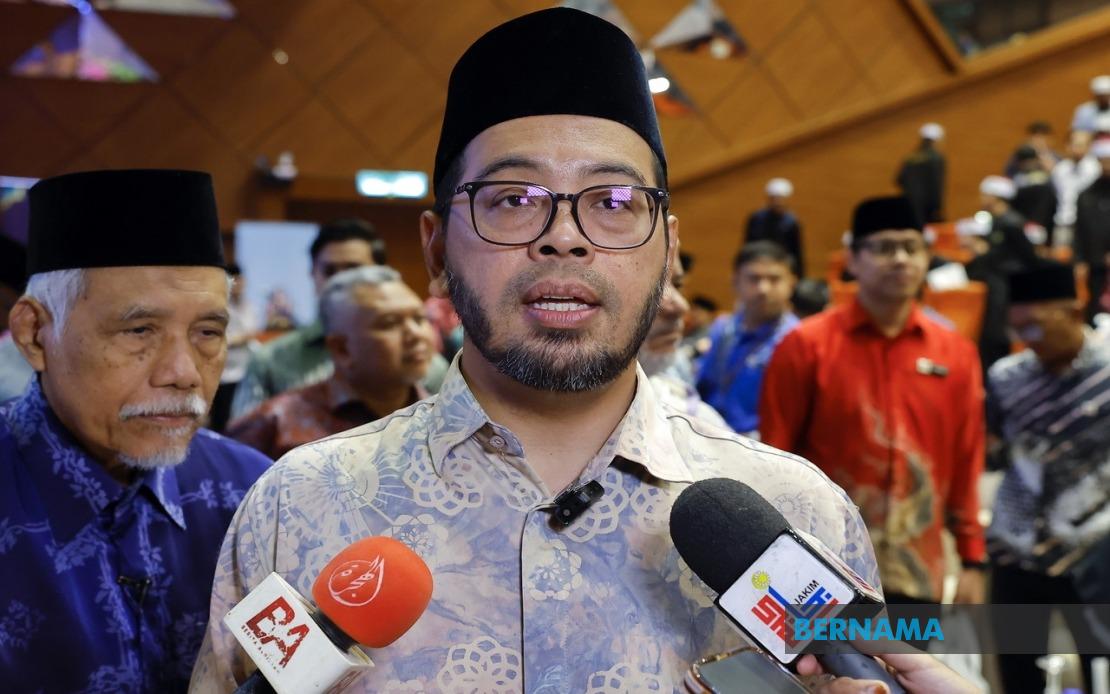
Dr Zulkifli's remarks, made at the National and International Tokoh Ma'al Hijrah Premier Lecture 1448/2026 in Putrajaya, underscored the ministry's resolve to translate royal guidance into concrete action. He confirmed that the department would systematically incorporate the Sultan's key reminders and messaging across its institutional framework. This represents a strategic pivot toward enlisting religious organisations as frontline actors in Malaysia's broader counter-extremism and information integrity efforts, acknowledging that top-down government responses alone may prove insufficient in reaching youth immersed in decentralised digital spaces.
The Sultan's intervention carries particular weight in Malaysia's constitutional context, where royal institutions command significant moral and symbolic authority. When a reigning Sultan issues guidance on national governance matters, federal agencies typically respond with measurable institutional adjustments. This pattern suggests the Religious Affairs Ministry will likely allocate resources toward developing digital-literacy programmes, establishing mentorship networks between religious teachers and students, and creating content strategies that compete effectively against extremist narratives and disinformation on popular social media channels.
For Malaysian policymakers, the Sultan's address also signals a broader recognition that religious identity and institutional participation remain potentially powerful countervailing forces against radicalisation. Unlike purely secular or state-centric approaches, leveraging religious authority figures—when those figures articulate inclusive, democratic values—can resonate authentically with faith-conscious youth. The Sultan's framing implicitly affirms that authentic Islamic teaching, properly contextualised and communicated by respected leaders, can inoculate young Muslims against both violent extremism and the conspiratorial thinking that often flourishes online.
The timing of this royal intervention aligns with mounting concerns across Southeast Asia regarding youth radicalisation pathways and the destabilising effects of digital misinformation. Neighbouring countries including Indonesia, Singapore, and Thailand have similarly grappled with balancing digital freedoms against security imperatives, making Malaysia's latest policy pivot regionally significant. Should the Religious Affairs Ministry successfully design and deploy youth engagement initiatives that prove transferable, the model could inform best practices elsewhere in the region.
However, meaningful implementation will require addressing operational challenges that have historically constrained such programmes. Recruiting, training, and deploying religious leaders equipped with both theological credibility and digital fluency remains difficult. Many traditional religious institutions lack institutional capacity for systematic youth outreach at scale, and cultural gaps between older religious authorities and Gen Z cohorts can hinder authentic dialogue. The ministry will need to invest in capacity-building infrastructure, from digital communication training to youth-centred pedagogy, to translate the Sultan's directive into sustained, impactful engagement.
The emphasis on countering misinformation reflects Malaysia's evolving security landscape, where false narratives—whether politically motivated, religiously exploitative, or purely profit-driven—pose tangible threats to social cohesion and institutional legitimacy. Young people, often their primary consumers and amplifiers, bear disproportionate responsibility for propagating viral falsehoods. By positioning religious leaders as trusted intermediaries capable of contextualising information and building critical evaluation skills, the ministry acknowledges that youth trust in institutional authorities has become a scarce commodity requiring deliberate cultivation.
Looking forward, the ministry's response will likely encompass partnerships with educational institutions, digital platforms, and civil society organisations working with young demographics. Collaborative frameworks may include interfaith initiatives that emphasise shared values across religious communities, counter-narrative content creation, digital citizenship training integrated into school curricula, and accessible online spaces where youth can engage religious scholars on contemporary concerns. These interventions would be most effective if designed with meaningful youth consultation, ensuring programmes address authentic grievances and concerns rather than imposing adult-centric assumptions about youth needs.
The Sultan's call also implicitly critiques a status quo where religious leadership institutions occupy marginal roles in contemporary youth spaces. Digital platforms dominated by algorithmic curation, entertainment, peer networks, and external influencers have substantially displaced traditional institutional authorities in shaping young people's worldviews and behaviours. By explicitly directing religious authorities to reassert their presence and relevance, Sultan Nazrin has essentially authorised a repositioning campaign—one that frames religious engagement not as nostalgic reversion but as essential modern governance responding to genuine contemporary vulnerabilities.