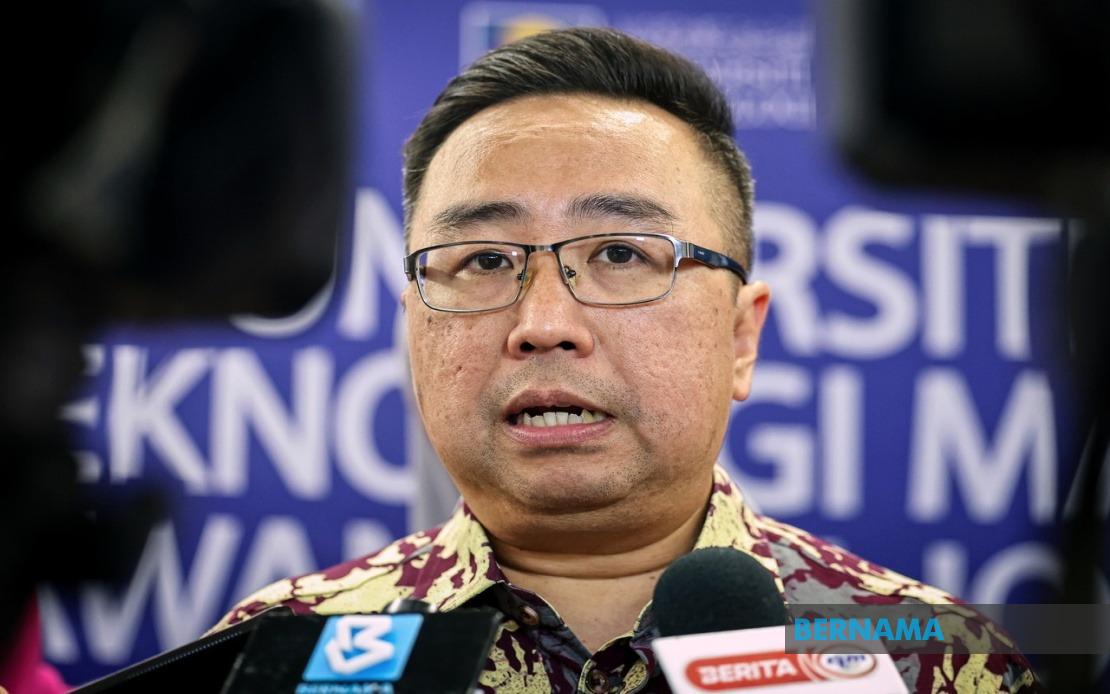
Malaysia's push to position itself as a regional science and technology powerhouse is taking concrete shape, with the Ministry of Science, Technology and Innovation cementing talent development as the linchpin of its strategic approach heading into a significant milestone. As the country prepares to host the 23rd ASEAN Ministerial Meeting on Science, Technology and Innovation next year, MOSTI has made clear that building a capable workforce will underpin all other ambitions in the sector. Datuk Chang Lih Kang, the ministry's chief, underscored this priority following the MOSTI TechTalks Series 2/2026 programme, signalling that human capital formation sits at the very top of the government's science agenda.
The decision to elevate talent development reflects a hard-nosed assessment of what Malaysia needs to compete for the high-value manufacturing and technology investments it seeks to attract. Without a ready pool of skilled scientists, engineers, technologists and innovators, policy frameworks and financial incentives alone will not suffice to draw multinational corporations or anchor regional innovation hubs. This reasoning appears to have crystallised across MOSTI's entire portfolio, with Chang identifying six core technological domains where Malaysia intends to build comparative advantage: the energy transition, artificial intelligence, digitalisation, advanced materials, nanotechnology including hydrogen applications, and biotechnology. Each of these sectors demands not just state-of-the-art facilities or venture capital, but workforces educated and trained to world-class standards.
The choice of June 2027 for AMMSTI-23 follows a formal decision made at the 22nd iteration of the same ministerial meeting held in Vientiane, Laos, on 26 June. This gives Malaysia roughly eighteen months to prepare both the logistical and substantive elements of its chairmanship. The timing is not incidental; it provides a platform for Malaysia to showcase its science and innovation ecosystem to counterparts across ASEAN, potentially opening channels for cross-border collaboration and positioning the country as a serious contender for regional research partnerships and funding flows. For Malaysian stakeholders in academia, industry, and start-ups, such a meeting carries knock-on benefits, from heightened visibility to new partnership opportunities.
Crucially, MOSTI has adopted a systems-wide approach to talent development that reaches beyond its immediate mandate. The ministry has committed to working alongside ten other government departments to strengthen Technical and Vocational Education and Training programmes, acknowledging that the conventional boundaries between ministerial responsibilities must become more porous when national competitiveness is at stake. This collaborative architecture brings together the Ministry of Education, the Ministry of Higher Education, the Ministry of Rural and Regional Development, and the Ministry of Human Resources, among others. By pooling resources and aligning curricula, the government aims to ensure that TVET pathways do not become technological backwaters but instead evolve to meet the demands of a rapidly transforming economy.
The modernisation of TVET deserves particular scrutiny, as it represents a departure from the historical pattern in which vocational training remained somewhat separate from cutting-edge industrial needs. Chang's call for TVET curricula to incorporate robotics, artificial intelligence, and coding rather than relying solely on conventional technical skills reflects a recognition that the future factory floor, logistics hub, and service centre will all be digital ecosystems. A technician without grounding in automation or data systems will be as mismatched to tomorrow's jobs as a blacksmith was to yesterday's. This curricular shift, if implemented with rigour and funding, could create a virtuous cycle in which graduates from TVET institutions become attractive to employers because they arrive with relevant, modern competencies.
The MOSTI TechTalks initiative exemplifies how the ministry is trying to shape the talent pipeline from the ground up. By conducting regular programmes at university campuses, MOSTI is attempting to expose young people to the realities of Malaysia's science and innovation landscape and the career pathways it opens. University students who grasp early the direction of national STI strategy and the skills gaps the country is trying to fill are more likely to make educational choices that align with national needs. This is not coercive central planning but rather a form of soft guidance that, done well, can orient talent toward areas where both individual opportunity and national interest converge.
For Malaysian businesses and investors, the policy pivot carries strategic implications. A government investment in talent development and the modernisation of TVET suggests that Malaysia is serious about building indigenous capability rather than remaining dependent on expatriate expertise or outsourced innovation. This reduces long-term labour costs for companies, decreases visa and regulatory friction, and fosters a sense of national ownership in technological advancement. Multinationals considering Malaysia as a regional hub for research, product development, or manufacturing can take some assurance that the country is actively building the human infrastructure to support such operations.
The regional context matters equally. ASEAN nations are competing intensely to attract technology investment and position themselves along global value chains for semiconductors, renewable energy, and digital services. Malaysia's explicit emphasis on talent development, articulated at the ministerial level and backed by multi-agency collaboration, signals seriousness compared to countries where innovation policy remains rhetorical. However, execution will be the ultimate test. Curriculum overhauls, teacher training, investment in laboratory and digital infrastructure, and sustained funding are non-trivial undertakings. The next eighteen months, culminating in June 2027, will offer a window into how adeptly Malaysia can translate these ambitions into tangible progress.
The breadth of MOSTI's focus areas—from hydrogen to biotechnology—also hints at a diversification strategy. Rather than betting on a single technological frontier, the ministry is attempting to cultivate multiple domains where Malaysia can develop competitive clusters and attract specialised investment. This hedging approach is sensible given the uncertainty surrounding which technologies will dominate in fifteen to thirty years. A talent pipeline trained across multiple advanced sectors provides flexibility and resilience. Equally, it demands a more sophisticated education system capable of offering diverse pathways without diluting quality.

