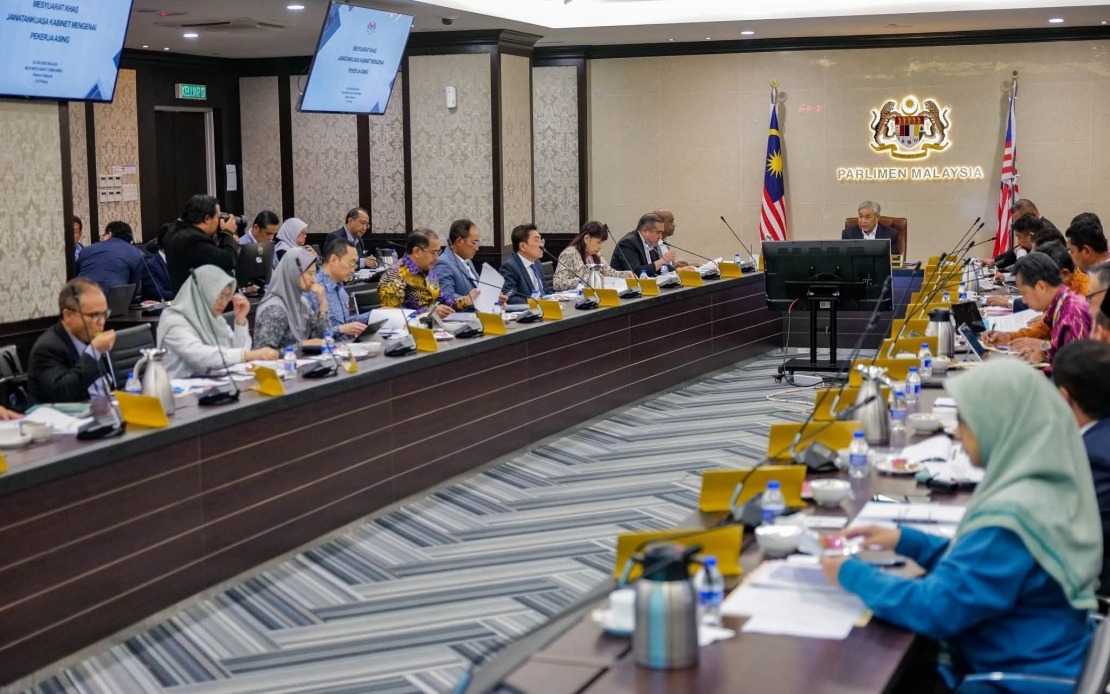
Deputy Prime Minister Datuk Seri Dr Ahmad Zahid Hamidi has unveiled plans for a fundamental restructuring of how Malaysia manages its foreign workforce, reflecting mounting pressure to create a more cohesive and strategic approach to labour importation. The announcement came following a special Cabinet Committee meeting on foreign workers held at Parliament on June 30, where Ahmad Zahid presided over discussions aimed at sharpening the nation's approach to managing migrant labour across multiple sectors and regions.
At the core of the government's reform agenda lies a recognition that the current system requires substantial coordination improvements to function at optimal capacity. Ahmad Zahid emphasised that the restructured framework would operate with greater efficiency while simultaneously strengthening safeguards around integrity and transparency. This dual emphasis reflects awareness that foreign worker programmes, while economically necessary in certain sectors, have historically been vulnerable to exploitation and administrative inconsistencies that undermine both worker protections and national interests.
One significant institutional change emerging from the meeting involves relocating the One Stop Centre for Foreign Worker Management under the administrative purview of the Ministry of Human Resources. This consolidation represents an attempt to centralise decision-making and reduce bureaucratic fragmentation that has previously hindered effective oversight. By anchoring the centre within human resources oversight, the government aims to ensure foreign worker policies remain aligned with broader labour market strategies and workforce development priorities rather than being handled in isolation by multiple competing agencies.
The restructuring also encompasses a comprehensive review of how Malaysia assesses its actual foreign labour requirements across industries. Rather than perpetuating existing worker quotas or relying on historical patterns, Ahmad Zahid indicated the government would adopt a more data-driven methodology grounded in genuine sectoral needs. This shift matters considerably for Malaysia's economic planning, as misaligned worker imports can distort labour markets, suppress local wage growth in certain occupations and create surplus populations of migrant workers vulnerable to unemployment or exploitation.
Underpinning these operational changes sits a broader policy objective: reducing Malaysia's structural dependency on foreign labour. Ahmad Zahid outlined three interconnected strategies to achieve this goal. First, the government intends to expand local workforce participation by creating more attractive pathways for Malaysian citizens to enter sectors currently dominated by foreign workers. Second, it plans to invest in skills development programmes that enhance the competitiveness of domestic workers in higher-value occupations. Third, it will accelerate industrial automation and technological transition, enabling sectors to maintain productivity while relying less heavily on labour-intensive immigration.
This multi-pronged approach reflects long-standing tensions within Malaysia's labour market. Certain sectors—particularly construction, plantation agriculture, domestic work and hospitality—have become heavily dependent on migrant labour over decades. Yet critics argue this dependency has created perverse incentives discouraging automation investment and wage improvements that might attract local workers. Additionally, large undocumented migrant populations in Malaysia have generated periodic social tensions, public health concerns and security complications. By addressing the root drivers of over-reliance on foreign labour, Ahmad Zahid's framework seeks to address these interconnected problems rather than simply tightening enforcement around existing systems.
The Cabinet Committee's expanded membership and revised terms of reference suggest the government is elevating foreign worker management to a higher priority within governance structures. Previously, foreign labour issues were sometimes handled as peripheral concerns within larger labour ministry portfolios. Establishing a dedicated, high-level Cabinet Committee signals recognition that managing migration strategically requires sustained political attention and coordination across multiple government agencies—from health and security authorities to industry development bodies and local governments implementing actual policies.
For Malaysian employers, particularly in labour-intensive sectors, these reforms carry mixed implications. While greater system efficiency and clearer labour requirement assessments should reduce administrative burdens, the government's simultaneous push toward reducing reliance on foreign workers will likely constrain recruitment ceilings in many industries. This pressure may accelerate automation adoption in some sectors while potentially creating short-term labour shortages in others. Employers will need to adapt recruitment strategies, invest in mechanisation and compete more aggressively for local talent through improved working conditions and wages.
The emphasis on balancing industry requirements against national security and employment priorities reflects awareness that unchecked labour migration can generate social and security externalities beyond pure economic considerations. Malaysia has experienced periodic concerns regarding trafficking networks, document fraud and overstaying workers exploited in informal sectors. By integrating security and integrity safeguards into the restructured management system, Ahmad Zahid signals the government recognises foreign worker programmes must serve national interests comprehensively, not merely fill immediate labour gaps.
For Southeast Asia's migration dynamics, Malaysia's restructuring carries regional significance. As a major destination for migrant labour from Indonesia, Bangladesh, Nepal and Myanmar, Malaysia's policy shifts influence migration patterns across the region and shape bilateral labour mobility agreements. A Malaysian system emphasising worker integrity and reduced overall intake may incentivise some workers to seek opportunities elsewhere, potentially affecting labour supply patterns throughout Southeast Asia's interlinked employment networks.
The government's commitment to guiding all foreign worker measures by "national interests and the people's wellbeing" represents an attempt to anchor the restructuring within a nationalist framework that prioritises Malaysian citizens' employment prospects. This rhetorical positioning matters politically, as foreign worker policies remain sensitive among local constituencies concerned about job competition and labour market dilution. By explicitly tying reforms to Malaysian welfare priorities, the government positions restructuring as serving citizen interests rather than merely accommodating employer convenience.
Looking forward, the success of this restructuring depends heavily on implementation rigour. Establishing new governance structures and policies means little without consistent enforcement and genuine coordination among previously competing agencies. Additionally, balancing industry needs against reduced foreign worker intake will require substantial investment in local workforce development, automation support and skills training. How effectively the government invests in these complementary programmes will ultimately determine whether restructuring achieves its stated objectives of efficiency, integrity and sustainable domestic employment.

