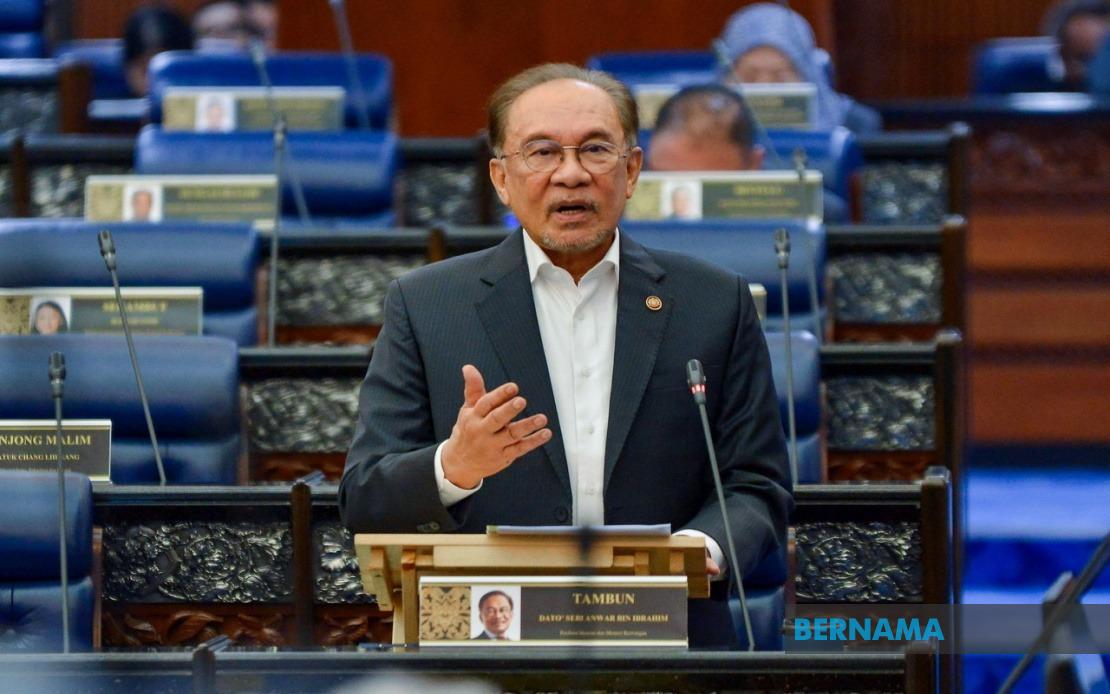
Malaysia will continue pursuing negotiations and strict adherence to the 1982 United Nations Convention on the Law of the Sea as its primary mechanism for settling maritime boundary disputes with neighbouring countries, Prime Minister Datuk Seri Anwar Ibrahim declared during parliamentary proceedings on July 14. The statement underscores the government's preference for diplomatic channels over contentious legal proceedings, even as Malaysia grapples with overlapping maritime claims involving six separate countries across its ocean boundaries.
While acknowledging the International Maritime Organization's supporting role in maritime governance, Anwar emphasised that the IMO itself operates within the constraints of UNCLOS 1982, which establishes the overarching legal architecture for ocean-related disputes. This position reflects Malaysia's understanding that international bodies, however authoritative, cannot supersede the foundational treaty that 168 nations have ratified. The Prime Minister's remarks respond to parliamentary questions about whether Malaysia might seek specialised IMO expertise regarding security concerns in the strategically vital Straits of Malacca and broader maritime management issues affecting the country's shipping interests.
Acknowledging the inherent limitations of UNCLOS, Anwar noted that member states interpret the convention's provisions differently, creating gaps that the treaty alone cannot adequately address. This frank assessment reflects the reality facing Southeast Asian maritime nations, where competing interpretations of continental shelf definitions, baseline measurements, and exclusive economic zones have generated persistent friction. Malaysia's pragmatic recognition of these interpretive divergences suggests the government views legal frameworks as guides rather than complete solutions, necessitating supplementary dialogue and creative compromises.
On the South China Sea specifically, Anwar reported that ASEAN member states have collectively decided to ground their engagement with China in UNCLOS principles while simultaneously negotiating a Code of Conduct to manage tensions and prevent conflict escalation. This dual-track approach represents a careful balance between maintaining legal sovereignty claims and avoiding military confrontation in one of the world's most strategically important waterways. However, Anwar acknowledged that discussions involving the Philippines encounter additional complications owing to the unresolved Sabah issue, indicating how historical territorial disputes intertwine with contemporary maritime negotiations and complicate regional consensus-building.
The government's negotiating philosophy prioritises persistence over ultimatums, with Anwar describing a process where talks may be suspended when progress stalls but parties commit to resuming discussions rather than abandoning the process entirely. This iterative approach, while potentially lengthy, has allowed Malaysia and its dialogue partners to maintain working relationships even during contentious disputes. ASEAN's broader commitment to this framework suggests the bloc's collective preference for gradualism and face-saving arrangements over confrontational settlement mechanisms.
Malaysia's joint development arrangements with Thailand and Vietnam demonstrate the practical application of this diplomatic philosophy, allowing economic cooperation and resource sharing in disputed maritime zones without requiring either nation to relinquish sovereignty claims. These arrangements essentially suspend the legal question of ownership while enabling tangible cooperation, creating shared interests that discourage escalation. Anwar highlighted the Vietnamese experience specifically, where disputed areas remain formally unresolved but a Joint Development Authority permits both countries to extract resources and share revenues, transforming potential conflict zones into zones of economic collaboration.
The Prime Minister catalogued Malaysia's maritime boundary challenges across its full oceanic perimeter, identifying overlapping claims or boundary demarcation issues with Brunei, Thailand, Indonesia, Singapore, the Philippines, and China. This comprehensive list illustrates why maritime boundary management constitutes a persistent feature of Malaysia's foreign policy landscape rather than a discrete problem amenable to final resolution. Each bilateral relationship involves distinct historical contexts, strategic interests, and interpretative positions that resist uniform solutions.
Progress on the Brunei boundary has advanced substantially, with outstanding issues concentrated in areas involving Sarawak's jurisdiction, reflecting the complexity of incorporating state-level interests into national-level negotiations. This institutional dimension adds another layer to maritime diplomacy, requiring coordination between federal authorities and state governments whose territorial claims and development aspirations may diverge from federal strategic preferences. Sarawak's involvement in boundary discussions with Indonesia similarly shapes negotiations over Sabah maritime areas, requiring consultation with state leadership before federal commitments can be finalised.
By consistently prioritising diplomatic channels and rejecting escalatory postures, Malaysia has avoided the military tensions and heightened nationalistic rhetoric characterising some other maritime disputes in the region. This strategy reflects both pragmatic recognition that military solutions to maritime boundary questions remain elusive and a conviction that regional stability depends on maintaining functional diplomatic relationships despite underlying disagreements. The approach requires patience, flexibility, and willingness to accept partial solutions and prolonged negotiations as preferable to confrontation.
The Prime Minister's parliamentary statement carries significance beyond Malaysia's immediate bilateral relationships, signalling to China and other ASEAN partners that Malaysia views the South China Sea Code of Conduct as a viable framework for reducing tensions without resolving underlying claims. This positioning helps ASEAN maintain diplomatic momentum on the COC negotiations while reassuring Southeast Asian publics that their governments are taking measured steps toward conflict prevention. For Malaysian readers, the emphasis on negotiation reflects a foreign policy continuity prioritising economic engagement and stability over nationalist posturing, even when maritime sovereignty questions remain unresolved.

