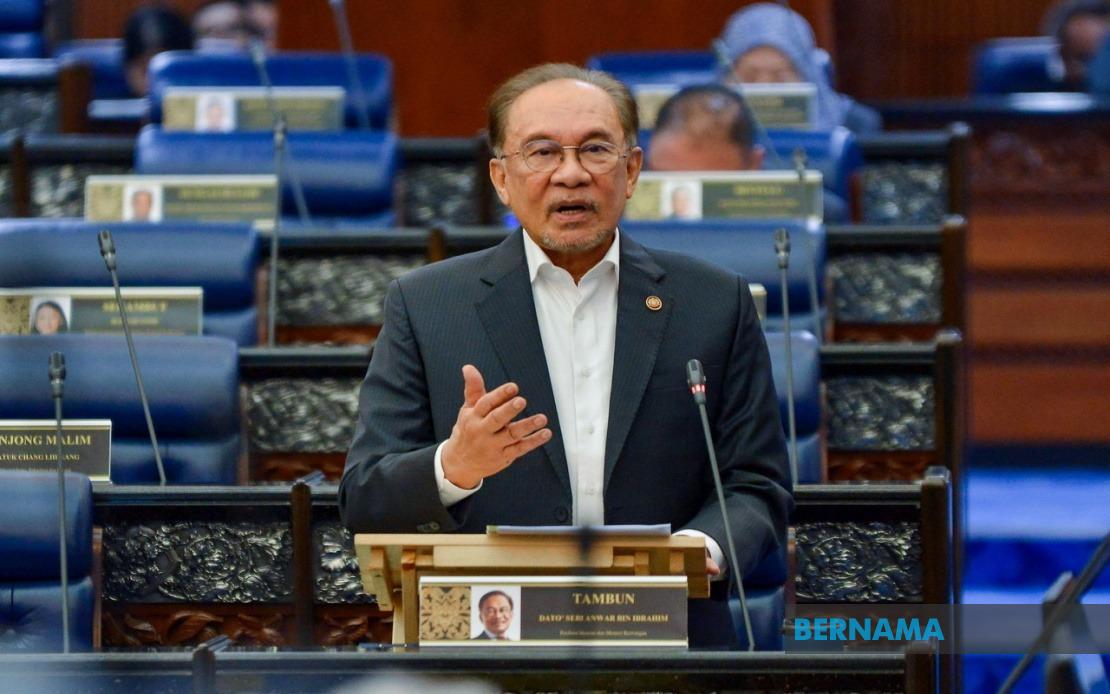
The Malaysian government will continue to examine hiring requirements for foreign workers through official channels while reserving job opportunities for locals first, Prime Minister Datuk Seri Anwar Ibrahim stated in parliament this week. His remarks signal an attempt to balance two competing pressures: the legitimate labour shortages facing employers in key sectors against mounting unemployment concerns among young Malaysians and the need to crack down on exploitation of the immigration system.
Anwar acknowledged that certain industries remain dependent on overseas workers to function. However, he emphasised that the government's approach would involve a staged process: existing legal foreign workers already in Malaysia should be prioritised to fill vacancies before any new recruitment permits are granted. This strategy attempts to maximise the utility of the migrant workforce already present in the country while reducing the burden on employers seeking fresh approvals.
The prime minister's comments came in response to concerns raised by parliamentarian Khoo Poay Tiong from Kota Melaka about labour shortages affecting small and medium enterprises, a sector vital to Malaysia's economy and employment base. This tension between SME competitiveness and youth employment reflects a broader challenge facing developing economies attempting to modernise while ensuring domestic workforce participation.
A significant portion of Anwar's statement focused on what he termed the "foreign worker syndicates" that have operated in Malaysia for decades. He characterised these networks as mechanisms through which individuals accumulate wealth illicitly, positioning enforcement action as essential to addressing systemic corruption. This framing suggests the government views the issue not merely as a labour supply problem but as one intertwined with organised crime and regulatory capture.
The government intends to study sectoral foreign worker requirements jointly through the Ministry of Human Resources and Ministry of Home Affairs, with security considerations factoring prominently into any decisions. This inter-ministerial approach acknowledges that immigration and labour policy cannot be separated from national security frameworks, a consideration that has grown more urgent given regional migration patterns and concerns about undocumented populations.
Enforcement measures will intensify against foreign workers breaching regulations regardless of their nationality or ethnicity, Anwar stated, explicitly mentioning the Rohingya population. This universalist approach to enforcement attempts to depoliticise what has become a contentious issue in Malaysian public discourse, though the specific mention of Rohingya suggests the government recognises sensitivities around this demographic group in particular.
A crucial dimension of the government's emerging policy involves tightening approval criteria for foreign professional workers. Anwar highlighted cases where companies obtained visas for specialists in high-demand fields such as artificial intelligence but then deployed these workers in roles unrelated to their approved expertise. Such practices undermine genuine skills transfer and technology development while consuming visa quotas that could benefit Malaysia's economic transformation.
The prime minister's reference to artificial intelligence reflects Malaysia's strategic interest in positioning itself within global technology value chains. By insisting that foreign expertise align with actual corporate needs, the government seeks to prevent employers from using visa approvals as a general labour procurement tool while simultaneously protecting opportunities for Malaysian professionals in emerging sectors.
This policy stance addresses a legitimate frustration among young Malaysian job seekers who report difficulty securing professional roles despite formal qualifications. The perception that multinational firms and large enterprises routinely hire foreign professionals for positions ostensibly requiring local talent has become politically significant, particularly among educated urban voters concerned about career prospects.
However, the government faces a genuine structural dilemma. Many employers in construction, agriculture, manufacturing, and hospitality sectors argue they cannot operate profitably or maintain service quality without access to migrant labour. Some economists contend that restricting foreign workers without concurrent investments in domestic workforce training and development could harm productivity and economic growth. The government's joint study approach suggests recognition that this problem requires nuanced solutions rather than blanket restrictions.
The enforcement angle also targets business establishments that violate regulations, with Anwar indicating that premises engaged in illegal labour practices would face seizure. This escalation of consequences aims to increase compliance costs for unscrupulous employers, though questions remain about implementation capacity given Malaysia's historically variable enforcement records across enforcement agencies.
The broader context involves Malaysia's transformation from a primarily manufacturing economy toward services and digital sectors where skills gaps between domestic supply and employer demand have widened. Foreign workers fill gaps in lower-skilled sectors while simultaneously creating competition for entry-level positions that young Malaysians traditionally accessed. Resolving this tension requires not just restrictive policies but coordinated workforce development, a dimension less clearly articulated in the parliamentary exchanges.
Looking forward, the government's commitment to studying sectoral requirements while enforcing existing regulations represents a middle path between protectionism and liberalisation. Success depends on rigorous analysis of genuine labour market needs, effective implementation of tightened professional visa requirements, and simultaneous investment in domestic skills development. Without this comprehensive approach, Malaysia risks either crippling labour-dependent sectors or failing to address legitimate youth employment concerns.

