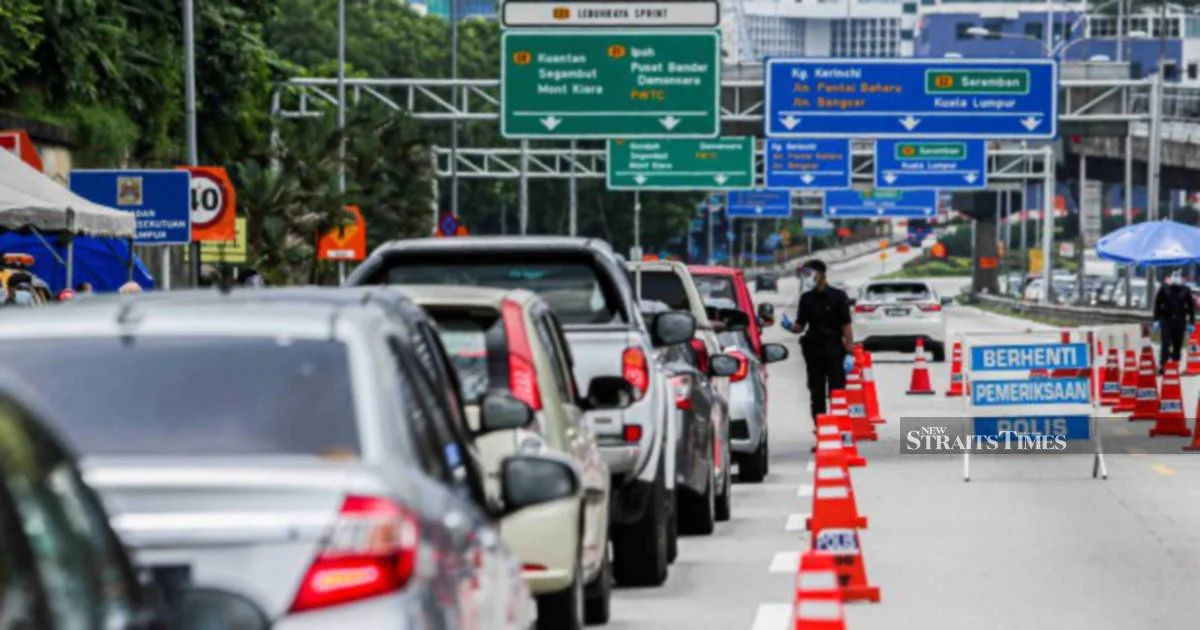
Malaysia stands on the verge of a significant escalation in road traffic penalties, with proposed amendments to the Road Transport Act 1987 poised to increase maximum compound fines to RM500 for more than 700 distinct driving violations. The legislative changes, awaiting parliamentary approval, signal a marked shift in the government's enforcement approach and represent one of the most substantial penalty revisions in recent years for Malaysia's motoring public.
The Road Transport Act 1987 has served as the legislative backbone for Malaysian traffic enforcement for over three decades, establishing the framework through which the Road Transport Department and police manage compliance with driving regulations. As traffic volumes have grown exponentially and road safety concerns have intensified across the country, authorities have increasingly recognised that existing penalty structures may no longer adequately deter dangerous or negligent driving behaviour. The proposed amendments reflect this institutional recognition that financial consequences require periodic recalibration to maintain their intended deterrent effect.
Currently, the maximum compound rates for various traffic offences remain substantially lower, creating situations where accumulated inflation and rising vehicle ownership have gradually eroded the real-world impact of historical penalties. By raising the ceiling to RM500, the authorities aim to create more proportionate consequences for serious violations while potentially streamlining the bureaucratic categorisation of offences. The breadth of the amendment—affecting over 700 distinct offence categories—underscores the comprehensive nature of this overhaul rather than targeted increases for specific violations.
For Malaysian motorists, the implications are substantial and multifaceted. Drivers caught committing traffic violations face not only immediate financial penalties but also potential accumulation of points on their driving records, insurance premium increases, and in cases of repeat offences, suspension or cancellation of driving privileges. The doubling or near-doubling of maximum compounds across such a broad spectrum of offences will particularly impact commercial drivers, delivery personnel, and those operating vehicles professionally, as their cumulative exposure to traffic penalties substantially exceeds that of occasional private motorists.
The enforcement landscape will inevitably shift following implementation, as police and road enforcement officers gain access to increased penalty discretion. Traffic enforcement has long been subject to criticism from motorist advocacy groups regarding consistency and perceived inconsistency in penalty application. Raising the maximum threshold without necessarily mandating its universal application creates a two-tier system where certain violations attract higher fines depending on officer discretion, severity assessment, and specific circumstances. This could potentially lead to renewed scrutiny over enforcement fairness and transparency across different jurisdictions and enforcement agencies.
From a public policy perspective, the increase reflects a broader regional trend across Southeast Asia toward stricter road safety measures. Governments throughout the region—including Thailand, Indonesia, and Singapore—have progressively increased traffic penalties in response to persistently elevated accident and fatality statistics. Malaysia's initiative aligns with this regional movement while acknowledging domestic road safety challenges, including high-speed violations, failure to use safety equipment, and reckless driving behaviours that contribute significantly to fatal and serious injury accidents.
The economic dimension cannot be overlooked, as increased penalty revenue will flow directly to government coffers or designated road safety programmes, depending on legislative allocation provisions. However, transport economists debate whether raised penalties genuinely reduce violations or merely increase revenue extraction, particularly among lower-income motorists who may view fines as unavoidable business costs rather than genuine deterrents. The effectiveness of such penalties ultimately depends on consistency of enforcement and public perception of legitimacy regarding penalty levels.
Insurance industry observers anticipate potential secondary effects, as insurers monitor penalty trends to inform risk assessments and premium calculations. Drivers with recent traffic offences on their records already face premium increases; substantially higher maximum penalties could influence underwriting guidelines and rate structures. Fleet operators and commercial transport companies, already managing thin operational margins, will need to factor enhanced penalty exposure into operational risk assessments and driver training programmes.
Parliamentary deliberation over the amendments will likely involve discussion regarding appropriate maximum thresholds, whether graduated penalty scales based on offence severity require refinement, and whether enforcement resources adequately support consistent application of higher penalties. Opposition from some quarters may focus on regressive impacts on lower-income drivers or concerns that revenue generation rather than genuine safety improvement motivates the increase. Supporters will emphasise alignment with international best practices and the necessity of meaningful financial consequences to achieve behavioural change.
As these amendments progress through parliament, Malaysian motorists should remain attentive to specific implementation timelines and any transitional provisions. The Road Transport Act 1987, once enacted, typically requires accompanying regulations detailing specific offence categorisations, applicable penalties, and enforcement procedures. The Department of Transport and Road Safety will presumably publish detailed guidance explaining which offence categories attract which penalty levels within the new RM500 maximum structure.
The passage of these amendments would represent the most significant overhaul of Malaysia's traffic penalty structure in years, fundamentally altering the financial consequences of road violations. Whether the increases achieve intended safety improvements remains to be demonstrated, though the regulatory intention appears clear: rendering Malaysia's traffic violation consequences more consequential and, theoretically, more effective as deterrents against dangerous driving behaviour.