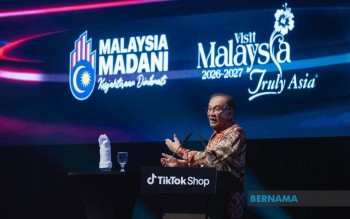
Malaysia will implement stricter vetting procedures for fresh investment applications, with Prime Minister Datuk Seri Anwar Ibrahim signalling heightened government concern over foreign businesses operating in the country without delivering meaningful economic returns. Speaking at the TikTok Shop Summit 2026 in Kuala Lumpur, Anwar outlined the administration's intention to block operations that provide superficial economic activity while extracting commercial value without contributing substantially to local employment or industrial development.
The initiative stems from intelligence gathered by the Ministry of Investment, Trade and Industry, which has flagged an emerging pattern: overseas companies establishing warehouses and transit facilities in Malaysia to service regional markets whilst maintaining minimal local workforce requirements or procurement from domestic suppliers. This activity, while technically lawful under existing foreign investment frameworks, represents what policymakers increasingly view as economically parasitic—capturing the benefits of Malaysia's strategic geographic position and infrastructure without reciprocal contribution to the country's social and economic wellbeing.
Anwar identified specific vulnerabilities in the current regulatory environment during questioning about cross-border e-commerce platforms such as Temu and Pinduoduo flooding Malaysian markets with inexpensive imported goods. He acknowledged Malaysia's commitment to maintaining an open, trade-oriented economy whilst simultaneously expressing frustration at predatory commercial practices that undermine local retailers and manufacturers. The Prime Minister characterised aggressive international pricing strategies as "dumping"—a term referencing unfair trade practices where foreign firms sell below cost to capture market share and eliminate local competitors.
One particularly egregious loophole involves foreign enterprises registering ostensibly local companies under Malaysian names, typically adopting identities reminiscent of traditional small businesses such as coffee shops. These entities then import substantial quantities of goods—beverages, snacks, consumer products—with zero domestic sourcing or value creation. From a consumer standpoint, such arrangements create illusions of locality whilst displacing genuine Malaysian small and medium enterprises that have built supply chains and employment networks around domestic production and wholesale distribution.
The Prime Minister drew attention to large-scale logistics operations concentrated around Port Klang, Malaysia's primary container port. International investors have established substantial warehousing facilities to service Asian supply chains without hiring meaningful numbers of Malaysian workers or purchasing Malaysian-origin products. These operations function essentially as regional transshipment hubs rather than enterprises integrated into the local economy. Anwar emphasised that such arrangements fail the fundamental test of investment attractiveness: they consume scarce physical infrastructure and commercial real estate whilst contributing minimally to tax bases, employment rolls, or domestic purchasing power.
This focus on investment quality over quantity represents a recalibration of Malaysia's foreign direct investment strategy, particularly acute in an era of intense regional competition. Vietnam, Thailand, and Indonesia have aggressively pursued manufacturing and logistics investments with clear performance benchmarks—minimum local workforce percentages, technology transfer requirements, and domestic content obligations. Malaysia risks attracting financial capital that generates weak multiplier effects whilst stronger competitors cement deeper economic relationships with multinational corporations.
The enforcement dimension of Anwar's announcement carries particular significance. He indicated that authorities have already begun investigating and taking action against flagged operations, suggesting that the policy shift from permissive to restrictive encompasses not merely future applicants but existing market participants. This enforcement approach creates compliance uncertainty for borderline cases—businesses operating warehousing or logistics functions who cannot definitively assert they meet emerging employment and economic contribution thresholds may face operational scrutiny or licensing challenges.
For Malaysian entrepreneurs and small business associations, the policy offers vindication of long-standing grievances. Local traders have repeatedly complained that foreign entities exploit regulatory gaps to undercut pricing whilst evading the compliance costs—labour standards, environmental regulations, corporate governance expectations—imposed on domestically registered businesses. Enhanced investment screening potentially levels competitive dynamics, though implementation details remain undefined. Questions persist regarding how authorities will measure "economic benefit," whether thresholds will apply retroactively, and which sectors face heightened scrutiny.
The policy also intersects with broader Southeast Asian anxieties about economic sovereignty and capital flows. Malaysia, like peers across the region, depends heavily on foreign investment to drive growth, yet increasingly recognises that not all foreign capital generates equivalent developmental benefits. Investment that exploits logistics advantages whilst outsourcing employment elsewhere represents capital extraction rather than genuine economic partnership. The Malaysian approach—vetting for tangible local contribution rather than merely accepting foreign money—aligns with emerging global sentiment that unrestricted foreign investment sometimes serves recipient countries poorly.
International investors and multinational corporations will likely interpret the announcement as signalling shifting policy expectations, particularly those operating in logistics, warehousing, and transit sectors. Companies considering Malaysian expansion or renewal of existing arrangements should anticipate pressure to demonstrate measurable local employment creation, domestic procurement commitments, or technology and capability transfer. This represents a departure from Malaysia's historical posture of welcoming foreign capital with minimal conditionality, reflecting recognition that quality matters profoundly in driving sustainable prosperity for Malaysian workers and businesses.

