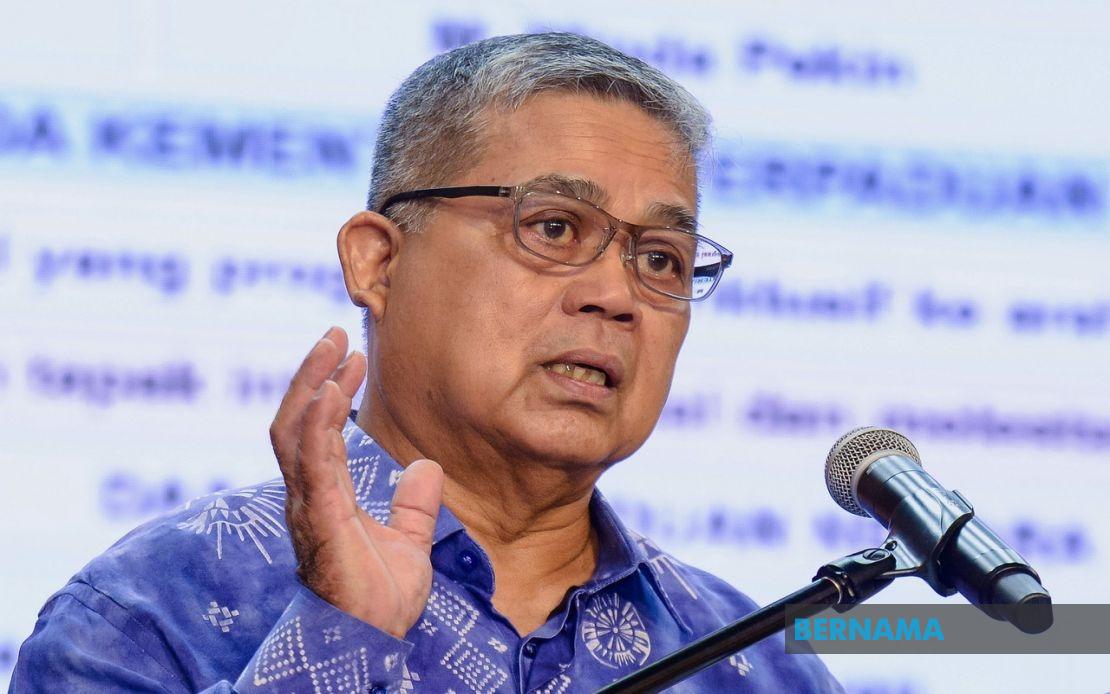
Malaysia's push to embed conflict resolution at the grassroots level has taken concrete form with the National Unity Ministry unveiling an ambitious target of producing 1,280 certified community mediators by 2030. Minister Datuk Aaron Ago Dagang announced the initiative on behalf of the ministry, positioning mediation services as a cornerstone of the government's broader vision to strengthen social cohesion and reduce strain on the judiciary through alternative dispute mechanisms.
The mediation agenda aligns closely with Malaysia's 13th Malaysia Plan, which emphasises inclusive and sustainable conflict management as part of the government's wider social unity framework. Rather than viewing community disputes as matters requiring formal legal intervention, the ministry sees trained mediators as enablers of voluntary settlements rooted in mutual understanding and negotiated compromise. This philosophical shift reflects a growing recognition in policymaking circles that court-based litigation, while necessary, often proves slower, costlier, and more damaging to the social fabric of tight-knit communities than non-adversarial resolution pathways.
The cost efficiency of mediation services represents a significant advantage for ordinary Malaysians. Unlike court proceedings, which involve legal fees, court costs, and prolonged timescales, mediation is offered entirely free of charge on a pro bono basis. Both disputing parties gain access to professional mediators without financial barriers, democratising access to quality dispute resolution services across economic strata. For neighbourhoods and communities where financial constraints often prevent residents from pursuing formal legal remedies, this availability transforms how conflicts are managed and relationships are preserved.
The physical expansion of mediation infrastructure underpins the ministry's human capital ambitions. By 2027, twelve new community mediation centres will be operational across Malaysia, strategically distributed to serve underserved regions and densely populated urban areas alike. The geographical spread is deliberately diverse: Kota Kinabalu and Labuan in Sabah and the Federal Territory; Kuala Lumpur and Shah Alam in the Klang Valley; Johor Bahru and Pontian in the southern peninsula; Terengganu, Kelantan, and Pahang in the east coast; Kedah and Perak in the northern corridor; Sarawak's Miri; and Melaka's Jasin. This distribution suggests the ministry recognises that conflict and community tensions transcend geography, affecting urban neighbourhoods, suburban housing estates, and rural settlements with equal urgency.
The strategic partnership with local authorities represents a crucial implementation lever. Community mediation centres are being anchored within existing grassroots infrastructure—Rukun Tetangga (neighbourhood associations), public housing complexes, and community activity centres. This embedded approach leverages existing trust networks and administrative relationships that residents already rely upon for other services. Rather than creating parallel bureaucratic structures, the ministry is grafting mediation capacity onto established community institutions, reducing implementation friction and improving uptake among target populations.
For Malaysia's diverse and increasingly urbanised society, where rapid development and demographic change sometimes strain traditional social bonds, trained community mediators serve as cultural brokers and conflict translators. Malaysia's ethnic and religious pluralism means disputes often carry intercommunal dimensions requiring not merely legal expertise but cultural sensitivity and understanding of different community norms and values. Certified mediators equipped with cross-cultural competency can help neighbours from different backgrounds find common ground more effectively than impersonal court processes, potentially reducing ethnic or religious tensions that can escalate from unresolved neighbourhood grievances.
The mediation framework also carries implications for Malaysia's informal economy and migrant worker populations. Many disputes involving informal sector workers, domestic helpers, or tenants in irregular housing arrangements never reach formal courts precisely because parties lack knowledge, resources, or trust in the legal system. Community mediation centres, operating at neighbourhood level with transparent and accessible processes, can absorb disputes that might otherwise fester or erupt into violence. For migrant workers in particular, mediation services offer culturally appropriate mechanisms for resolving conflicts without risking employment or immigration status through formal legal entanglement.
The ministry's commitment to this model reflects a broader Southeast Asian trend toward restorative and preventive justice approaches. Thailand, Indonesia, and Singapore have similarly expanded mediation infrastructure in recent years, recognising that sustainable peace requires addressing grievances before they calcify into antagonism. Malaysia's initiative positions the country within this regional movement while adapting mechanisms to its specific constitutional framework emphasising harmony and social stability.
From a policy implementation perspective, the 1,280-mediator target by 2030 implies sustained investment in training, certification standards, and quality assurance over the next six years. The ministry must establish credible pathways for mediator recruitment, develop standardised curricula, implement rigorous competency assessments, and create ongoing professional development mechanisms. The viability of this human capital agenda depends on whether compensation structures, job security, and professional recognition make mediation careers attractive enough to draw and retain quality practitioners, particularly in less urbanised areas where recruitment may prove challenging.
The expansion timeline reflects realistic implementation phasing—twelve centres by 2027 with mediator numbers scaling proportionally thereafter. This staggered approach allows the ministry to pilot approaches, refine training methodologies, and adjust resource allocation based on early performance data before full nationwide rollout. However, success ultimately depends on community awareness and uptake. Many Malaysians remain unfamiliar with mediation as an alternative to courts or informal dispute settlement through village elders or religious authorities, suggesting that awareness campaigns and trust-building efforts must accompany physical and human infrastructure expansion.
The initiative sits within Malaysia's broader MADANI development framework, which emphasises prosperity with purpose and inclusive growth. By strengthening community mediation capacity, the government signals commitment to building social infrastructure that supports wellbeing beyond purely economic metrics. Harmonious, cohesive communities where disputes are resolved fairly and relationships preserved create conditions where economic activity flourishes and citizens feel secure—prerequisites for shared prosperity that economic growth alone cannot guarantee. This positioning moves community mediation from a peripheral social service to a core development priority, potentially attracting dedicated policy attention and sustained funding that previous initiatives sometimes lacked.

