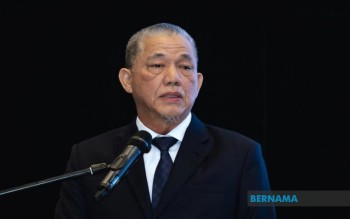
Malaysia is charting a pragmatic course through its energy transition by converting sites of retiring coal-fired power stations into renewable energy hubs and battery energy storage facilities, according to Deputy Prime Minister Datuk Seri Fadillah Yusof. Speaking at the World Economic Forum's "Malaysia's Energy Future: Power Sector Decarbonisation Deep Dive" forum in Kuala Lumpur, Fadillah outlined a proposed National Coal Site Repurposing Framework that seeks to maximise the value of existing infrastructure rather than allowing these assets to languish as abandoned industrial sites.
The framework addresses a critical but often-overlooked dimension of energy transition strategy: what happens to the physical infrastructure left behind when fossil fuel plants retire. Across Malaysia, coal-fired power stations represent substantial national assets encompassing established transmission networks, industrial facilities, and land parcels situated in strategically valuable locations. Rather than viewing these retiring installations as liabilities, policymakers are reconceptualising them as potential anchors for future clean energy development, a shift in thinking that could accelerate Malaysia's decarbonisation while supporting local economies dependent on these industrial hubs.
Fadillah, who simultaneously holds the portfolio of Energy Transition and Water Transformation Minister, stressed that the repurposing initiative draws on strategic insights from a World Economic Forum analysis titled "Beyond Coal: Building a Flexible, Resilient and Clean Power System for Malaysia." The framework is designed to establish formal pathways for sustained dialogue among government bodies, regulatory authorities, utility companies, investment firms and community stakeholders. Such collaboration is essential because successful coal site conversion requires navigating complex technical, financial and social considerations that no single actor can resolve independently.
The initiative reflects a broader recognition that coal plant retirement, while environmentally imperative, creates genuine economic disruption for communities and workforce groups that have depended on these facilities. By transforming retiring installations into centres of renewable energy innovation and manufacturing, Malaysia aims to channel investment toward affected regions and create employment opportunities aligned with clean energy sector growth. This approach acknowledges that energy transitions must deliver tangible benefits to stakeholders beyond simply reducing emissions.
Malaysia's commitment to phase out coal-fired electricity generation by 2044 and achieve 70 percent renewable energy installed capacity by 2050 represents one of Southeast Asia's more ambitious decarbonisation targets. However, Fadillah emphasised a critical constraint that often receives insufficient attention in transition planning: renewable energy deployment must advance faster than coal retirement. Failure to maintain this sequence risks replacing coal dependence with structural reliance on liquefied natural gas imports, merely shifting vulnerability from one fuel source to another rather than building genuine energy independence and security.
This concern carries particular weight for Malaysia, an energy-intensive economy with significant manufacturing sectors sensitive to fuel price fluctuations. Import dependence on LNG exposes the nation to volatile international commodity markets and geopolitical pressures beyond its control. A genuinely successful transition, Fadillah stressed, must reduce Malaysia's overall dependence on imported fuels, not simply substitute coal with equivalent quantities of imported gas. This perspective suggests that renewable energy deployment must substantially exceed current trajectory expectations to prevent the energy system from becoming ensnared in new dependencies.
To accelerate this transition, the Ministry of Energy Transition and Water Transformation is prioritising several interconnected initiatives. Large-scale solar deployment across industrial, commercial and utility segments provides the most immediately scalable renewable capacity expansion. The Corporate Renewable Energy Supply Scheme facilitates private sector participation in renewable procurement, creating market-driven incentives for clean energy development. Battery energy storage systems represent increasingly critical infrastructure as variable renewable sources expand, stabilising grid frequency and enabling higher renewable penetration. Smart grid modernisation, meanwhile, optimises electricity distribution efficiency and integrates distributed generation more seamlessly into national networks.
Beyond domestic measures, Fadillah reaffirmed Malaysia's commitment to advancing the ASEAN Power Grid initiative, which envisions expanded cross-border electricity trading throughout Southeast Asia. Regional electricity interconnection allows member countries to balance seasonal and temporal variations in renewable availability, improving overall system resilience while enabling economies with abundant renewable resources to export surplus capacity to neighbours facing temporary shortfalls. Enhanced cross-border electricity trade strengthens collective energy security across the region while facilitating deeper renewable energy integration that individual national grids might struggle to accommodate independently.
Looking further ahead, Malaysia continues evaluating long-term low-carbon energy options including advanced nuclear technologies and small modular reactors. These technologies could provide stable baseload power complementing variable renewable sources, though Fadillah underscored that deployment depends on meeting rigorous safety standards, establishing robust regulatory frameworks, ensuring institutional preparedness and maintaining public confidence. The cautious approach reflects lessons from nuclear energy debates elsewhere, where public opposition derailed technically sound projects due to inadequate engagement and transparency. Malaysian authorities recognise that successful energy transition requires sustained social licence and cannot proceed through technocratic fiat alone.
The coal site repurposing framework ultimately represents a policy innovation that acknowledges energy transitions involve profound spatial, economic and social dimensions beyond kilowatt calculations. By transforming coal country into renewable energy country through deliberate, collaborative planning, Malaysia signals commitment to managing transition disruption while maintaining momentum toward decarbonisation goals. How effectively the framework translates into concrete coal site conversions will substantially influence both Malaysia's energy security trajectory and the broader Southeast Asian transition pathway, making this initiative worthy of close regional attention.

