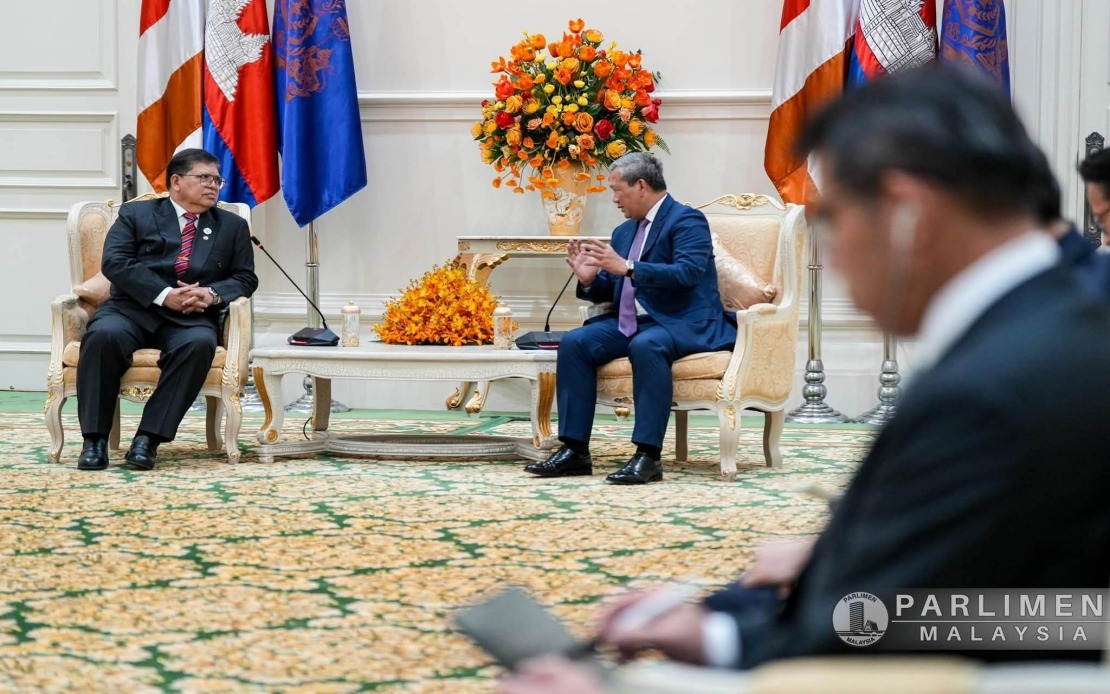
Malaysia has reiterated its commitment to supporting peaceful resolution of the Cambodia-Thailand border conflict through continued dialogue and diplomatic channels. Dewan Rakyat Speaker Tan Sri Johari Abdul made the statement following meetings held in Phnom Penh during the Second Inter-Parliamentary Speakers' Conference, underscoring Kuala Lumpur's position as a proponent of multilateral engagement within the regional bloc.
The ongoing tensions between Cambodia and Thailand along their shared frontier represent a significant test for ASEAN's core principles of peaceful dispute resolution. Speaking to the matter during his visit to Cambodia's capital from August 26 to 28, Johari emphasized that maintaining open communication channels remains essential for preventing escalation and safeguarding the collective interests of the ten-member regional organisation. His intervention reflects Malaysia's traditional role as a mediator within ASEAN, particularly on sensitive geopolitical matters that could fracture the bloc's unity.
During his engagement with Cambodian Prime Minister Hun Manet, Johari articulated Malaysia's understanding of Cambodia's position regarding the border situation and acknowledged the humanitarian dimensions affecting local communities in the disputed areas. This empathetic framing demonstrates Malaysia's recognition that such disputes carry real consequences for ordinary citizens living near flashpoints. The acknowledgment signals Malaysia's nuanced approach to the issue—neither dismissing Cambodia's concerns nor taking a rigid stance that might alienate other affected parties.
Johari stressed that bilateral disagreements between member states must not be permitted to undermine ASEAN's foundational framework of collective trust-building and consensus-seeking. The bloc has long positioned itself as a zone of peace and cooperation, and border conflicts threaten this carefully constructed identity. By emphasising that differences should be managed constructively within ASEAN structures, Malaysia is advocating for the utilisation of existing institutional mechanisms rather than allowing disputes to spiral into military confrontations or international complications.
Malaysia has committed to supporting initiatives aimed at returning all parties to the negotiating table, prioritising the preservation of regional peace and stability above other considerations. This stance reflects Kuala Lumpur's assessment that a military or unilateral approach would prove counterproductive and destabilising for the entire Southeast Asian region. The position also aligns with Malaysia's broader foreign policy objective of maintaining a rules-based regional order where disputes are resolved through established protocols.
Beyond the immediate border issue, Johari's visit focused on broadening the Malaysia-Cambodia relationship across multiple dimensions. The two nations discussed parliamentary cooperation mechanisms that could facilitate deeper legislative engagement and knowledge-sharing. Enhanced inter-parliamentary ties often serve as confidence-building measures during periods of regional tension, creating additional channels for communication and mutual understanding.
Economic cooperation featured prominently in bilateral discussions, reflecting the interconnected nature of modern Southeast Asian partnerships. Malaysia recognised Cambodia's efforts in providing a supportive environment for Malaysian business investments and operations within Cambodian territory. This commercial dimension reinforces incentives for all parties to maintain stable relations, as economic disruption following conflict would harm businesses and workers on both sides of borders.
The two countries identified significant potential for expanded technical and vocational education collaboration, an area that could yield long-term benefits for both populations. Such programmes create people-to-people connections and develop skilled workforces capable of driving economic growth. Skills training initiatives, institutional exchanges, and industry partnerships represent practical mechanisms through which countries can build interdependence and mutual prosperity.
Youth engagement emerged as another priority area, with both nations agreeing to expand opportunities for younger populations to participate in exchange programmes and collaborative initiatives spanning economic, social, and parliamentary spheres. Investing in youth connections helps construct a generation of Southeast Asians with shared experiences and invested interests in regional stability. These programmes also provide alternatives to conflict narratives and create networks of individuals across borders who benefit from peace.
Johari's messaging underscores Malaysia's conviction that ASEAN's value proposition depends fundamentally on member states' willingness to manage their differences without allowing them to dominate the regional agenda. The organisation's relevance in an increasingly complex geopolitical environment rests on its ability to provide platforms for dialogue and mechanisms for peaceful resolution. Any significant rupture within ASEAN could invite external powers to exploit divisions and undermine the regional autonomy that ASEAN members have worked to maintain.
The timing of these statements carries particular significance given the heightened tensions between Cambodia and Thailand. By publicly articulating Malaysia's position through high-level parliamentary channels, Johari sends signals to all stakeholders that the broader ASEAN community remains invested in peaceful outcomes. Such diplomatic positioning, while not immediately resolving disputes, establishes normative pressure and creates incentive structures favouring negotiation over confrontation.
Malaysia's continued emphasis on dialogue reflects a strategic calculation that regional peace ultimately benefits all member states, including those not directly involved in particular disputes. For Malaysian readers and policymakers, the message reinforces how individual border conflicts possess spillover potential affecting trade routes, investment flows, and security conditions across the broader region. Malaysia's diplomatic engagement on the Cambodia-Thailand issue thus serves not merely humanitarian or altruistic purposes, but also protects Malaysian national interests in maintaining a stable Southeast Asia.

