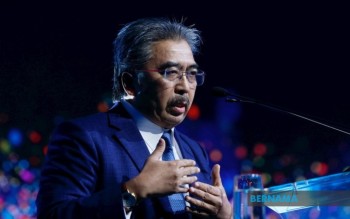
The Malaysian government is navigating a delicate policy challenge in determining how best to finance the sprawling infrastructure needed to support electric vehicle adoption while protecting consumers from excessive cost increases. The Ministry of Investment, Trade and Industry revealed during a Dewan Negara session that no final decision has been made on implementing a proposed EV levy, with officials still examining the most appropriate framework for such a mechanism. MITI Minister Datuk Seri Johari Abdul Ghani emphasized that any approach must carefully weigh the competing interests of accelerating the clean energy transition against maintaining affordability for ordinary Malaysians grappling with cost-of-living pressures.
The fundamental tension underlying this policy dilemma stems from Malaysia's current fiscal position. Operating under a budget deficit, the government faces severe constraints in directly financing the massive capital investment required to build a public charging network comparable to infrastructure systems in advanced economies like China. This budgetary reality has prompted officials to explore alternative funding mechanisms, with a per-vehicle levy on EV sales emerging as a potential solution to generate sustainable revenue for charging station expansion. Such an approach would create a dedicated fund specifically earmarked for infrastructure development rather than relying on manufacturers or distributors to shoulder the entire investment burden voluntarily.
However, any levy structure carries inherent economic trade-offs that policymakers must carefully manage. Johari acknowledged that if costs are imposed directly on vehicle manufacturers, these expenses will inevitably flow through to consumers via higher purchase prices, potentially dampening demand for electric vehicles precisely when the government aims to accelerate market penetration. This creates a paradox where funding mechanisms designed to support EV adoption could inadvertently slow the very transition they are meant to facilitate. The ministry recognizes that consumer behaviour is highly price-sensitive, particularly in Malaysia where vehicle purchases represent substantial household expenditures and where traditional internal combustion engines remain the overwhelming majority of sales.
The broader context reveals Malaysia's complex energy and transportation landscape. Unlike developed nations with mature renewable energy portfolios, Malaysia continues to depend significantly on gas and coal-fired electricity generation to power its grid. This dependency means that widespread EV adoption simultaneously raises demands on the existing power generation infrastructure and transmission networks. The government must therefore coordinate investments across multiple systems—charging stations, grid modernization, and potentially renewable energy expansion—making the financial challenge considerably more expansive than simply deploying chargers nationwide. These interconnected infrastructure requirements explain why officials have stressed the importance of understanding the complete policy picture rather than focusing narrowly on vehicle taxation alone.
The subsidies Malaysia has already extended to support EV market development further complicate fiscal management. Government support has traditionally helped keep electric vehicles financially accessible relative to conventional cars, effectively cushioning consumers against the full cost differential. As Johari noted, these subsidies are not sustainably funded indefinitely, and the ministry must determine a realistic endpoint or transition strategy for these support measures. The question becomes whether subsidies should phase out gradually as infrastructure develops, whether they should shift form entirely, or whether alternative mechanisms should emerge to maintain affordability during the critical growth phase of EV market development.
The proposal for a levy specifically on each EV sold represents one policy pathway under serious consideration. Unlike general taxation mechanisms, a dedicated EV levy would create transparency by directly linking the costs that buyers incur to the public charging infrastructure those same vehicles require. This transparency could strengthen public acceptance if consumers understand that their levies directly fund convenient charging access. The dedicated fund approach also prevents EV-generated revenue from being absorbed into general government finances where it might not prioritize transport infrastructure investments. Establishing such a fund would require careful legislative design to ensure governance frameworks prevent resource diversion and maintain accountability for how proceeds are allocated.
Yet implementing any levy scheme requires calibrating rates thoughtfully to avoid unintended consequences. Setting levies too high could price potentially-interested consumers out of the EV market entirely, reducing adoption momentum and ultimately limiting the revenue base available for infrastructure development. Conversely, setting levies too low would generate insufficient funding to build the charging networks necessary to support rapid EV growth, creating a bottleneck where vehicle availability exceeds charging accessibility. This optimization challenge suggests that successful implementation will require iterative adjustments based on market responses and infrastructure deployment progress, rather than imposing fixed rates indefinitely.
Malaysia's situation differs meaningfully from wealthier East Asian economies that have pursued more aggressive EV transitions. Singapore, South Korea, and Japan have combined government subsidies with substantial public investment in charging infrastructure, leveraging stronger fiscal positions to accelerate adoption. China's state capacity to directly finance massive charging networks through centralized planning represents another model. Malaysia must therefore develop policy approaches suited to its own economic constraints and governance structures rather than simply copying foreign precedents. This reality underscores why MITI officials have repeatedly emphasized the need to consider local conditions rather than applying one-size-fits-all solutions.
The government's hesitation to definitively commit to any single approach reflects prudent policymaking given the uncertainty surrounding technology trajectories and market evolution. Battery technology continues advancing rapidly, with implications for charging speeds, vehicle ranges, and consumer preferences. Market competition may yet produce unexpected solutions where private sector actors contribute more substantially to charging infrastructure than currently anticipated. Deferring final policy decisions allows the government flexibility to adjust course as new information emerges while still actively exploring viable mechanisms that could generate revenue without unduly burdening consumers or manufacturing sectors.
For Malaysian consumers and the automotive industry, this extended deliberation period creates both opportunity and uncertainty. Consumers shopping for vehicles today face unclear long-term cost structures depending on levy implementation decisions yet unmade. Manufacturers planning investments in electric vehicle production or importation must navigate ambiguous future regulatory and cost environments. This uncertainty could dampen private sector enthusiasm for EV ecosystem investments that might otherwise occur if policy frameworks were definitively established. Conversely, the extended consultation period allows stakeholders to provide input before policies crystallize, potentially producing more balanced outcomes than hasty decisions might generate.
The wider Southeast Asian context adds pressure to resolve Malaysia's EV charging infrastructure challenge. Regional peers including Thailand, Indonesia, and Vietnam are actively developing their own charging networks and EV incentive schemes, creating competitive dynamics around attracting manufacturing investments and market share in electric vehicles. If Malaysia's uncertainty around charging infrastructure persists too long, investors might favor destinations offering clearer policy certainty. This regional competition reinforces the importance of establishing sustainable, coherent policy frameworks relatively soon, even as policymakers appropriately take time to develop the most suitable approaches for Malaysian conditions.
Moving forward, MITI's stated commitment to balancing public interest with infrastructure development needs will likely require compromise solutions rather than ideologically pure approaches. Combinations of limited levies, continued government subsidies for strategic periods, private sector partnerships, and international financing mechanisms may together form workable policies where single instruments alone prove inadequate. The ministry's transparent acknowledgment that no easy answers exist, combined with genuine exploration of multiple mechanisms, suggests policymakers recognize both the urgency of building charging infrastructure and the legitimacy of public concerns about cost burdens. How successfully Malaysia navigates this balance will significantly influence the pace and trajectory of its electric vehicle transition.

