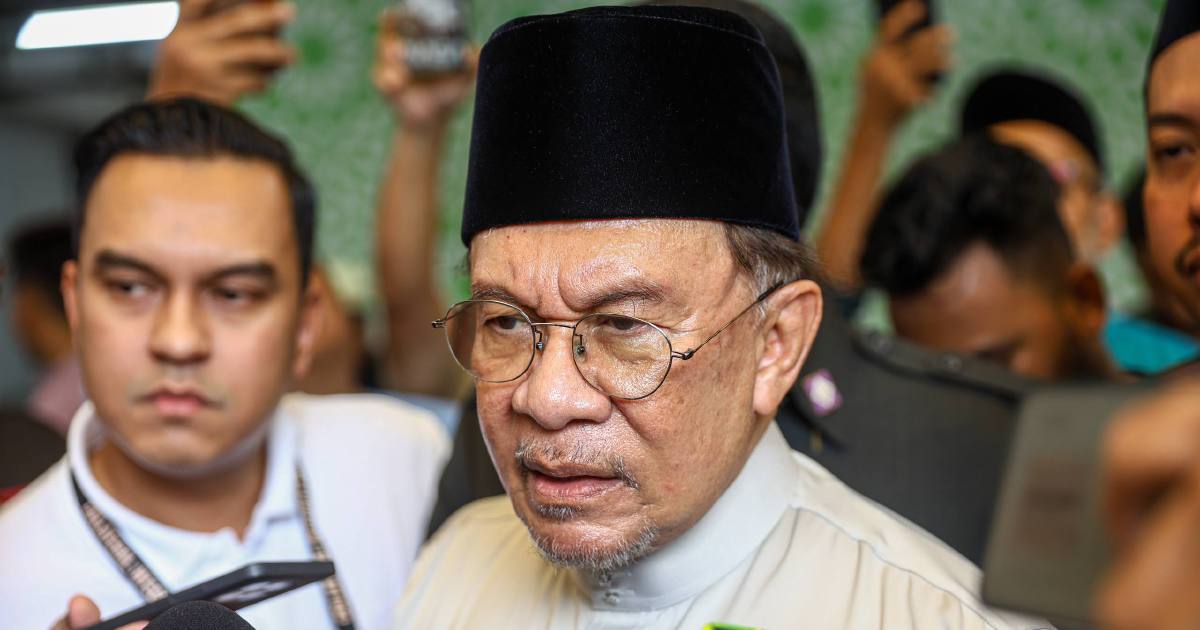
Prime Minister Datuk Seri Anwar Ibrahim has reaffirmed Malaysia's unwavering commitment to pursuing accountability over the 1MDB financial scandal, declaring that a US presidential pardon for the scandal's key architect Jho Low would not alter the country's legal position or investigative priorities.
The statement represents a significant assertion of Malaysian sovereignty in the ongoing 1MDB matter, which has stretched across multiple jurisdictions and captured international attention for nearly a decade. Anwar's remarks underscore the independence of Malaysia's judicial and investigative apparatus, signalling that external decisions by foreign governments will not dictate domestic policy or legal strategy. This positioning carries particular weight given the complexity of the 1MDB affair, where billions in stolen funds allegedly transited through international banking channels, implicating officials across multiple nations.
Jho Low, the fugitive financier who orchestrated one of the world's largest embezzlement schemes, has remained a central figure in the unfolding legal consequences of 1MDB. The businessman fled Malaysia in 2015 as investigations intensified, subsequently evading extradition attempts and prosecution efforts. His whereabouts have become the subject of international speculation, with reports placing him in various locations beyond the reach of Malaysian authorities. The question of whether he might seek a pardon from the United States—where he also faces serious legal charges—has loomed as a potential complication in Malaysia's pursuit of justice.
The 1MDB scandal itself represents a watershed moment in Malaysian governance and international financial oversight. The state investment fund, established in 2009, became the vehicle through which an estimated $4.5 billion was misappropriated through an elaborate scheme involving shell companies, forged documents, and complicit financial institutions across continents. The fallout extended far beyond Malaysia's borders, prompting investigations in the United States, Singapore, Switzerland, and other jurisdictions, each revealing layers of corruption that implicated politicians, bankers, and intermediaries at the highest levels.
For Malaysia specifically, the investigation and prosecution of those responsible for 1MDB became intertwined with the country's political transformation. The Change of Government in 2018 that brought down the administration under which 1MDB flourished created both opportunity and pressure to pursue accountability. Successive Malaysian governments have maintained the legal framework for prosecution, though the progress of cases has varied depending on political circumstances and judicial resources. Anwar's explicit statement therefore serves to entrench Malaysia's commitment across potential future political shifts.
The international dimensions of the Jho Low case illustrate the challenges modern law enforcement faces in pursuing white-collar criminals across borders. The United States has successfully prosecuted several individuals connected to the 1MDB scheme and seized substantial assets acquired through the proceeds of corruption. Jho Low's residence beyond Malaysia's jurisdiction—whether in China, the UAE, or elsewhere—has complicated direct apprehension. Any US pardon would represent a significant setback to coordinated international enforcement efforts, though it would not necessarily terminate Malaysia's parallel investigations and prosecutions.
Anwar's statement also carries implications for regional financial governance and the Southeast Asian response to transnational corruption. Malaysia's firmness on this issue sends a signal to other countries in ASEAN that individual nations will pursue accountability for major financial crimes regardless of external pressures or developments. This stance reinforces the principle that capital flight and asylum-seeking by white-collar criminals should not provide indefinite protection, and that regional cooperation on anti-corruption efforts remains a priority despite geopolitical complexities.
The domestic politics surrounding the 1MDB matter remain sensitive in Malaysia. Prosecutions of high-profile political figures connected to the scandal have proceeded at varying speeds, with some convictions secured while others remain ongoing. Civil society and political opposition have consistently scrutinized the government's commitment to full accountability, using the pace and scope of investigations as a measure of ruling coalition sincerity. Anwar's reassurance to Malaysians that the country will not be deflected by external developments appears designed to address these concerns and demonstrate that pursuit of the truth remains non-negotiable.
From an international law perspective, Anwar's remarks highlight the distinction between different legal systems' obligations regarding transnational crime. A US presidential pardon affects only US prosecutions and penalties; it creates no legal immunity from Malaysian prosecution for crimes committed against Malaysian citizens or Malaysian institutions. This fundamental principle of jurisdictional independence means that even if Jho Low were to obtain relief in the American system, he would remain liable for charges in Malaysia, though his continued evasion would prevent enforcement.
The financial recovery aspect of the 1MDB scandal remains ongoing across multiple jurisdictions. Billions in assets have been traced, seized, or are the subject of civil recovery actions. Malaysia has negotiated the return of significant sums from various sources, though the total recovery remains a fraction of the original theft. Any development affecting Jho Low's legal status in one jurisdiction could theoretically impact the scope of asset recovery efforts, making Anwar's statement relevant not only to criminal accountability but also to the government's efforts to reclaim stolen public money.
Looking forward, the evolution of the Jho Low case will likely remain a barometer of Malaysian governance standards and regional commitment to financial accountability. Anwar's explicit rejection of external influence on this matter positions Malaysia to maintain its investigative and prosecutorial momentum regardless of how other countries resolve their own proceedings. This independence reflects a broader shift in Malaysian politics toward emphasizing the rule of law and accountability as essential to national recovery and international standing.

