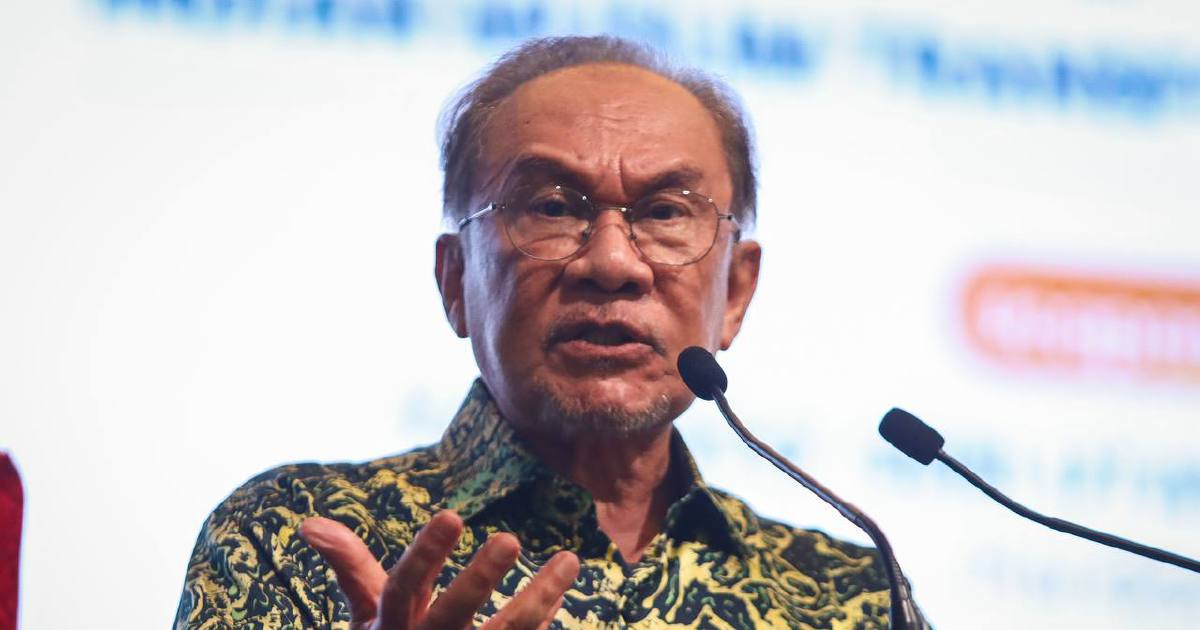
Malaysia's Prime Minister Datuk Seri Anwar Ibrahim has reaffirmed the government's resolve to maintain public order in the face of growing concerns about refugee encampments and demonstrations, declaring that no displaced group will be permitted to commandeer public spaces or create disruptions in urban areas. The statement reflects mounting tension between humanitarian obligations and domestic governance pressures, particularly as Southeast Asia grapples with unprecedented refugee flows from conflict zones and economic crises across the region.
The assertion underscores a significant policy direction for a country already hosting one of Asia's largest undocumented refugee populations. Malaysia has traditionally served as a transit destination rather than a long-term home for displaced persons, yet over the past two decades it has become a de facto haven for hundreds of thousands of asylum seekers. The Rohingya crisis alone brought approximately 180,000 stateless Muslim minorities to Malaysian shores, straining social services, housing markets, and public sentiment. Without formal refugee camps managed by the United Nations High Commissioner for Refugees (UNHCR), displaced communities have concentrated in urban poor neighbourhoods, creating visible points of friction between refugee populations and local residents competing for limited resources.
Anwar's hardline messaging suggests the administration is balancing its stated commitment to humanitarian principles with pragmatic recognition that public tolerance for visible refugee populations has eroded significantly. Recent years have seen sporadic protests by local communities in Kuala Lumpur, Penang, and Johor against what they perceive as unfair allocation of welfare benefits, job competition, and security concerns. Political opposition parties have seized on refugee-related anxieties, framing the issue as a matter of national sovereignty and Malaysian citizens' interests. Against this backdrop, the Prime Minister's declaration appears designed to reassure the electorate that government is firmly in control and prioritising the welfare of Malaysian nationals.
The government's position reflects evolving regional dynamics. Thailand, Indonesia, and Bangladesh have similarly tightened their approaches to refugee management, citing strain on public services and security concerns. Bangladesh, which hosts nearly one million Rohingya in overcrowded camps, has faced international criticism over conditions and restrictions on movement. Southeast Asian governments generally lack the institutional capacity and financial resources to manage large-scale refugee crises independently, yet face mounting domestic political pressure to do so. Malaysia's strategy of preventing visible congregation appears rooted partly in this bind: unable or unwilling to mount large-scale deportation operations, authorities seek instead to prevent the emergence of identifiable encampments that might invite further protests or media attention.
Yet the practical enforcement of such a policy poses considerable challenges. UNHCR estimates approximately 180,000 registered refugees and asylum seekers remain in Malaysia, with additional undocumented populations likely substantially larger. Most exist outside formal structures, surviving through informal work in manufacturing, construction, domestic service, and street commerce. Preventing them from occupying public spaces requires sustained police and municipal enforcement, heightened immigration raids, and potentially expanded detention capacity—measures that carry humanitarian and reputational costs. International human rights organisations have previously documented overcrowding and poor conditions at Malaysia's immigration detention centres, raising concerns about the sustainability of enforcement-heavy approaches.
The timing of Anwar's remarks coincides with broader regional conversations about refugee burden-sharing. The UNHCR has repeatedly called on wealthier nations and the international community to assume greater responsibility for displaced persons, rather than leaving neighbouring countries to bear disproportionate costs. Malaysia, as a middle-income nation and ASEAN member, occupies an ambiguous position—wealthy enough to host asylum seekers according to some international standards, yet economically vulnerable enough that domestic welfare provision remains contested. The government's stance may also signal frustration with developed nations' limited resettlement contributions and uneven international engagement with the refugee crisis.
From a longer-term perspective, the government's public order focus highlights tension between Malaysia's aspirations as a middle-income country and the humanitarian realities of mass displacement in its region. Economic development narratives emphasise stability, investor confidence, and orderly cities—conditions potentially undermined by visible populations of displaced persons. Yet the underlying drivers of refugee migration—civil wars in Myanmar and Syria, gang violence in Central America, poverty across South Asia—show no signs of abating. Without substantial international investment in refugee-receiving countries' infrastructure, social services, and livelihood programmes, enforcement-focused approaches may prove unsustainable or counterproductive in the longer term.
The Prime Minister's declaration also carries implications for Malaysia's international standing and soft power ambitions. The country presents itself as a bridge between the Muslim world and the West, yet increasingly restrictive refugee policies may complicate that narrative, particularly given Malaysia's large Muslim population and historical role supporting Palestinian causes and other displaced communities. International observers will likely scrutinise whether Malaysia's position reflects genuine governance constraints or political calculation designed to mollify nativist constituencies ahead of future elections.
Moving forward, the government faces pressure to articulate a more comprehensive refugee strategy beyond public order enforcement. Regional cooperation mechanisms, international burden-sharing agreements, and investment in host-community infrastructure remain underdeveloped. Without such frameworks, individual declarations about preventing disruption may address symptoms rather than underlying causes, potentially intensifying grievances among both refugee communities and Malaysian citizens competing for resources in increasingly crowded urban areas.

