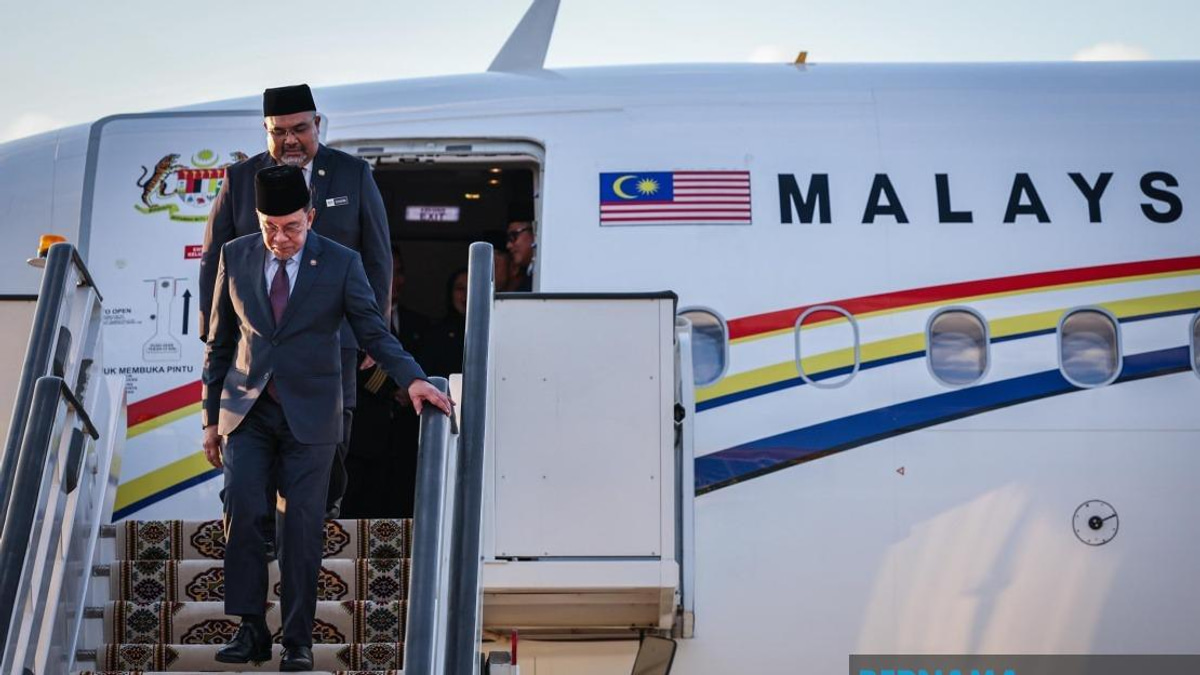
Prime Minister Anwar Ibrahim has issued a stark warning that developing nations will refuse to tolerate what he characterizes as inequitable treatment emanating from European capitals, signalling a more assertive stance from Malaysia's leadership on the international stage. Speaking with conviction on the matter, Anwar singled out Malaysia's defence-related disagreement with Norway as emblematic of the broader frustrations facing the Global South when engaging with wealthy Western democracies that he argues apply selective standards based on geopolitical convenience.
The dispute with Norway, which has centred on defence procurement and related commercial matters, has become a flashpoint demonstrating how developed European nations sometimes leverage their economic and diplomatic influence to pressure smaller trading partners. Rather than capitulating to such pressure, Anwar indicated that Malaysia and other developing economies are actively seeking alternative pathways and partnerships that respect their sovereignty and commercial interests. This represents a tactical shift in Malaysia's approach to its relationship with the Nordic country and, by extension, European nations more broadly.
Anwar's comments reflect a growing impatience among developing-world leaders with what many perceive as inconsistent application of international norms. Wealthy nations often position themselves as defenders of universal principles—whether related to governance standards, environmental commitments, or defence partnerships—yet these same countries frequently exempt themselves from identical scrutiny or grant themselves exemptions when their strategic interests dictate. For Malaysia and comparable middle-income nations, this perceived hypocrisy has become increasingly difficult to overlook or accommodate without protest.
The Malaysian government's willingness to articulate this grievance at the highest level signals a recalibration of how Kuala Lumpur intends to navigate its external relationships. Rather than accepting the historical pattern wherein developed nations set the terms of engagement, Malaysia's leadership is signalling that it expects reciprocal respect and treatment. This posture carries particular weight given Malaysia's positioning as a middle power with significant regional influence across Southeast Asia and the Indian Ocean region.
The Norway situation itself carries implications beyond bilateral relations. It touches on questions of defence autonomy, the ability of nations to make independent procurement decisions, and the extent to which commercial disputes become entangled with political pressure. When developing nations perceive that their defence choices or economic decisions are being constrained by external powers invoking normative arguments, it breeds resentment and pushes governments toward diversifying their partnerships and dependencies.
Anwar's remarks also resonate within the context of broader geopolitical realignment. As competition intensifies between major powers and regional blocs, developing nations have gained leverage by refusing to align exclusively with traditional Western partners. Malaysia, with its strategic location and significant economic heft, has cultivated relationships with China, India, the United States, and regional partners, giving it genuine alternatives when disputes arise with any single party. This diplomatic flexibility undermines the historical ability of any single power or bloc to dictate terms unilaterally.
The Prime Minister's public stance will likely encourage other developing nations facing similar grievances to voice their concerns more forcefully. There is a demonstration effect at work here: when a nation of Malaysia's stature pushes back against what it views as unfair treatment, it provides political cover for smaller or less influential countries to do likewise. Collectively, developing nations represent the majority of the world's population and command considerable economic weight, yet they have historically been excluded from decision-making frameworks established by and for the benefit of industrialized powers.
Looking ahead, Malaysia's pursuit of alternative solutions to its dispute with Norway will likely take multiple forms. The government may accelerate engagement with non-European suppliers for its defence requirements, deepen ties with regional partners capable of addressing similar security needs, or establish new commercial relationships that reduce dependency on any single developed market. Each alternative pursued sends a message that Malaysia has options and will not remain captive to a single relationship if it perceives unfair treatment.
For European capitals, Anwar's intervention should serve as a cautionary note. The postcolonial world has matured considerably, and nations like Malaysia no longer view engagement with Europe as a one-way street requiring deference. The era in which developing nations felt compelled to accept discriminatory treatment or unequal partnerships in exchange for market access or security guarantees is waning. Anwar's comments crystallize this shift and suggest that Malaysia intends to be an active architect of its own foreign policy rather than a passive recipient of terms dictated by others.
The broader implication extends to how international relations may evolve in coming years. If developed nations continue to apply inconsistent standards or use economic leverage to enforce compliance with their preferred norms, they risk accelerating the decoupling and reorientation of developing economies toward alternative partnerships. Malaysia's stance suggests that middle powers are increasingly willing to bear the short-term costs of standing firm on questions of dignity and equal treatment. For the developing world, this represents a significant psychological and diplomatic shift that could reshape global alignments.