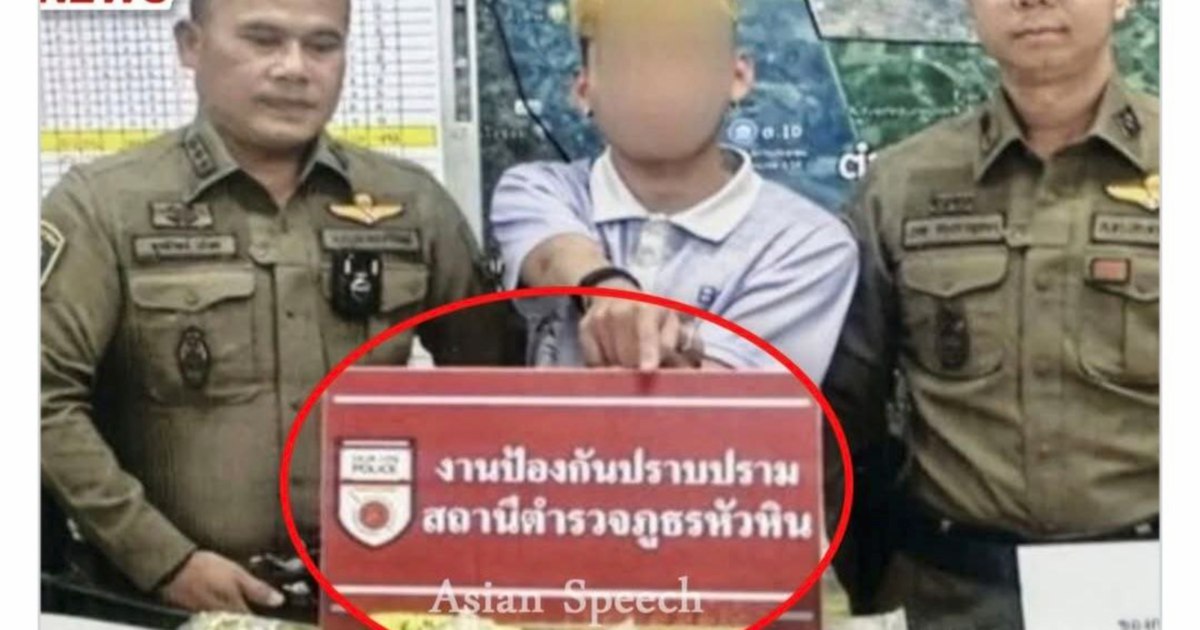
Thai police arrested a 20-year-old Malaysian national in Hua Hin, Prachuap Khiri Khan province on Saturday after seizing one of the largest crystal methamphetamine shipments in recent cross-border operations, valued at more than RM8 million. The arrest represents a significant blow to trafficking networks operating along the Thailand-Malaysia corridor and highlights the scale of drug movement through the region.
The bust unfolded when officers manning a checkpoint observed a BMW vehicle attempting to bypass security protocols, raising immediate suspicion among personnel stationed at the site. Upon investigation, the vehicle was intercepted and subjected to a thorough search, which revealed the massive drug consignment concealed within its compartments. The quantity—166 kilograms of crystal methamphetamine, commonly known as syabu—represents a particularly dangerous catch given the potency and widespread demand for the substance across Southeast Asia.
The arrested individual, identified as a 20-year-old man, is now in Thai police custody pending formal charges and trial procedures. His age suggests he may have been recruited into trafficking operations due to perceived vulnerabilities or desperation, a pattern frequently observed in cross-border drug operations where recruitment networks target younger individuals who can serve as couriers or drivers. The investigation into his involvement, sources, and connections within the broader trafficking chain continues, with authorities likely examining his communications, financial records, and known associates.
Crystal methamphetamine remains one of the most problematic substances fuelling addiction crises throughout Southeast Asia. Its production in clandestine laboratories, particularly in border regions of Myanmar and Laos, has accelerated significantly over the past decade. The drug commands premium prices in major consumption centres across Thailand, Malaysia, and beyond, creating powerful economic incentives for trafficking networks to maintain supply routes despite law enforcement efforts. The RM8 million valuation of this single shipment illustrates the financial stakes involved in these operations.
The incident emphasizes the porous nature of land borders in the region and the continuing challenges faced by both Thai and Malaysian authorities in disrupting drug flows. While Thailand maintains an extensive network of checkpoints along major highways and border crossing points, sophisticated trafficking operations employ various countermeasures including decoy shipments, corruption of border personnel, and the use of less conspicuous routes through secondary roads and remote areas. The fact that this substantial consignment was attempted through a checkpoint suggests either operational overconfidence or inadequate intelligence suggesting the route was compromised.
For Malaysia, the seizure carries particular significance given that the suspect is a national, raising questions about domestic recruitment and participation in transnational trafficking enterprises. Malaysian authorities have expressed growing concern about citizens becoming involved in drug smuggling operations, whether as willing participants seeking profit or as coerced individuals exploited through debt or threats. The demographic profile of the arrested individual—relatively young and potentially economically vulnerable—fits patterns of recruitment identified by law enforcement agencies across the country.
Cross-border drug operations represent a complex regional challenge requiring coordinated responses between Thailand and Malaysia. Intelligence sharing, joint task forces, and synchronized enforcement operations have yielded results, but the sheer profitability of the trade ensures that criminal networks continually adapt their methods. The seizure in Hua Hin demonstrates that cooperation does produce tangible outcomes, yet the volume of drugs still reaching end-users suggests that apprehensions represent only a fraction of total trafficking activity.
The detention of the Malaysian suspect in a Thai facility raises consular considerations, as Malaysian diplomatic missions typically seek to ensure that detained nationals receive appropriate legal representation and consular access. Thailand's legal system provides for trials in specialized drug courts, which generally result in severe penalties including lengthy prison sentences for major trafficking cases. The individual now faces the prospect of extended imprisonment under Thai law, which maintains some of the region's strictest drug-related sentencing frameworks.
This latest seizure contributes to ongoing efforts by both nations to map trafficking patterns and identify vulnerability points requiring enhanced enforcement. Regional intelligence suggests that multiple organizations operate competing routes and methods, with competition occasionally manifesting in violence as groups vie for market access and operational security. The capture of significant shipments can temporarily disrupt supply chains, though nimble criminal enterprises typically compensate through alternative arrangements or increased production from upstream sources.
The broader implications extend beyond immediate law enforcement success to considerations of demand reduction and prevention. While interdiction operations remain important, Malaysian and Thai policymakers increasingly acknowledge that addressing addiction through treatment access, public health messaging, and economic development—particularly in communities vulnerable to recruitment—represents essential complements to enforcement efforts. The presence of substantial methamphetamine supplies in the region indicates robust demand from consumers willing to pay premium prices, suggesting that supply-side interventions alone cannot resolve the underlying challenge.

