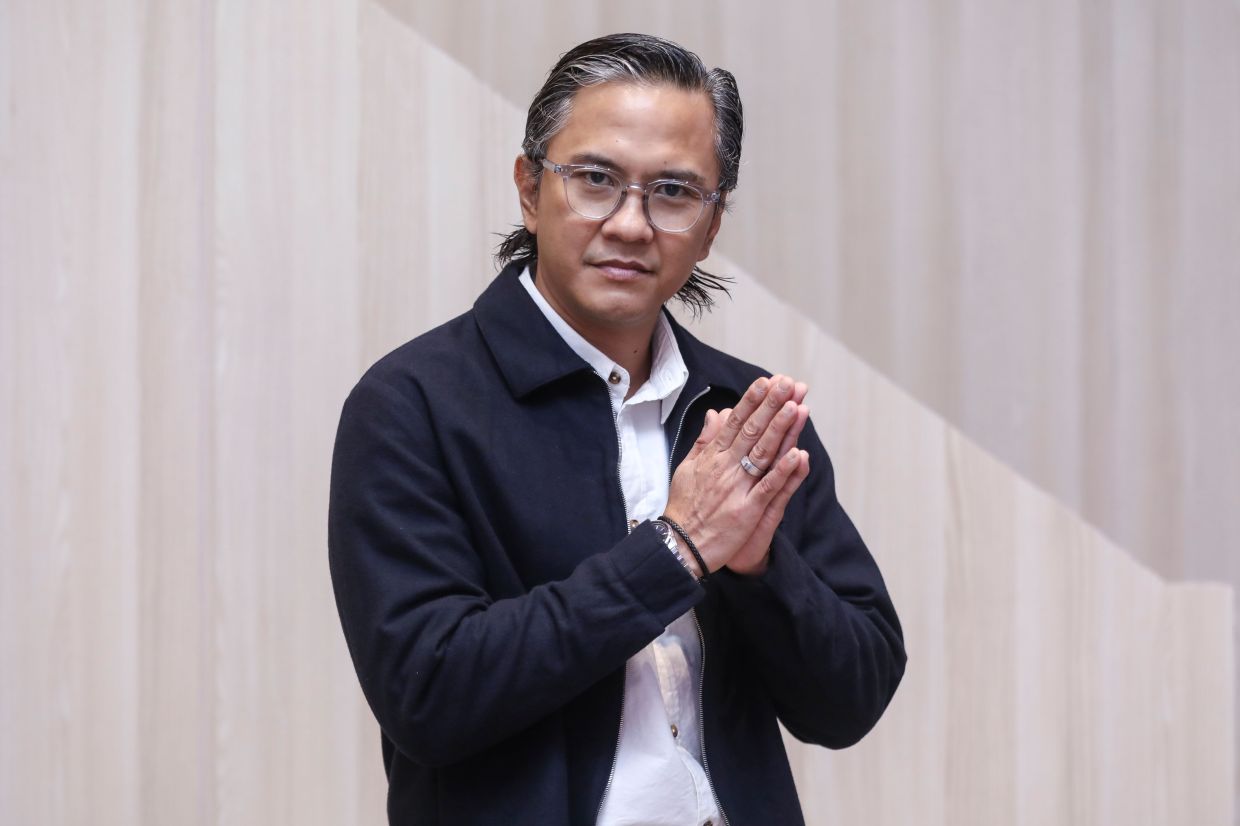
At 46 years old, veteran actor Beto Kusyairy has reached a career crossroads where commercial success matters far less than creative integrity. The Malaysia Film Festival Best Actor winner is now deliberately selecting projects based on artistic merit and personal resonance rather than mainstream appeal, a philosophy that has shaped his recent work across multiple platforms including film, television and radio drama.
This shift in priorities recently brought him to a special screening of the penultimate episode of an Astro Originals series that has captivated the nation. The eight-episode production casts Kusyairy as the father of an eight-year-old boy whose disappearance ends in tragedy. His character presents a compelling moral puzzle: outwardly a devoted parent whose fuzzy recollection of the fateful day makes him a prime suspect in his own son's murder investigation. The narrative framework allows the drama to probe deep into uncomfortable territory including childhood trauma, sexual abuse and child exploitation—subjects traditionally skirted in Malaysian mainstream entertainment.
The series has achieved remarkable traction both domestically and internationally. Astro Shaw reported that the production generated over 58 million video views and reached 9.5 million users across social media platforms, establishing itself as one of the year's most discussed local productions. Its momentum extended to Netflix, where it sustained a Top 10 position for six consecutive weeks, indicating substantial crossover appeal beyond traditional Malaysian television audiences.
Kusyairy attributes much of this success to organic audience participation. Early viewers engaged enthusiastically with the mystery narrative itself, treating the drama as an interactive puzzle where every detail might unlock the solution. This detective-minded engagement transformed passive viewing into active discussion, creating a participatory entertainment experience that resonated across digital communities. The actor's own social media interactions with fans on Instagram and Threads, mirrored by his cast colleagues, amplified this sense of community investment in the unfolding story.
What began as lighthearted speculation gradually matured into substantive conversation about the series' thematic core. Kusyairy has witnessed this evolution firsthand through direct audience feedback. Viewers have privately messaged the actor with personal accounts of experiences mirroring storylines in the drama—disclosures of childhood trauma, abuse and exploitation that many had previously kept hidden. The platform provided by popular entertainment has emboldened viewers to articulate long-suppressed experiences, transforming the series into an unexpected therapeutic outlet.
This phenomenon points toward a broader societal shift that Kusyairy eagerly highlights. Previous generations of Malaysian families prioritized maintaining family honour and protecting reputation, often at the cost of justice and healing for abuse survivors. Contemporary society, by contrast, demonstrates markedly greater willingness to confront these issues publicly and pursue accountability. Younger Malaysians in particular show less tolerance for the protective silence that once characterized community responses to trauma and abuse.
The production team never anticipated the depth of social conversation their drama would catalyse. Initial intentions were straightforward: narrate an authentic story that would raise awareness and emotionally connect with viewers. The unexpected outcome—that audiences would use the series as a springboard for discussing previously taboo subjects—suggests that Malaysian audiences have fundamentally evolved in their consumption maturity. What matters crucially, Kusyairy emphasizes, is the method of storytelling. When creative teams handle sensitive material with narrative subtlety rather than crude sensationalism, viewers embrace rather than reject the challenging content.
Kusyairy resists framing the series as explicitly educational, since drama operates through emotional experience rather than didactic instruction. Yet the show's trajectory implies something significant about Malaysian audiences: they possess both readiness and appetite for stories that challenge social conventions and address difficult realities. The success suggests that creators need not sanitize narratives to achieve popularity, a revelation that could fundamentally reshape Malaysian production strategy.
Reflecting on the project's broader implications, Kusyairy invokes Eugene Bell Jr's exhortation to "aspire to inspire." The veteran actor hopes the series' impact will embolden filmmakers, screenwriters and production teams to pursue more ambitious and complex storytelling that transcends genre conventions. The Malaysian film and television sector has already demonstrated measurable advancement in technical production values and narrative ambition, with increasingly diverse offerings spanning action, comedy, crime thrillers and horror.
Kusyairy views his current project as contributing to this positive momentum rather than inaugurating it. The industry's trajectory toward greater sophistication in both production and storytelling suggests that the appetite for challenging narratives extends beyond isolated successes. As younger creators assume greater production roles and audiences continue demanding more complex representations of social reality, the boundary between commercial viability and artistic integrity continues dissolving.
For Malaysian viewers accustomed to more formulaic entertainment, the resonance of narratives tackling abuse, trauma and justice signals a significant recalibration of audience expectations. The private messages Kusyairy receives from viewers finding catharsis in dramatic representation underscore how entertainment functions as more than distraction—it serves as cultural mirror permitting society to examine uncomfortable truths. This recognition may ultimately prove the series' most enduring legacy, reshaping perceptions of what Malaysian audiences will tolerate and what creators feel emboldened to produce.

