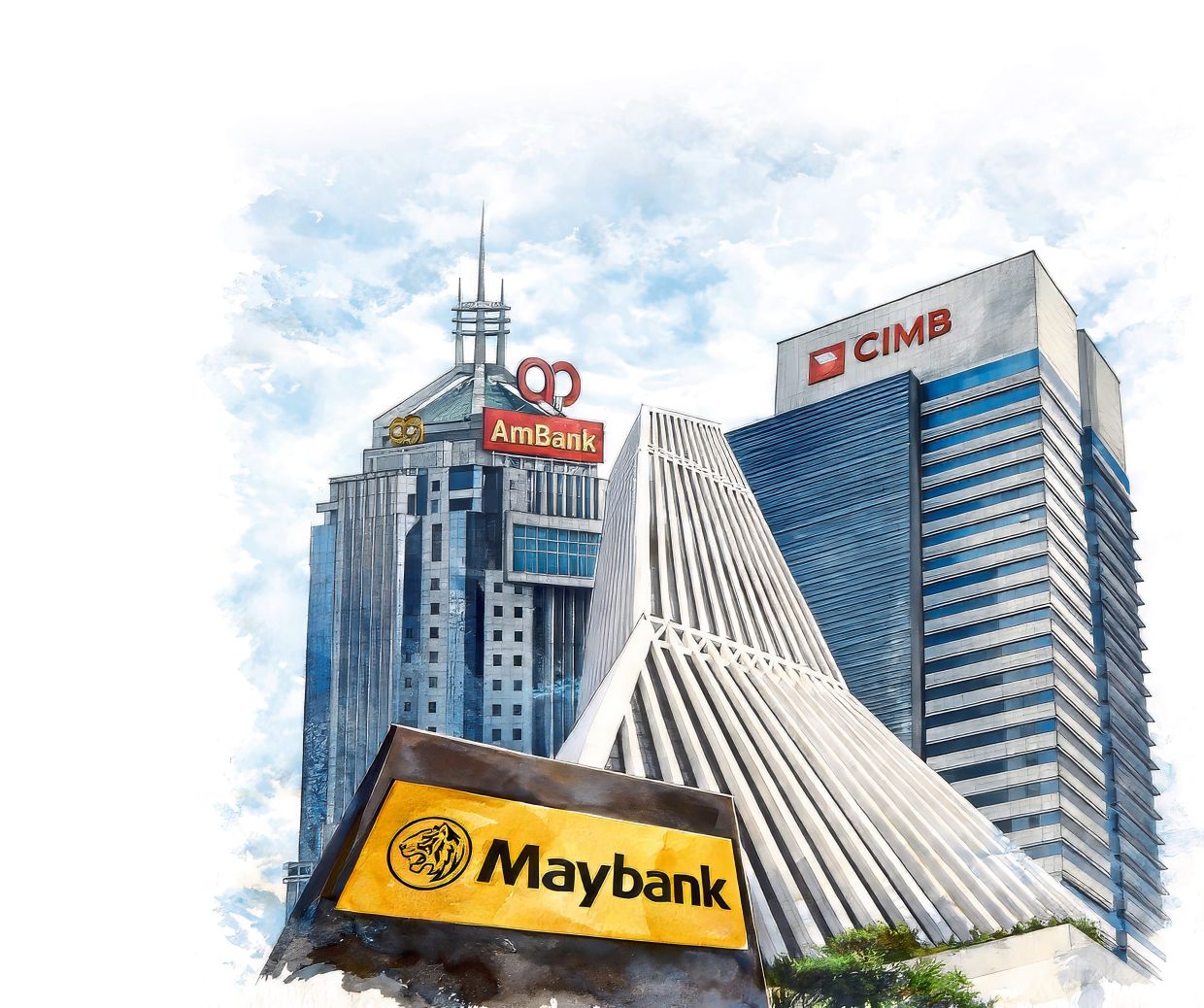
Malaysia's banking sector enters the second half of 2026 at a crossroads, caught between the stabilising effect of de-escalating geopolitical tensions and the headwinds of a more aggressive US Federal Reserve maintaining higher interest rates for longer. After enjoying several years of strong earnings powered by rising rates and solid economic growth, regional lenders have recently seen investor enthusiasm wane as global tensions and international conflicts have eroded some of the traditional defensive appeal that banking stocks typically offer. The situation reflects a broader recalibration happening across global financial markets, with particular implications for how Malaysian financial institutions will perform through the remainder of the year.
First-quarter results from Malaysia's major lenders revealed a troubling pattern despite generally resilient underlying performance. While gross income and operational metrics held steady, mounting pressures from geopolitical disruptions and international conflict began squeezing profitability across the sector. This deterioration has not gone unnoticed by market participants, who have responded by liquidating banking positions, signalling a loss of confidence in the near-term trajectory. The selling pressure reflects uncertainty about how sustained external shocks will ultimately feed through into credit quality and deposit dynamics, particularly for institutions heavily exposed to trade-sensitive sectors of the Malaysian economy.
Yet there are reasons for cautiously renewed optimism. Following the recent US-Iran de-escalation roadmap, several banking strategists believe the probability of a prolonged and severe energy crisis has diminished substantially. This shift matters enormously because an extended oil shock would have cascaded through supply chains, eroded corporate cash flows, and ultimately pressured loan quality across the sector. CIMB Research's Ei Leen Tan argues that this geopolitical reset marks a critical inflection point, allowing investors to redirect focus from worst-case credit scenarios back to the fundamentals driving bank earnings. The easing of crisis-level tensions removes one significant tail risk from the investment equation, potentially reviving appetite for financial stocks among those who had retreated on safety concerns.
However, this relief comes packaged with a distinctly less comfortable reality: the Federal Reserve appears committed to keeping interest rates elevated well into 2026 and beyond. This hawkish posture introduces a new constellation of challenges that analysts argue deserve serious attention. Bond yields will likely experience greater volatility, currency markets face increased uncertainty, liquidity conditions are tightening in some segments, and capital flows between emerging and developed markets may become less predictable. These pressures ripple through bank balance sheets via several channels, from net interest margin expansion (which can be either positive or negative depending on the deposit franchise) to collateral valuations and hedging costs. Sammeer Sharma, OCBC Bank Malaysia's managing director, believes rates will remain stable across the US and domestically, limiting margin deterioration, though he acknowledges that economic ripple effects from prior shocks may still materialise with a lag.
Malaysia's specific circumstances provide some insulation from the worst effects. Unlike many regional peers, particularly Singapore, Malaysia did not aggressively raise policy rates during the global tightening cycle of recent years. Bank Negara Malaysia's measured approach means that local lenders did not extend themselves into rate-sensitive assets to the same degree as banks in economies that moved in lockstep with Fed tightening. This structural positioning suggests that any reversal or sustained elevation in global rates will hit Malaysian institutions less acutely than competitors in more synchronised markets. OCBC Malaysia's leadership points out that their operations derive substantial benefit from exposure to a stable rate environment where margins are less vulnerable to sudden shifts. The negligible direct impact from Middle East tensions on local lenders reflects this favourable positioning, though executives caution that supply chain disruptions and inflation dynamics will likely transmit effects with a one-to-two quarter delay.
Prudent observers argue that the full shape of 2H26 banking performance remains unknowable until enough data accumulates. The April-June quarter results, which will become visible in coming weeks, represent a crucial datapoint for validating or revising sector assumptions. An independent banking analyst cautioned StarBiz that cost-push inflation stemming from earlier energy shocks presents particular risks for small and medium-sized enterprises, the most vulnerable borrowers in Malaysia's credit ecosystem. If inflationary pressures persist longer than anticipated, these businesses may face genuine strain servicing existing debt facilities, potentially triggering the asset quality deterioration that banks carefully monitor. Analysts will scrutinise loan loss provisions, specific impairment charges, and management commentary on early warning indicators when second-quarter results arrive, seeking confirmation that credit metrics remain underpinned by solid fundamentals.
The capital position of Malaysian banks provides a substantial cushion against credit cycle stress. Tan notes that current asset quality metrics are supportive of continued earnings generation and validate the thesis that lenders enter this phase with thick buffers of capital and loan loss reserves. These provisions were deliberately built during the benign growth periods of preceding years, precisely to absorb losses should conditions deteriorate. The combination of solid capital ratios, conservative loan loss buffers, and relatively contained credit costs in recent quarters suggests that even if credit quality does soften somewhat, the impact will be absorbed without compromising dividend capacity or necessitating capital raises. This fortress-like positioning distinguishes Malaysia's banking sector from more leveraged systems where rising rates pose genuine systemic risks.
The shifted geopolitical backdrop also alters how investors should assess bank valuations going forward. Market-related risks such as bond volatility and currency fluctuations carry a lower risk premium than credit-related concerns because they are transient and reversible, whereas deteriorating loan quality is persistent and self-reinforcing. If the de-escalation narrative holds and geopolitical risks remain contained, the sector can transition from a defensive posture focused on downside protection toward a more balanced framework centring on earnings resilience and capital deployment. This recalibration has profound implications for dividend policy, capital return programmes, and ultimately share price performance. Banks with clarity on their earnings trajectory and confidence in credit stability will have greater latitude to reward shareholders, whereas uncertainty will sustain investor caution.
CIMB Research maintains that the combined effect of de-escalating geopolitical tensions and the Fed's hawkish stance creates the conditions for Malaysian banks to demonstrate improved net interest margin dynamics while maintaining relatively contained credit costs. The thesis rests on several pillars: stable policy rates domestically, contained asset quality risks from avoided worst-case scenarios, and capital optionality that permits flexibility in dividend and buyback decisions. Whether this constructive scenario materialises hinges critically on how the domestic economy absorbs the lagged effects of earlier energy shocks and whether consumer and corporate spending patterns adjust constructively or succumb to inflation pressures. The second half of 2026 will test whether Malaysian banks' structural advantages and accumulated buffers are sufficient to navigate a world where geopolitical risk has receded but monetary policy remains restrictive and market volatility elevated.

