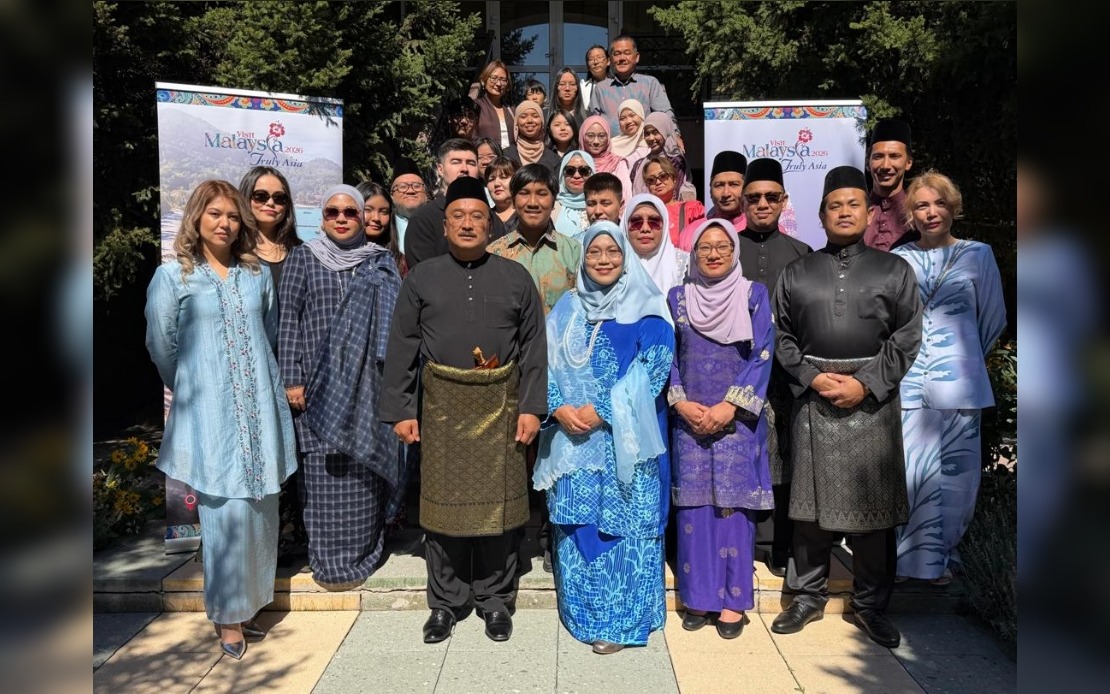
The Malaysian community residing in Kazakhstan demonstrated unwavering patriotic commitment on Saturday when they assembled at Malaysia House in Astana for a flag-raising ceremony and celebration honouring the nation's 69th National Day. Organised under the auspices of the Embassy of Malaysia in Astana, the gathering brought together diplomats, students, professionals, and alumni of bilateral cooperation programmes to participate in this significant occasion. The centrepiece of the morning's proceedings involved the ceremonial raising of the Jalur Gemilang, accompanied by the singing of Negaraku and the recitation of the Rukun Negara, traditional elements that anchor such observances across Malaysian missions worldwide.
Malaysian Ambassador to Kazakhstan Mohd Adli Abdullah used the platform to articulate the deeper significance of this year's National Day theme, Malaysia MADANI: Prosperity Enjoyed. Rather than reduce national achievement to conventional measures such as gross domestic product or infrastructure development, Ambassador Adli emphasised that genuine progress must be evaluated through the lens of equitable distribution and inclusive access to development benefits. This conceptual reframing reflects a broader philosophical shift within Malaysia's governance discourse, positioning prosperity not merely as an aggregate economic indicator but as a lived experience shared meaningfully across all demographic groups and geographic regions.
The ambassador's remarks highlighted the multidimensional nature of national development in contemporary Southeast Asia, where middle-income nations like Malaysia increasingly grapple with questions of inclusive growth and social cohesion. For Malaysian expatriates operating within the distinctive context of Kazakhstan—a Central Asian nation pursuing its own modernisation agenda—these themes carry particular resonance. The emphasis on shared prosperity and mutual benefit mirrors principles that underpin Malaysia's own regional diplomacy, making such messaging especially relevant for diaspora communities tasked with representing national values abroad.
Ambassador Adli extended a particular appeal to the Malaysian community in Kazakhstan, urging them to internalise and exemplify the core principles underpinning Malaysia MADANI. He specifically identified hard work, integrity, discipline, courtesy, and mutual assistance as virtues requiring constant reinforcement and practice. This exhortation functions on multiple levels: it serves as a reminder of expected behavioural standards, certainly, but equally it positions overseas Malaysians as custodians of national identity and reputation. By framing each individual expatriate as an informal ambassador, the diplomatic corps emphasises how diaspora communities contribute to Malaysia's international standing through everyday conduct and professional conduct.
The gathering drew participation from a representative cross-section of Malaysia's expatriate presence in Kazakhstan, encompassing embassy officials and administrative staff alongside Malaysian students pursuing tertiary education, alumni of the Malaysia Technical Cooperation Programme, and other individuals maintaining active engagement with Malaysian networks. This heterogeneous composition reflects the diversifying nature of Malaysia-Kazakhstan connections, extending beyond formal bilateral governmental relations to encompass educational exchange, professional development, and informal social ties.
Integrated within the National Day commemoration was the Malaysia Technical Cooperation Programme Alumni Get-Together 2026, co-hosted by Ambassador Adli. The MTCP, established in 1980 as Malaysia's institutional contribution to South-South cooperation frameworks, functions as a capacity-building instrument through which Malaysia extends training programmes, professional development initiatives, and postgraduate educational opportunities to developing nations across Asia, Africa, and the Pacific. This mechanism represents a distinctive expression of Malaysian foreign policy philosophy, grounded in principles of horizontal solidarity and developmental mutuality rather than hierarchical aid relationships.
The MTCP's significance within Malaysia-Kazakhstan bilateral relations warrants particular emphasis for Malaysian readers and policymakers tracking regional partnerships. As of 2025, the programme had facilitated the professional development of 196 Kazakh officials through various capacity-building interventions. These numbers, whilst perhaps appearing modest in absolute terms, carry outsized diplomatic and strategic weight. Each trained official potentially becomes a vector for Malaysia's intellectual influence within Kazakhstani bureaucratic structures, facilitating informal channels of communication and cooperation that complement formal intergovernmental mechanisms. Furthermore, MTCP alumni frequently occupy positions of influence within their respective governments and professional sectors, creating long-term networks of goodwill and reciprocal understanding.
From Kazakhstan's perspective, participation in MTCP initiatives provides access to Malaysian expertise spanning diverse fields including public administration, technical skills, and governance practices. For Malaysia, the programme simultaneously advances soft power objectives by positioning the nation as a credible source of technical knowledge and development wisdom within the Global South. This mutual instrumental value helps explain the durability of the MTCP framework across more than four decades of operation and through various geopolitical transitions affecting the developing world.
The embassy's formal statement positioning these events within the broader architecture of Malaysia-Kazakhstan relations illuminates the multifaceted nature of contemporary bilateral engagement. Beyond conventional diplomatic protocol and economic transactions, the two nations increasingly cultivate relationships rooted in human capital development, professional expertise-sharing, and the deliberate cultivation of people-to-people connections. These dimensions prove particularly valuable for middle-power nations like Malaysia, which cannot compete with larger economies through sheer resource allocation but can leverage accumulated expertise and institutional capacity to build durable partnerships.
For Malaysian policymakers and citizens, the Kazakhstan scenario illustrates how the Malaysia MADANI concept translates into practical diplomatic action. Rather than pursuing narrow economic advantage, Malaysian missions emphasise inclusive development frameworks and reciprocal partnership models. This approach aligns contemporary Malaysian foreign policy with broader developmental principles whilst simultaneously addressing perceptions of Malaysia as a responsible regional actor committed to mutual benefit rather than zero-sum competition.
The symbolic and practical dimensions of this commemoration extend implications beyond bilateral relations. Malaysian diaspora communities worldwide increasingly serve as barometers for Malaysian soft power and national reputation. Visible, well-organised National Day celebrations conducted with appropriate solemnity and patriotic fervour signal to host governments and local populations that Malaysia maintains active engagement with its expatriate citizens and projects a coherent national identity. For Kazakhstan and other Central Asian nations, such demonstrations suggest that Malaysia takes regional relationships seriously enough to maintain institutional presence and organise substantive programming.
Looking forward, the integration of MTCP alumni events with National Day celebrations points toward a deliberate strategy of weaving development cooperation directly into patriotic observances. This coupling reinforces messaging that Malaysian expertise and friendship constitute tangible benefits to partner nations. For Malaysian students and professionals in Kazakhstan, participation in such events reaffirms their connection to home whilst positioning them within larger networks of Malaysian influence and bilateral cooperation. Ultimately, these gatherings serve functions both ceremonial and instrumental, maintaining patriotic bonds whilst advancing concrete diplomatic objectives across the Malaysia-Kazakhstan partnership.

