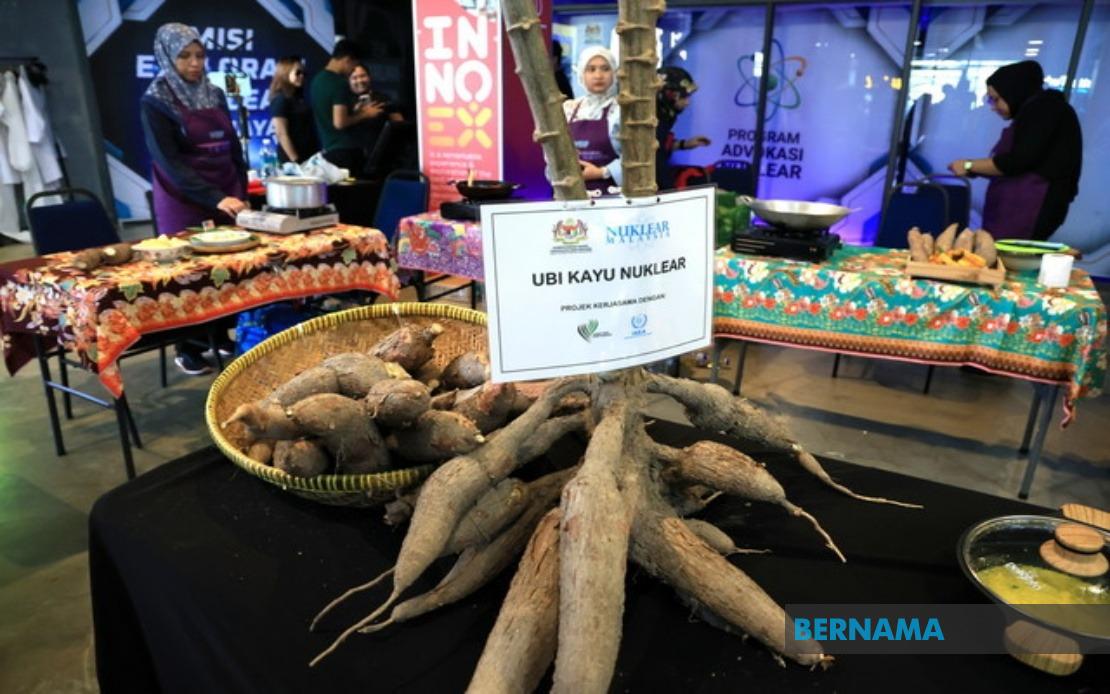
Malaysia's nuclear research capabilities are moving beyond theoretical science into practical agricultural solutions. The Malaysian Nuclear Agency has spent five to six years developing new cassava varieties using nuclear technology, marking a significant step toward improving the country's crop productivity and food security strategy. The breakthrough comes as the agency demonstrates how gamma radiation can accelerate the identification of desirable plant traits, potentially transforming how Malaysian farmers approach one of Southeast Asia's staple crops.
The innovation addresses a fundamental constraint that has long plagued local cassava farming. Conventional Malaysian cassava varieties require between eleven and twelve months before harvest, a lengthy maturation period that limits how frequently farmers can plant and limits their annual income from the crop. The Nuclear Agency's new varieties compress this timeline to just six months, representing nearly a fifty percent reduction in time to market. This acceleration occurs without sacrificing yield—in fact, early trials show the new varieties actually produce higher quantities of usable root material compared with traditional varieties, addressing both the timing and productivity concerns simultaneously.
Norazlina Noordin, a research officer with the Agrotechnology and Biosciences Division, explained the methodology during a media engagement at the Nuclear Advocacy Programme event in Cyberjaya. The process begins with exposing cassava stem cuttings to gamma radiation, a technique that induces random genetic variations in the plant material. Researchers then plant these treated cuttings and methodically observe them across multiple generations, identifying specimens that exhibit the preferred characteristics of early maturity and elevated yields. The screening process demands rigorous oversight because the genetic changes occur unpredictably, necessitating evaluation of approximately one thousand plants over extended periods to isolate stable, reproducible traits.
A critical concern for any agricultural technology involving radiation is food safety. Noordin directly addressed this anxiety by clarifying that gamma radiation operates similarly to X-ray exposure—it passes through biological material without leaving radioactive residue. The radiation functions purely as a mutagenic agent, triggering genetic changes without embedding any dangerous particles in the final product. This distinction is essential for consumer confidence and regulatory approval as the cassava varieties move toward market availability, particularly in Southeast Asia where food safety standards are increasingly stringent.
The research partnership demonstrates how Malaysia leverages international scientific cooperation to advance domestic agricultural capabilities. The Malaysian Nuclear Agency collaborated with the Department of Agriculture, receiving support from the International Atomic Energy Agency, including a research grant of approximately RM100,000 distributed over five years. The Department of Agriculture contributed additional resources by providing cultivation areas for screening and validating plant materials following nuclear treatment. This collaborative framework, though modest in financial scale, reflects how smaller economies can access cutting-edge agricultural science through multilateral partnerships rather than relying solely on domestic resources.
The commercialisation timeline of at least two years acknowledges the remaining work required before farmers can access improved varieties at scale. Research institutions must confirm that the desired traits remain stable across successive generations—a critical requirement because characteristics can revert to their original state if genetic stability has not been firmly established. For vegetatively propagated crops like cassava, where plants are grown from stem cuttings rather than seeds, this verification process typically requires six to seven years of observation before scientists can confidently release new varieties. The Malaysian Nuclear Agency's projection of two-year commercialisation suggests that some of the best-performing variants have already passed preliminary stability testing, though full regulatory clearance and farmer adoption will extend the broader timeline.
The economic implications for Malaysian cassava farmers are substantial. Shortening the harvest cycle from twelve months to six months theoretically enables farmers to plant twice as frequently, effectively doubling their production capacity on the same land area. For smallholder producers who constitute a significant portion of Malaysia's cassava farming base, this productivity gain could meaningfully enhance household income and reduce financial vulnerability to seasonal fluctuations. Expanded cassava production also strengthens Malaysia's agricultural self-sufficiency in this important crop, reducing reliance on imports and supporting domestic starch, animal feed, and industrial applications.
Beyond cassava, the Malaysian Nuclear Agency is applying identical nuclear mutation breeding techniques to other crops of regional importance. Research programmes are underway for bananas, sweet potatoes, taro, kenaf for industrial biomass applications, and Napier grass for livestock feed. These parallel projects target similar objectives: developing varieties with shortened maturation periods, elevated yields, and enhanced resistance to diseases, pests, and climatic stresses. This diversified research portfolio suggests the Nuclear Agency views mutation breeding as a generalised problem-solving methodology applicable across multiple sectors of Malaysian agriculture, rather than as a cassava-specific initiative.
The emphasis on climate resilience represents a forward-looking dimension of this research strategy. Southeast Asia faces increasing pressure from changing rainfall patterns, temperature volatility, and emerging crop diseases linked to climate variability. Varieties with enhanced tolerance to drought, flooding, and pathogenic stress would provide Malaysian farmers with greater adaptive capacity in an uncertain agricultural environment. The Nuclear Agency's inclusion of disease and pest resistance in its breeding objectives indicates awareness that productivity gains mean little if new varieties succumb to emerging threats. This holistic approach to crop improvement aligns with broader regional food security concerns and positions Malaysia's nuclear science infrastructure as relevant to contemporary agricultural challenges.
The research outcomes also carry implications for Malaysia's positioning within international agricultural science. The country is demonstrating technical capacity in a sophisticated discipline that many developing economies lack—the ability to conduct controlled plant breeding programmes using nuclear techniques. As Malaysia pursues higher-value agricultural pathways and seeks to reduce dependence on commodity production, capabilities in advanced breeding science enhance the country's competitive standing and research reputation. The partnership with the International Atomic Energy Agency acknowledges this positioning while creating opportunities for knowledge exchange and technology transfer within the broader Southeast Asian region.
Food security considerations underscore why the government has invested in this research direction. Cassava provides a crucial carbohydrate source for millions across Southeast Asia, supports livestock operations, and supplies industrial starch applications. Varieties that produce faster, more abundantly, and with greater disease resistance strengthen Malaysia's ability to feed its population, support rural livelihoods, and maintain competitive agricultural capacity. The government's apparent commitment to advancing these technologies—evidenced by departmental collaboration and international partnership—suggests nuclear agriculture is being integrated into broader national food policy rather than remaining isolated within research institutions.
The transition from laboratory validation to farmer adoption represents the final and perhaps most critical phase of this initiative. Even if the new cassava varieties perform impeccably under controlled conditions, successful commercialisation requires farmer awareness, access to planting materials, extension support, and demonstrated economic returns. The two-year timeline to market availability may prove optimistic if regulatory approval processes prove lengthy or if farmer education requires more time than anticipated. Regional governments and agricultural extension services will need to actively promote adoption to ensure that research breakthroughs translate into meaningful productivity improvements across farming communities. The Malaysian Nuclear Agency's success ultimately depends not on scientific achievement alone, but on how effectively the improved varieties reach actual farmers and contribute to their incomes and food security objectives.

