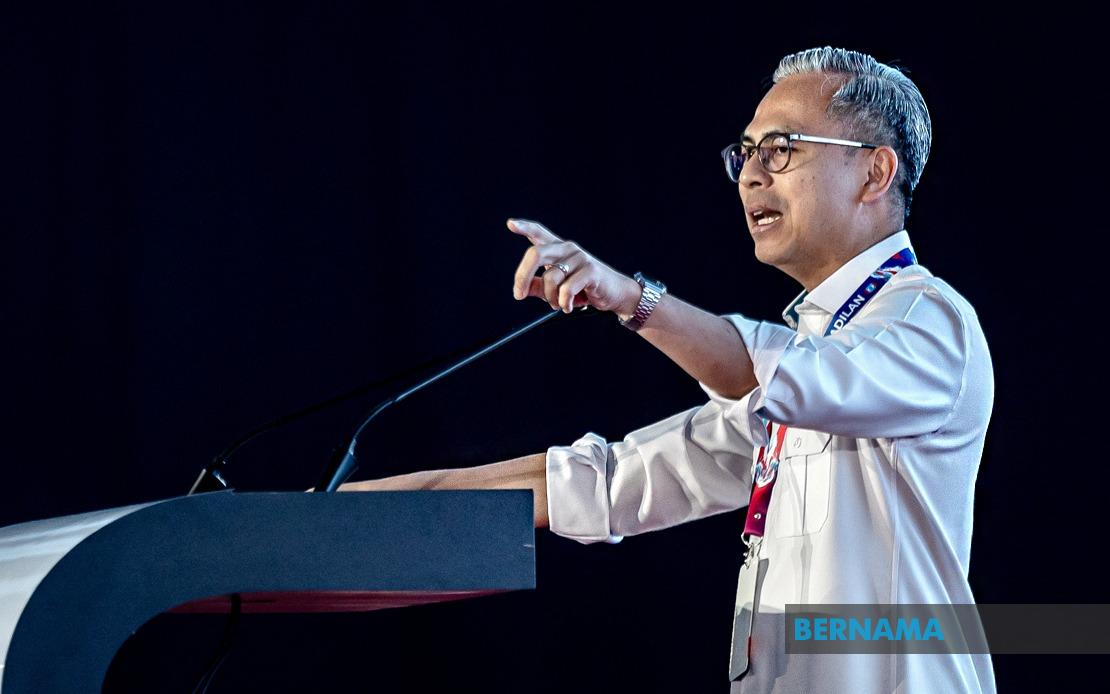
Malaysians are paying closer attention to the proper specifications of the Jalur Gemilang, with growing numbers of citizens becoming vigilant about correct stripe counts and colour arrangements, Communications Minister Datuk Seri Fahmi Fadzil said in Melaka on August 16. The heightened awareness reflects a broader shift in public consciousness regarding flag protocol and patriotic conduct, particularly as the nation approaches its major national celebrations.
Fahmi attributed the shift to intensified messaging around flag respect during the National Month period. He observed that this emerging social consciousness has manifested in informal but meaningful ways across Malaysian communities. Rather than relying solely on official enforcement, citizens are now taking personal responsibility for flag standards, creating a grassroots culture of accountability where individuals politely correct and advise one another when flag display falls short of accepted norms.
The minister specifically noted that no new complaints regarding improper flag display have been lodged recently, suggesting that the combination of public awareness and peer correction is proving effective. This bottom-up approach to maintaining flag protocols appears to be yielding tangible results without requiring heavy-handed governmental intervention. The shift demonstrates how civic consciousness can be cultivated through sustained messaging and cultural reinforcement.
While acknowledging an incident in Batu Buruk, Terengganu, involving an allegedly incomplete Jalur Gemilang, Fahmi indicated that such matters remain under investigation by relevant authorities. His measured response suggests the government is monitoring compliance while allowing investigative processes to proceed without premature commentary. This careful approach balances accountability with due process.
An emerging trend among Malaysian vehicle owners points to evolving practical solutions around flag display. Growing numbers are opting for magnetic Jalur Gemilang stickers rather than traditional physical flags, reflecting a pragmatic approach that balances patriotic expression with vehicle maintenance concerns. This innovation prevents potential paint damage and body deterioration while maintaining the symbolic presence of the national flag on private transportation. Fahmi characterised the shift positively, recognising that convenience and practicality need not undermine patriotic sentiment.
The government has substantially advanced its preparations for the twin celebrations of National Day and Malaysia Day, with coordinated planning occurring across multiple agencies. The Ministry of Education, in particular, is preparing elaborate human graphic performances that will showcase mass coordination and artistic presentation. Logistical arrangements throughout Putrajaya are proceeding according to schedule, with contingent preparations advancing smoothly across participating organisations and government departments.
Coordination mechanisms are being formalised through structured meetings scheduled across the coming weeks. A National Day coordination meeting was set for August 17, bringing together stakeholders responsible for various celebration components. Subsequently, a virtual session addressing Malaysia Day celebrations is planned for August 24, allowing participants across the nation to contribute to planning remotely and efficiently.
Two major Merdeka Eve events are being organised in Kuala Lumpur, each with distinct character and audience. The Ministry of National Unity is orchestrating festivities at Merdeka Stadium, where Prime Minister Datuk Seri Anwar Ibrahim will deliver a special address, lending the occasion heightened political significance. Simultaneously, Kuala Lumpur City Hall (DBKL) will oversee celebrations at Dataran Merdeka, ensuring that multiple venues and community focal points facilitate nationwide participation in the commemorations.
Beyond flag protocol matters, Fahmi's Melaka visit encompassed humanitarian concerns reflecting the government's broader social agenda. He visited two elderly stroke patients—R. Sathia Devi, 70, and Abu Zarin Nordin, 64—residing in modest housing situations at Pangsapuri Kiara and Kampung Tun Razak respectively. These visits were conducted to assess assistance requirements and determine how government support mechanisms could be optimised for their recovery and wellbeing.
The assessment process identified multiple intervention avenues, including milk supply provision and coordination with the Social Welfare Department (JKM) to ensure comprehensive support. Beyond conventional rehabilitation approaches, Fahmi committed to exploring alternative therapeutic options such as acupuncture, reflecting a holistic approach to elderly health management. These visits underscore the government's intention to combine high-level communications responsibilities with on-ground engagement in community welfare matters.
Fahmi praised the Information Department's role in identifying families requiring government assistance, noting that systematic identification mechanisms are essential for targeted aid delivery. His commitment to follow-up action on individual cases demonstrates that ministerial involvement extends beyond symbolic visits to substantive engagement with welfare delivery systems. This integration of communications strategy with direct social intervention suggests a model where public office encompasses both media-facing and community-facing dimensions.
The confluence of these developments—heightened flag consciousness, evolving civic participation patterns, advanced celebration planning, and direct engagement with vulnerable populations—presents a multifaceted portrait of a government navigating contemporary Malaysian society. The shift toward citizen-led flag protocol compliance, combined with practical innovations in patriotic expression and systematic attention to welfare matters, reflects governance approaches that increasingly rely on social participation rather than enforcement alone.

