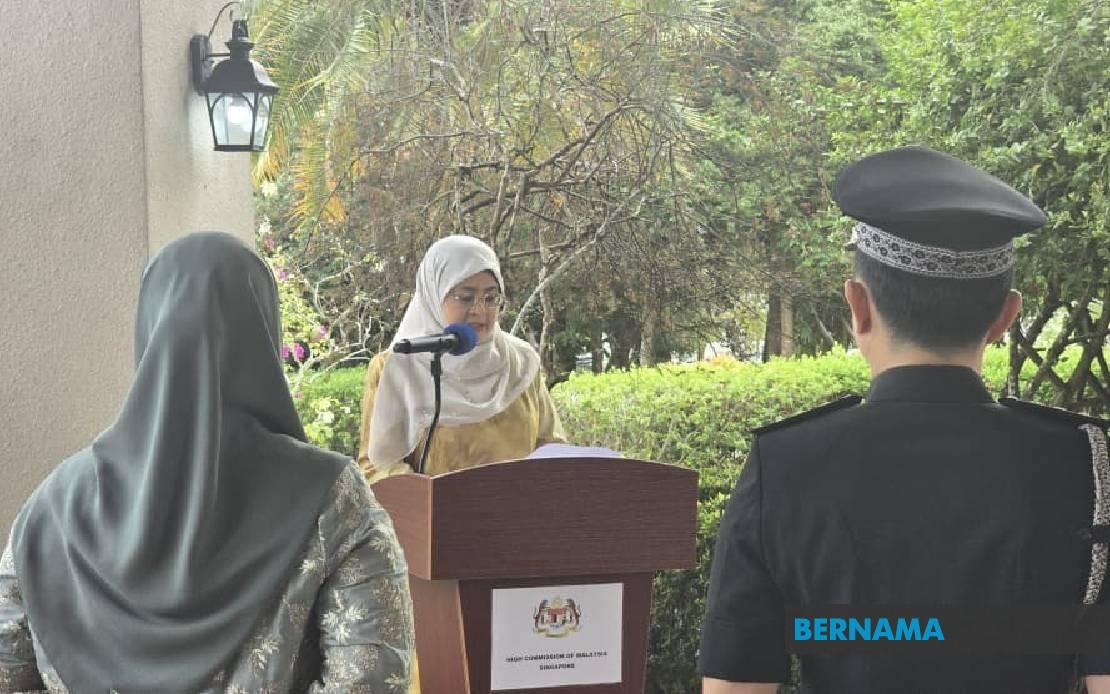
The Malaysian High Commission in Singapore has cast Malaysians working and living in the republic in a pivotal diplomatic role, characterising them as de facto representatives instrumental in deepening the long-standing relationship between the two nations. Speaking at the High Commission's 2026 National Day celebration held at Rumah Malaysia, High Commissioner Datin Paduka Anizan Siti Hajjar Adnin emphasised that the roughly 70 staff and family members of the mission, alongside tens of thousands of Malaysians who commute across the causeway or maintain long-term residence in Singapore, shoulder responsibility for projecting Malaysia's values and bolstering people-to-people connections.
The High Commissioner's remarks underscore a distinctive dimension of Malaysia-Singapore relations that extends well beyond formal diplomatic channels and trade agreements. Unlike relationships between nations separated by vast distances, the proximity of Malaysia and Singapore creates a unique dynamic wherein individual citizens become frontline ambassadors through their everyday interactions. The daily movement of workers, students, and business professionals across the Johor Strait represents perhaps the most tangible manifestation of integration between the two societies, and the High Commissioner's framing of these individuals as bridges reflects official recognition of this organic, grassroots connectivity as strategically valuable.
Anizan articulated that Malaysia-Singapore ties are layered with historical complexities and contemporary interdependencies that transcend the conventional framework of bilateral state relations. She highlighted how the relationship is grounded in shared history, geographic proximity, economic integration, cultural intersections, and familial bonds that span generations. This multiplex foundation means that citizens functioning professionally or residing in Singapore operate within a context where national identity and international relations are continually negotiated at personal and communal levels. The High Commissioner's call for Malaysians in Singapore to embody integrity, professionalism, courtesy, and mutual respect recognises that individual conduct accumulates into collective national reputation.
The emphasis on maintaining professional standards and interpersonal decorum reflects awareness that Malaysians in Singapore exist within a competitive regional environment where national stereotypes and reputational capital matter substantially for bilateral comfort and cooperation. Singapore's reputation for efficiency, orderliness, and meritocratic standards creates an implicit benchmark against which Malaysian workers and residents are sometimes measured by local populations and employers. By advocating for Malaysians to demonstrate excellence across professional domains, the High Commissioner was essentially positioning ethical conduct and competence as soft power instruments that reinforce rather than undermine Malaysia's standing in Singapore's eyes.
Anizan's specific exhortation to younger Malaysians to maintain cultural heritage and uphold Malay as the national language carries particular significance within Singapore's multicultural context. Unlike Malaysia, where ethnic Malays constitute a demographic majority and Malay is constitutionally enshrined as the sole national language, Singapore's official multilingualism and ethnic diversity mean that maintaining Malay language proficiency and cultural practices requires conscious effort among Malaysian expatriates. The High Commissioner's appeal to younger generations reflects concern that prolonged residence in Singapore's English-dominant, culturally pluralistic environment might attenuate the cultural moorings that connect diaspora Malaysians to their homeland, potentially weakening the affective dimension of bilateral relations.
The framing of Malaysia-Singapore ties as rooted in interconnection rather than separation carries implications for how both governments calibrate relations during periods of diplomatic tension or disagreement. When the High Commissioner emphasised family ties as foundational, she was invoking the reality that thousands of Malaysians have relatives in Singapore and vice versa, creating networks that transcend state boundaries and political disputes. These kinship connections, alongside the economic interdependencies created by cross-border trade, investment, and employment, constitute structural constraints on either nation's capacity to allow bilateral friction to escalate into genuine rupture.
The High Commission's National Day parade itself serves as performative reaffirmation of Malaysian national identity within a foreign space. By organising a coordinated celebration featuring staff members and dependents, the mission creates a bounded sphere wherein Malaysian symbols, values, and commemorations are foregrounded. Such occasions matter symbolically for diaspora populations, as they provide sanctioned spaces for national expression and collective identity affirmation. For Malaysians in Singapore who may encounter subtle or overt reminders of their status as foreigners, these gatherings reaffirm connection to homeland and reinforce the legitimacy of maintaining Malaysian identity whilst functioning effectively within Singaporean society.
The High Commissioner's vision of Malaysia as a nation that is simultaneously confident in its identity and open to the world reflects tension inherent in contemporary Malaysian nationalism. In an era of globalisation, regionalism, and transnational mobility, maintaining distinctive national character whilst engaging internationally requires careful calibration. For Malaysians in Singapore specifically, this translates into expectations that they remain anchored to Malaysian values and cultural markers even whilst adapting to Singapore's professional norms and social conventions. The High Commissioner's articulation suggests that these orientations need not conflict, and that cultural rootedness can coexist with international openness.
The practical relevance of this diplomatic messaging extends to how Malaysians in Singapore navigate questions of identity and belonging. For cross-border workers who may spend eight hours daily in Singapore but maintain family homes in Malaysia, the High Commissioner's framing validates their dual orientation rather than treating it as a source of ambiguity or disloyalty. For younger Malaysians who may have spent formative years in Singapore or who may hold professional aspirations more readily achievable in the city-state, the emphasis on maintaining language proficiency and cultural engagement acknowledges the genuine tension between individual advancement and national cultural preservation.
From a bilateral governance perspective, recognising Malaysian citizens as unofficial ambassadors also acknowledges the limits of formal state capacity in managing international relations. Governments cannot unilaterally control how citizens represent their nations abroad, nor can they fully dictate how expatriates experience or convey national identity. By explicitly framing individual conduct as diplomatically consequential, the High Commissioner invites Malaysians in Singapore to adopt a perspective wherein their professional choices and social interactions carry implications beyond personal benefit. This rhetorical move transforms everyday activities—workplace collaboration, neighbourhood relations, cultural participation—into vectors through which Malaysia's national interests are advanced or compromised.
The approximately 70 High Commission personnel and family members who participated in the parade represent the institutional apparatus through which Malaysia maintains formal presence in Singapore. Their participation in national day celebrations, combined with their professional roles in consular services, trade promotion, and cultural diplomacy, embodies the state's commitment to maintaining robust bilateral relations. The fact that the event was held specifically at Rumah Malaysia, the cultural institution dedicated to promoting Malaysian heritage and facilitating diaspora engagement, reinforces institutional investment in sustaining Malaysian community cohesion and visibility within Singapore.

