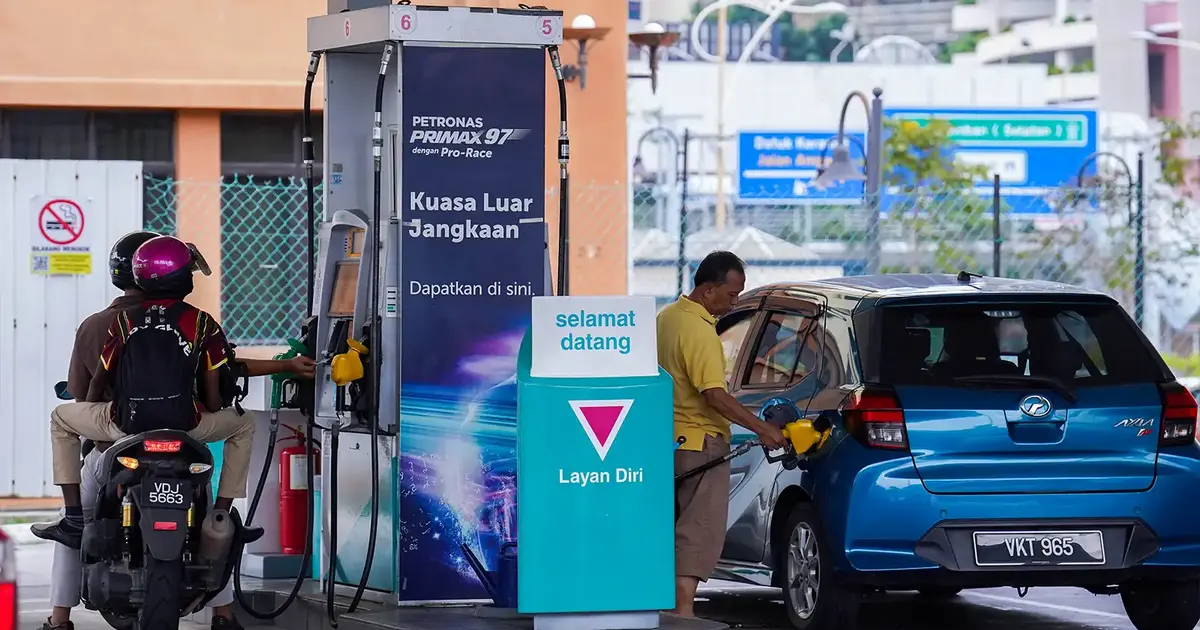
Prime Minister Anwar Ibrahim has confirmed that Malaysia's government subsidy bill for fuel consumption is expected to climb to RM40 billion in the coming year, underscoring the mounting fiscal challenge of maintaining affordable energy prices for consumers as crude oil markets remain unpredictable. The projection reflects ongoing strain on the federal budget as policymakers balance the competing demands of price stability for ordinary Malaysians against the need for fiscal discipline and debt management.
The RM40 billion figure represents a substantial commitment of public resources to fuel price controls, a cornerstone of government policy aimed at insulating households and businesses from the full impact of international petroleum price fluctuations. This expenditure ranks among the largest subsidy programmes in the national budget and has become a recurring concern for economic managers who must account for it during annual budget planning cycles. The scale of the commitment illustrates how deeply fuel subsidies are embedded in Malaysia's social contract, even as economists warn about their long-term sustainability and economic efficiency.
Amid these fiscal pressures, Anwar has moved to reassure the public and business community by reiterating that Malaysia's domestic petroleum supply chains remain robust and adequate to meet national demand. The emphasis on supply security reflects international concerns about energy security in the region, particularly given geopolitical tensions that periodically threaten global oil production and shipping routes. For Malaysia, a net petroleum exporter with significant reserves, maintaining domestic production has become as much a strategic priority as managing subsidy costs.
The government's petrol price policy has long been a politically sensitive issue in Malaysia, affecting millions of consumers and shaping public sentiment toward the ruling administration. Price hikes trigger immediate public backlash and concerns about the rising cost of living, particularly among lower-income groups who spend a higher proportion of their earnings on transportation fuel. Conversely, maintaining subsidies strains government finances and diverts resources from education, healthcare, and infrastructure—areas where spending often faces pressure during budget negotiations.
The RM40 billion projection must be understood within the context of Malaysia's broader fiscal position. The government has committed to reducing its budget deficit and managing public debt levels, targets that require careful prioritisation of spending. Fuel subsidies, while politically difficult to reduce, represent a significant discretionary expense that economists and think-tanks have repeatedly flagged as an area where fiscal efficiency gains could be realised. The tension between maintaining subsidies and achieving deficit targets will likely intensify as international oil prices remain subject to unexpected shocks.
Regional energy dynamics also shape Malaysia's fuel subsidy calculations. As other Southeast Asian nations adopt different approaches to energy pricing—some removing subsidies entirely, others implementing targeted assistance programmes—Malaysia's continued reliance on broad-based fuel price controls becomes increasingly distinctive. This policy divergence means Malaysian consumers and businesses enjoy relatively lower petrol and diesel prices than counterparts in neighbouring countries, a competitive advantage that carries real economic implications for sectors dependent on fuel inputs.
The government's supply stability assurance carries particular weight given Malaysia's historical experience as a petroleum producer. The country's crude oil and natural gas reserves remain significant, though production has declined from peak levels two decades ago. Maintaining adequate refining capacity and domestic fuel production capacity has required ongoing investment in the energy sector, managed primarily through Petronas, the national oil company. Supply security thus depends not only on geological factors but also on sustained capital investment and operational efficiency in the downstream sector.
International crude oil price movements remain the primary driver of subsidy cost volatility, and projections like the RM40 billion figure are necessarily conditional on oil market assumptions. If global prices spike due to supply disruptions or demand surges, the actual subsidy bill could exceed estimates, creating budget crises. Conversely, a period of weak global demand could reduce costs, though this would require international economic weakness that might damage Malaysia's export sectors. The government therefore operates within a range of fiscal uncertainty that complicates medium-term planning.
Looking forward, Malaysia faces strategic choices about fuel subsidy policy that will shape both fiscal outcomes and economic competitiveness. Some policymakers advocate for gradual subsidy reduction coupled with targeted cash transfers to vulnerable groups, an approach that could improve fiscal health while protecting poorer Malaysians. Others defend existing subsidies as essential to maintaining social stability and supporting economic activity. The RM40 billion projection will likely feature prominently in upcoming policy debates as stakeholders weigh economic efficiency against political feasibility and social concerns about the cost of living.

